
Vandaag of morgen in huis

Kwaliteit gegarandeerd

Welkomstaanbiedingen ontgrendelen: GRATIS bezorging | Tot 80% korting | Gratis 30 dagen JoyPlus-proefperiode
Download de app
A food processor can chop vegetables, grate cheese, grind nuts, mix sauces and sometimes even knead dough. However, not every model is suited to everyday use. A compact mini food processor is handy for herbs and small portions, while a multifunctional food processor offers more space and attachments.
Most disappointing purchases come down to three common misconceptions:
The power of an electric chopper or food processor is measured in watts. Models of around 200 to 500 watts are often designed for smaller portions, herbs, onions, soft vegetables and simple dips. A model with 650 to 1,000 watts may be more practical for grating, slicing, nuts, meat or larger quantities.
Check the instructions too. Some choppers should only be run in short bursts. For example, the Kenwood Easy Chop CHP61 specifies a maximum operating time of 30 seconds, followed by a cooling period. This is worth bearing in mind if you want to prepare several portions in a row.
A small 500 ml bowl is suited to one-person households, sauces and herbs. For a family, 1 to 2.3 litres is generally more practical. As well as capacity, consider the material:
A chopper with a glass bowl is a good option if you alternate between processing aromatic ingredients, meat and vegetables. After contact with raw meat, wash the bowl and blades straight away, following the instructions.
Decide in advance which tasks you’ll actually use it for. A simple food chopper with one blade is enough for chopping and mixing. For grating and slicing, you’ll need interchangeable discs. A food processor with a blender can offer extra options, but it often takes up more space.
In particular, check for:
Blades and grating discs are sharp. Always unplug the appliance before assembling, dismantling or cleaning it. Don’t process boiling liquids unless the manufacturer explicitly allows it.
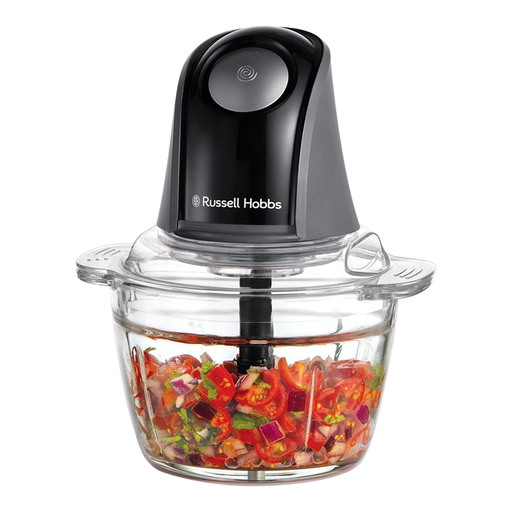
Why it suits this profile: This compact model is designed for simple everyday tasks such as chopping vegetables, herbs, meat and nuts. It’s operated using one large button.
The product specifications list a 500 ml bowl, stainless steel blades, a non-slip base and dishwasher-safe parts. Make sure this capacity is right for your portions.
200 watts, one speed, a glass bowl and removable blades. Its compact design takes up little cupboard space.
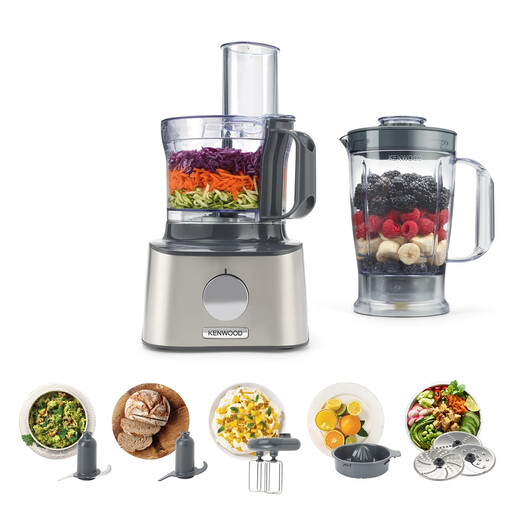
Why it suits this profile: If you want to slice, grate, mix, knead and juice as well as chop, this model gives you several accessories in one food processor.
The choice isn’t based on wattage alone: the 2.1-litre bowl, 1.2-litre blender jug and included accessories make its functions clear.
800 watts, two speeds, a blender function and dishwasher-safe accessories, according to the product description.
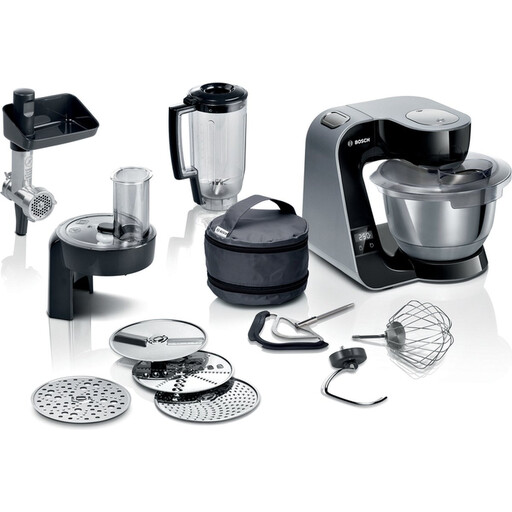
Why it suits this profile: This model is designed for users looking for a larger bowl, multiple speeds and accessories for dough, whisking, blending and grating.
The 3.9-litre stainless steel bowl means you won’t have to start another batch straight away when preparing larger quantities. Check you have enough storage space before buying.
1000 watts, a built-in scale, multiple speeds and accessories such as dough hooks, a whisk, a blender and slicing discs.
We’ve put together a complete, up-to-date list of products that meet these strict selection criteria and the applicable European safety regulations.
That depends on the blade, power, bowl and the manufacturer’s instructions. A chopper for meat and vegetables can handle small quantities, but remove bones, tough skins and large pieces beforehand. Use short pulses for better control over the texture, and clean the parts straight away after handling raw meat.
Its lifespan depends on the materials, how often you use it and how well you maintain it. Don’t run the motor for longer than the time stated in the manual, and let the appliance cool down when instructed. Before buying, also check the warranty and your statutory rights. The product information for several of the models mentioned lists a two-year warranty period.
A food processor is usually only used for a short time. Its total energy consumption therefore depends on both its wattage and how long you use it. In practice, an 800-watt model running for a few minutes may use less energy than a lower-powered appliance that takes much longer. Above all, choose a model that suits your portion sizes and tasks rather than simply looking for the highest wattage.
