
Vandaag of morgen in huis

Kwaliteit gegarandeerd

Welkomstaanbiedingen ontgrendelen: GRATIS bezorging | Tot 80% korting | Gratis 30 dagen JoyPlus-proefperiode
Download de app
A food processor can chop, slice, grate and blend in one appliance. However, simply seeing “multifunctional” on the box does not automatically mean you are buying a convenient kitchen helper. For UK households, three pitfalls are particularly important: conflicting power claims, accessories that are rarely used and a bowl that is too small or difficult to clean in practice.
This guide helps you compare food processors using verifiable specifications. That way, you can make a more informed choice between a compact kitchen machine, a food processor with blender or a more extensive model for dough and meat.
A 1000-watt food processor may sound powerful, but wattage alone says little about performance when chopping or kneading. Also check the maximum operating time, recommended quantity of ingredients and included accessories. For example, a motor with a high stated peak power may be less suitable for prolonged heavy dough work than a model with a lower but clearly defined rated load.
Also look out for conflicting product information. On some listings, the product title and technical specifications differ. Before buying, always check the current product specifications and manual.
A multifunctional food processor may offer functions for mixing, kneading, blending, chopping and grinding. In practice, you will often need to change accessories and store the various parts. A food processor with a meat grinder or juicer therefore takes up more space than the basic unit alone.
Think about which functions you use every week. For soup, pesto and small quantities of nuts, a 4-in-1 stick blender may be sufficient. For bread dough, large salads and mince, a kitchen machine with a mixing bowl is generally more suitable.
A 5.5-litre bowl is not fully available for every recipe. For dough, liquids and ingredients that rise while the appliance is running, a lower safe filling level often applies. A compact food processor with a 1.3- or 2.1-litre bowl may actually be more convenient for everyday portions and takes up less space.
Lower power is often sufficient for light chopping and puréeing. If you are looking for a food processor for dough, nuts, hard vegetables or meat, it is worth checking:
A food processor with 800 to 1000 watts offers more scope for a range of tasks on paper, but always compare the full specification sheet. Some hand blenders, for example, state a maximum power alongside a lower rated power.
A food processor with mixing bowl is practical for slicing and grating, while a separate blender jug is better suited to smoothies, sauces and soup. Check both the capacity and the material. Glass is heavier but can be useful for hot preparations if the manual permits this. Plastic is lighter and often easier to handle.
Pay attention to the following points:
Do not process boiling liquids in a blender if the manufacturer does not permit this. One of the available models, for example, states a maximum temperature of 60 °C.
Discs for grating and slicing, a dough hook, whisk, blender jug and meat grinder make an appliance more versatile. However, check whether the accessories are included as standard or need to be purchased separately. An accessory such as the Kenwood KAH65.000PL is designed for compatible Kenwood kitchen machines with a low-speed connection, so it is not a standalone food processor.
Before buying, also check whether replacement blades and slicing discs are readily available. Sharp components should be stored safely and only fitted or removed when the appliance is unplugged.

Why it suits this profile: This compact model is designed for everyday portions and limited kitchen space. The bowl has a capacity of 1.3 litres and the personal blender holds 600 ml.
The functions and capacities are clearly specified: chopping, slicing, grating, puréeing, kneading, blending and crushing ice. This makes it easier to decide which functions you will actually use.
900 watts, 7 speed levels, 1.3-litre bowl and a 600 ml blender with drinking lid.
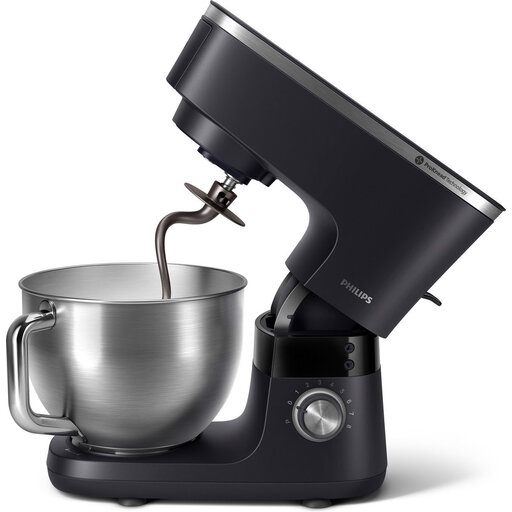
Why it suits this profile: The 5.5-litre mixing bowl, blender and meat grinder are well suited to home bakers and families preparing larger quantities.
The included accessories are listed separately. According to Philips, the ProKnead technology uses a movement that mimics kneading by hand; check the manual for the correct quantities and settings.
1000 watts, 8 speeds, 5.5-litre bowl, 1.5-litre glass blender and meat grinder.
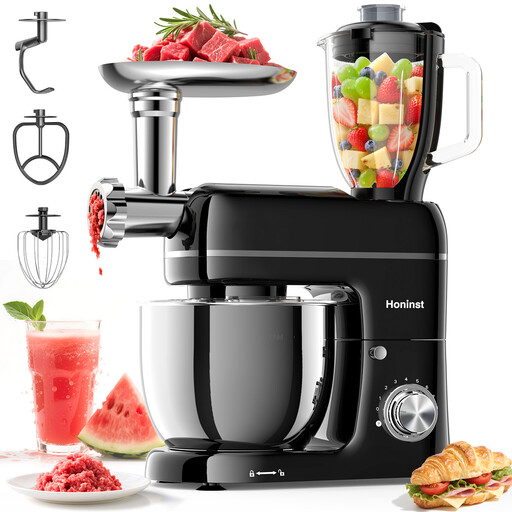
Why it suits this profile: According to the product description, this model combines a stand mixer, blender and meat grinder for dough, mince, smoothies and batter.
The product information states a maximum motor output of 1300 watts and recommends domestic use within normal quantities and operating times. Follow these limitations.
6 QT stainless-steel bowl, 8 speeds plus pulse function, tilt-head design and safety lock.
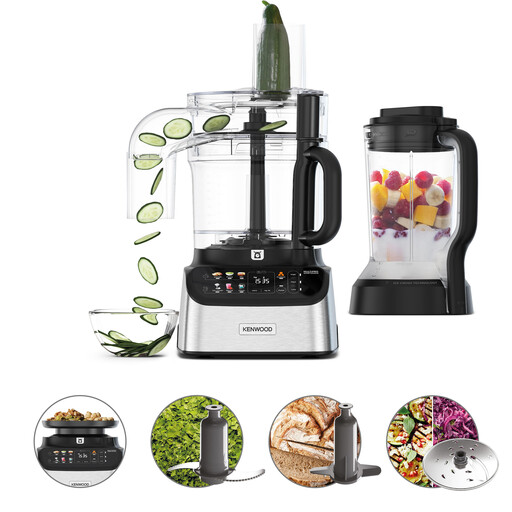
Why it suits this profile: The combination of a food processor and blender is ideal for families who regularly prepare vegetables, batter, sauces and smoothies.
The functions are clearly specified: weighing, mixing, kneading, puréeing, chopping, grating, slicing, blending and crushing ice. Automatic programmes do not replace checking the capacity and preparation time.
1000 watts, integrated scales, 1.5-litre blender and a stated bowl capacity of 3 litres.
We have put together a complete, up-to-date list of products that fully meet these strict selection criteria and the applicable European safety requirements.
Yes, provided its capacity and accessories suit the meals you prepare. A bowl of around 1 to 2 litres is suitable for smaller households and everyday portions. Families or keen home bakers will often benefit more from a kitchen machine with a 3- to 5.5-litre bowl. Use the appliance within the specified operating time and allow the motor to cool down after heavy preparations.
Lower power may be sufficient for chopping, slicing and puréeing. For a food processor used for dough, hard ingredients or meat, a model of around 800 to 1000 watts is a practical starting point for comparison. Do not look at wattage alone: the rated motor load, pulse function, blade design and recommended quantities also determine whether the appliance suits your needs.
Energy consumption depends on the power rating and operating time. A 1000-watt appliance theoretically uses 1 kilowatt-hour when running continuously for one hour, but a food processor usually operates for only a few minutes per preparation. The purchase price and replacement cost of accessories are therefore often more important than the difference in electricity consumption between comparable models.
