
Vandaag of morgen in huis

Kwaliteit gegarandeerd

Welkomstaanbiedingen ontgrendelen: GRATIS bezorging | Tot 80% korting | Gratis 30 dagen JoyPlus-proefperiode
Download de app
A food processor can chop vegetables, juice fruit, blend, grate or even mince meat. But one multifunctional food processor won’t automatically suit every household. A compact chopper, for example, is ideal for small portions, while a food processor with a large bowl is more practical for a family.
The most common buying mistakes usually come down to three recurring pitfalls:
Also look out for sharp blades, a safety lock, cleaning requirements and instructions for continuous use. These aren’t minor details; they’re important features for everyday use.
Power is measured in watts. A 250 W blender is mainly designed for simple tasks, such as blending soft ingredients and making smoothies. For harder vegetables, nuts, ice or meat, wattage isn’t the only thing that matters: the blade system and how the appliance can be used are important too.
A mini blender or smoothie maker often works in short cycles. So check the instructions before processing hard ingredients. Some models, for example, can run for a maximum of 30 or 60 seconds at a time and then need to cool down. This helps prevent you from overloading a compact kitchen appliance.
A 500 to 700 ml bowl may be enough for one person. A family will usually benefit from a capacity of around 1.2 to 2.5 litres. Don’t just look at the stated volume; also consider:
A chopper with a glass bowl is often handy for serving and storing food, while stainless steel may suit anyone looking for a sturdy bowl for meat or vegetables.
First, think about the dishes you actually make. You don’t need a citrus juicer or slow juicer just to chop vegetables, cut herbs and make dips. If you regularly make juice, it may be better to look at a separate citrus juicer or slow juicer.
Check whether the parts are detachable and dishwasher-safe. Also look for a safety lock, a non-slip base and straightforward controls. If your appliance has blades, always unplug it before removing or cleaning any parts.
A small bowl is handy for making baby food, but don’t process raw meat and baby food without thoroughly cleaning the appliance in between. Only use an appliance for hot liquids if the instructions explicitly say that it’s safe to do so.
The products below have been selected using verifiable product information, such as power, capacity, materials, functions and included parts. The features listed are taken from the product descriptions.

Why it suits this profile: The 500ml cup, single speed and simple controls are ideal if you mainly make smoothies or shakes for one person.
Its functions are limited, making it easy to use. The product description mentions a Tritan cup, detachable dishwasher-safe parts and a safety feature.
250 W power, 500 ml capacity, BPA-free Tritan according to the product description, and a travel lid for drinking on the go.
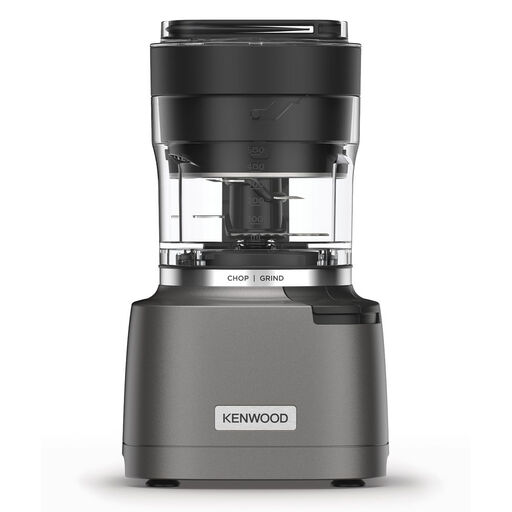
Why it suits this profile: This model combines a chopper and a separate grinding function in one stackable appliance. It’s a good fit if you switch between chopping everyday ingredients and grinding herbs, coffee or hard ingredients.
The two functions are clearly divided between a chopping bowl and a grinding cup. According to the product description, the parts can be stored inside the appliance.
800 W power, two speeds, a 500 ml capacity and dishwasher-safe parts according to the product description.

Why it suits this profile: The three bowls are designed for different tasks: chopping vegetables, mincing meat, and making purées or baby food.
The bowls come in three different capacities: 1.8, 2.2 and 2.5 litres. According to the product description, the appliance works in short pulses of up to 30 seconds per cycle.
350 W power, two speeds, three stainless steel bowls and a triple-curved blade system according to the product information.

Why it suits this profile: If you regularly make fruit and vegetable juice, this dedicated slow juicer comes with a juice jug and a pulp container.
The product description states a maximum running time of 10 minutes, a 20-minute rest period and clear restrictions, including for ice and frozen fruit.
150 W power, a juice jug with measurements up to 600 ml, an 836 ml pulp container and detachable parts.
We’ve put together a complete, up-to-date list of products that meet these strict selection criteria and the applicable European safety regulations.
It depends on the portions you make and the tasks you need it for. A 500 to 600 ml chopper is practical for sauces, herbs and small quantities. A food processor with a bowl of around 1.2 litres or more is a better fit for a family. If you mainly make smoothies, you’re more likely to need a blender or smoothie maker than a full-sized food processor.
Its lifespan depends on the materials, strain on the motor, cleaning and whether you follow the instructions. Let the motor cool down when advised, and don’t process ingredients the model isn’t designed to handle. Check the blades, seals, bowl and lock regularly for signs of wear.
Energy use depends on the power rating and how long you use the appliance for. A 600 W appliance running for a few minutes won’t use the same amount of energy as one that runs for a long time. Short pulses and choosing the right capacity can help you avoid running it for longer than necessary. So don’t just look at the wattage; consider what you’ll be using the appliance to prepare too.
