
Vandaag of morgen in huis

Kwaliteit gegarandeerd

Welkomstaanbiedingen ontgrendelen: GRATIS bezorging | Tot 80% korting | Gratis 30 dagen JoyPlus-proefperiode
Download de app
A food processor can take care of much of the preparation: slicing vegetables, grating cheese, grinding nuts, blending sauces and kneading dough. Yet many people buy an appliance that, after a few weeks, mainly takes up space in a kitchen cupboard. The issue is usually not the brand, but an incorrect assessment of the functions, capacity and cleaning involved.
This buying guide helps home cooks, families, baking enthusiasts and meal preppers choose a food processor based on verifiable product specifications.
A 1000-watt food processor sounds powerful, but wattage does not automatically indicate how well the appliance handles heavy dough, hard vegetables or frozen fruit. The blade design, transmission, bowl capacity and recommended operating time also play a part.
It is therefore worth considering the combination of:
A powerful 1000-watt food processor can be useful for regular chopping and blending, but always check the manual before processing heavy dough or large quantities.
A multifunctional food processor is only versatile if the right accessories are actually included. For example, an appliance may blend and chop but have no slicing or grating function. A stand mixer for dough often has a mixing bowl and dough hook, while a compact food processor focuses mainly on blades and discs.
Before buying, check whether you need:
Accessories available only as optional extras can increase the final cost.
Multiple bowls, blades and slicing discs offer more possibilities, but also take up more space. Check whether the parts can be removed, whether they are dishwasher-safe and how sharp blades can be stored safely. An appliance used every day should be easy to assemble and clean.
Also consider the size. A 5.5-litre bowl is practical for families and larger batches of dough, but takes up more room than a compact bowl of around 1.8 to 3 litres.
For everyday chopping, grating and blending, multiple speeds and a pulse setting are practical. For dough, a stable base, a suitable dough hook and a clearly stated maximum capacity are particularly important. For the Series 7000 Kitchen Machine HR7962/21, Philips lists a 1000-watt motor, eight speeds and a 5.5-litre bowl.
According to Philips’ product description, the machine features ProKnead technology and the HomeID app can provide recipe guidance. These are brand claims, not an independent guarantee of a particular result. Use the quantities and settings specified in the manual as your starting point.
Do not look only at the capacity stated on the packaging, but also at the usable quantity. A 1.5-litre blender jug is suitable for several portions of soup, sauce or smoothies, while a 700 ml cup is better suited to a single drink to take with you.
A larger chopping bowl is useful for meal prepping, but large quantities may sometimes need to be processed in batches. For the MUM 54251, Bosch specifies a 3.9-litre stainless steel bowl and accessories for blending, grinding, juicing citrus fruit and slicing vegetables, among other functions.
Stainless steel is commonly used for bowls and blades because of its resistance to stains and odours. Plastic bowls can be lighter. Check whether plastic parts are suitable for food contact and follow the cleaning instructions.
Important safety features include a lid lock, stable non-slip feet and overheat protection. Unplug the appliance before changing accessories or cleaning it. Blades and slicing discs are sharp and should be kept out of children’s reach.
For the products mentioned, a statutory warranty of at least two years under EU consumer law is stated. The exact rights may depend on the circumstances and the applicable national regulations.
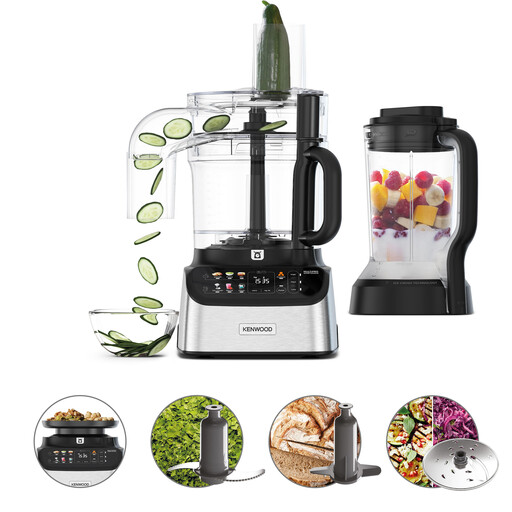
Why it suits this profile: A practical choice for anyone wanting to chop, slice, grate, knead and blend with one appliance rather than buying several separate devices.
The included functions are clearly specified: a 1.5-litre blender, a 2-in-1 slicing and grating disc, a dough hook and integrated scales.
1000 watts, six automatic programmes, a 3-litre bowl and a pulse setting.
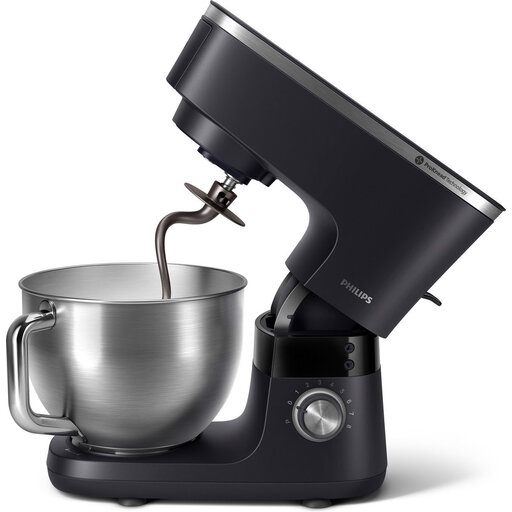
Why it suits this profile: Well suited to families and baking enthusiasts primarily looking for a spacious stand mixer for dough, while also wanting to prepare smoothies, sauces and mince.
The capacity and accessories are specified: 5.5-litre bowl, 1.5-litre glass blender and meat grinder. This makes it clearer what the appliance is designed for.
1000 watts, eight speeds, splash guard, smart timer and automatic bowl lighting.

Why it suits this profile: Suitable for anyone looking for a stand mixer with multiple attachments for dough, vegetables, smoothies, juice and ground ingredients.
The set includes several specific attachments, including a meat grinder, blender, citrus juicer, vegetable slicer and three grating discs. Check the current power specification in the product details before buying.
3.9-litre stainless steel bowl, various attachments and a stated dough capacity of up to 2.7 kg.
We have put together a complete, up-to-date list of products that fully meet these strict selection criteria and the applicable European safety regulations.
Choose a food processor if you mainly chop vegetables, slice onions, grate cheese, make dips or prepare smoothies. A stand mixer makes more sense when kneading dough and preparing larger mixtures are your priorities. If you need both functions, look for a food processor with blender or a stand mixer with blender attachment.
A food processor for smoothies should have more than just a blender jug. Also check whether the manufacturer allows ice, frozen fruit or hard ingredients to be processed. According to Ninja’s own information, the BN750EU has a 1200-watt motor, a 2.1-litre jug, a 700 ml cup and automatic Auto-iQ programmes. This information comes from the brand’s product description.
Some models are. Choose an appliance with a dough hook, sturdy mixing bowl and clearly stated maximum dough capacity. For regular bread dough, a stand mixer is often more practical than a compact food processor.
Its lifespan depends on how it is used, cleaned and stored, as well as whether the maximum quantities are observed. Allow the motor to cool down after heavy preparations, do not use damaged blades and prevent liquid from entering the motor base.
Consumption depends on the wattage and operating time. A 1000-watt motor only uses a maximum of approximately 1 kilowatt-hour per hour while running; for short preparations, actual consumption is lower. To calculate the current cost, check your own electricity tariff and usage frequency.
