
Vandaag of morgen in huis

Kwaliteit gegarandeerd

Welkomstaanbiedingen ontgrendelen: GRATIS bezorging | Tot 80% korting | Gratis 30 dagen JoyPlus-proefperiode
Download de app
A food processor can take care of a great deal of the preparation for you. Even so, it is easy to buy an appliance that ends up unused in a kitchen cupboard after a few weeks. A large number of accessories, a high wattage or a spacious mixing bowl do not automatically mean that a model is right for your recipes and kitchen.
Pay particular attention to these three common pitfalls:
Confusing wattage with capacity
A 1,300-watt motor sounds powerful, but it does not tell you how much dough, vegetables or liquid you can safely process at once. Always check the stated maximum capacity.
Counting accessories without checking compatibility
A food processor with a blender, chopper or meat grinder is only versatile if the accessories are actually included. With some models, extras are optional or only suitable for a particular attachment point.
Mistaking bowl capacity for usable capacity
A 6-litre mixing bowl may seem spacious, but you cannot always fill it completely. Look for separate specifications for flour, dough, dry ingredients and liquids.
A stand mixer is mainly designed for whisking, mixing and kneading. This type suits home bakers who regularly make bread, cakes, pizza dough or pasta dough. A food processor is more focused on chopping, slicing, grating, puréeing and sometimes kneading. A multifunctional food processor often combines these functions with additional accessories.
If you want one appliance for smoothies, sauces, mince and dough, look for a food processor with blender or a food processor with meat grinder. For everyday slicing and chopping, a compact food processor with a chopper may be more practical than a large model with lots of parts.
The stated power is expressed in watts. This is a useful indication, but it does not provide a complete measure of performance. Also consider:
The AUCMA Stand Mixer, for example, is listed with a 450W pure-copper DC motor, six speeds and a pulse function. The manufacturer also states that the appliance should not be used continuously for more than six minutes without a break. This makes the machine suitable for normal home preparation, but not automatically for prolonged professional use.
A food processor with mixing bowl should suit both the size of your portions and your kitchen worktop. A 5- to 6-litre bowl is useful for larger quantities of batter or dough, but also check the appliance’s dimensions and the space above the worktop.
Consider the following:
A large bowl does not prevent ingredients from sticking to the sides. A planetary mixing action or a well-fitting whisk can help with this, but always check the manual for the correct quantity.
A food processor with accessories can combine functions such as kneading, whisking, slicing, grating, blending and grinding. Only choose functions you will actually use. Every additional component requires storage space and cleaning.
Also check:
A CE marking is an important product designation within the European market, but you should also check the full product specifications, safety instructions and warranty terms.
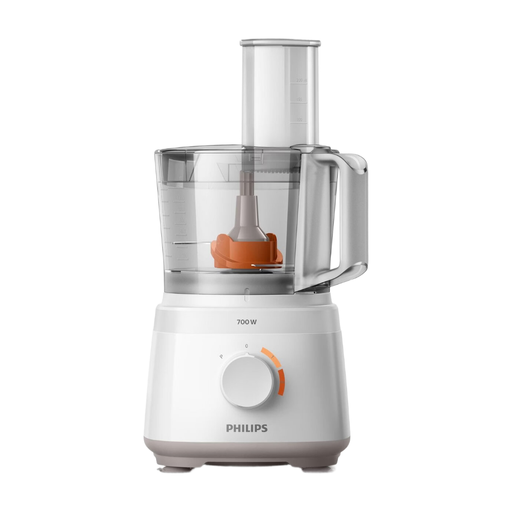
Why it suits this profile: This compact model is designed for everyday preparation and takes up less space than a large stand mixer.
The functions and included parts are clearly described. The 1.5-litre bowl, 700 watts and 19 functions make its intended capacity easier to assess.
700W motor, kneading attachment, reversible disc, non-slip feet and parts that, according to the product information, can go in the dishwasher.

Why it suits this profile: The combination of a 6-litre stainless-steel bowl, dough hook, whisk and beater is well suited to cakes, bread, pizza and pastries.
The product information specifies the bowl capacity, six speeds, pulse function and maximum operating time. This allows you to match the appliance more realistically to your baking routine.
6+1 speeds, tilting head, splash guard and non-slip suction cups. According to the product specification, the stated noise level is between 68 and 72 dB at one metre.
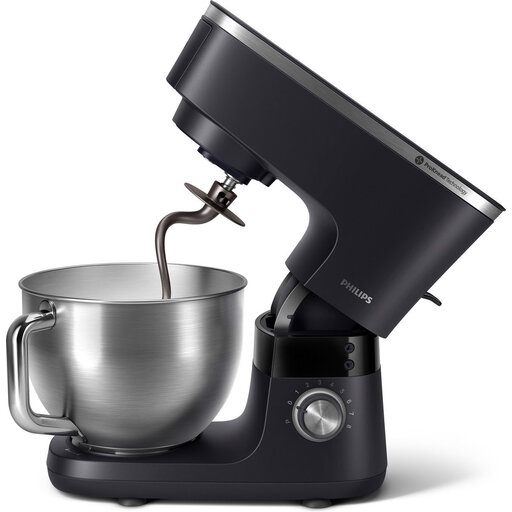
Why it suits this profile: This model combines baking with blending and grinding for households looking for several functions in one appliance.
The blender and meat grinder are listed as included accessories. This means you do not need to buy a second appliance for these functions.
1000W power, 5.5-litre bowl, eight speeds, 1.5-litre glass blender and a meat grinder attachment.
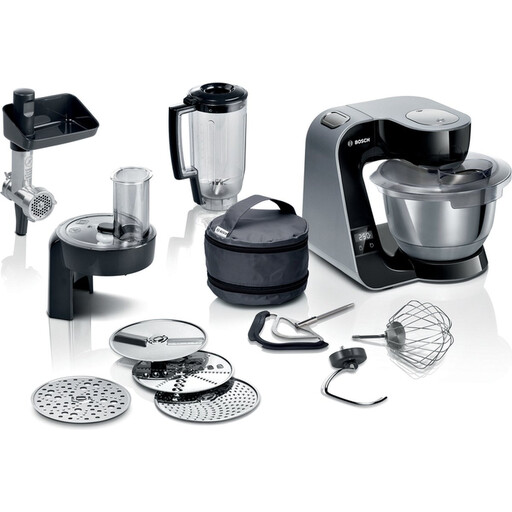
Why it suits this profile: The included blender, slicing and grating discs and dough hooks are well suited to households that regularly prepare a variety of dishes.
The functions are not merely mentioned as marketing terms: the product specification lists specific accessories, a 3.9-litre bowl and multiple speeds.
1000W power, built-in scales, ice-crushing function, blender and accessories for kneading, slicing and grating.
We have put together a complete, up-to-date list of products that fully meet these strict selection criteria and the applicable European safety regulations.
Yes, provided the model has a dough hook and the manufacturer specifies a suitable maximum quantity. A food processor used for dough should stand firmly on the worktop and must not be used beyond the recommended operating time. When working with heavy dough, start at a low speed and follow the instructions.
That depends on the intended use. A lower power rating may be sufficient for chopping and light mixing tasks. For regular kneading, blending or grinding, models with around 900 to 1,300 watts are often available. Alongside wattage, always consider bowl capacity, accessories, maximum quantities and overheating protection.
Power consumption depends on the wattage and how long the appliance is used. A 1,000-watt appliance theoretically uses 1 kWh when running continuously for one hour, but food processors usually operate for shorter periods. Pulse use and short preparation times help to limit consumption. Unplug the appliance after use and allow the motor to cool down according to the instructions.
By listing your regular recipes, available space and preferred accessories first, comparing food processors becomes much easier. This way, you mainly pay for functions you will actually use in your Dutch kitchen.
