
Vandaag of morgen in huis

Kwaliteit gegarandeerd

Welkomstaanbiedingen ontgrendelen: GRATIS bezorging | Tot 80% korting | Gratis 30 dagen JoyPlus-proefperiode
Download de app
Buying a food processor may seem straightforward, until you start comparing motor power, bowl capacity and accessories. A compact mini chopper can be ideal for onions and herbs, but may not be up to kneading dough or processing large quantities of vegetables. On the other hand, a large food processor takes up more space than you need for everyday use.
When comparing models, don’t focus only on the number of functions listed on the packaging. These three common pitfalls can leave you with an appliance you rarely use:
For chopping, slicing and grating, a motor of around 600 to 800 watts is enough for many everyday kitchen tasks, depending on the ingredients and the recommended running time. If you regularly process heavy dough, hard vegetables or large quantities, consider a more powerful model with suitable overload protection.
A 1000-watt food processor may be worth considering for more intensive use, but also compare:
A pulse setting gives you more control when chopping ingredients coarsely. It’s useful for nuts, herbs or vegetables that you don’t want to chop too finely.
A 1.3 to 1.5-litre bowl is a good fit for one-person households, small portions and limited worktop space. For families or meal preppers, a capacity of around 2 to 3 litres is often more practical. A larger bowl does, however, take up more cupboard space.
Look at the dimensions as well as the capacity. A compact food processor should not only fit on your worktop, but also be easy to move. So check its height if you plan to keep it under your kitchen cabinets. Integrated cord storage and accessories that fit inside the bowl help keep loose parts out of your kitchen drawer.
A multifunctional food processor can combine several appliances. Look for features such as:
A food processor for chopping, slicing and grating is a practical starting point for many households. A food processor with a blender is a good option if you also want to make smoothies, sauces or soups. If you plan to make bread or pizza dough, look specifically for a food processor with a dough hook or a food mixer with a mixing bowl.
Also check which parts are dishwasher-safe. Never immerse the motor base in water. Blades and slicing discs are sharp, so unplug the appliance before changing or cleaning any accessories.

Why it suits this user: This model combines a 2.3-litre bowl with 800 watts of power. Its compact design is made for everyday chopping, mixing, slicing and grating.
The specifications clearly list two speeds and a pulse function. You can see exactly what controls are available before you buy, without paying for a vague number of programmes.
2.3-litre capacity; 800 watts; compact dimensions of 397 × 263 × 369 mm; pulse setting.
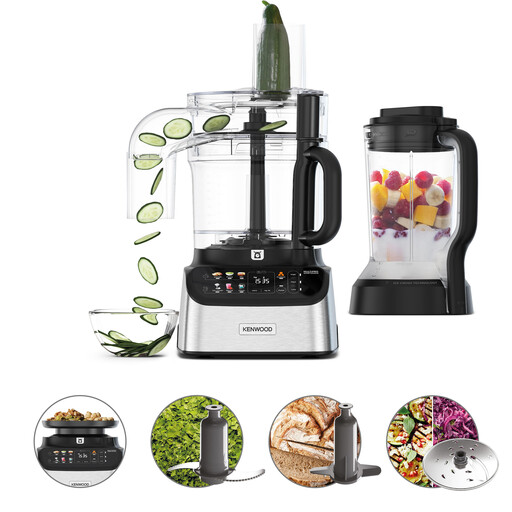
Why it suits this user: This is a good option if you want one appliance for a range of tasks, including weighing, mixing, kneading, chopping, grating and blending.
The accessories are clearly specified: a 1.5-litre blender jug, dough hook and slicing and grating attachment. Do check beforehand that you’ll actually use these parts.
1000 watts; integrated scales; six pre-set programmes; 3-litre bowl.
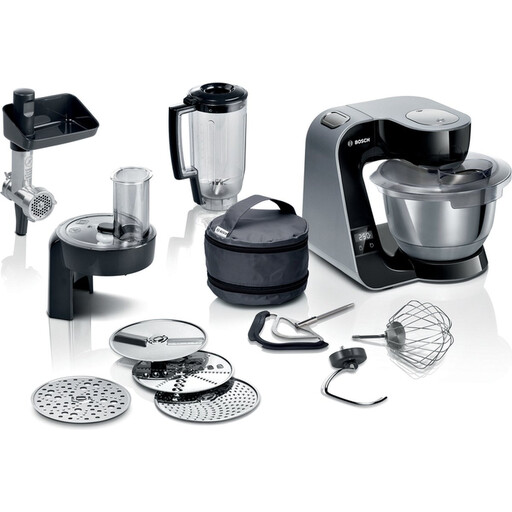
Why it suits this user: With the included dough hooks, whisk, blender and slicing and grating discs, this model is a good choice if you want one food processor for a wide range of tasks.
The accessories are designed for different tasks, rather than simply adding to a long list of functions. Check the dimensions and weight before you buy to avoid choosing a model that’s too large for a small kitchen.
1000 watts according to the product specifications; 3.9-litre bowl; built-in scales; dough hooks and blender included.
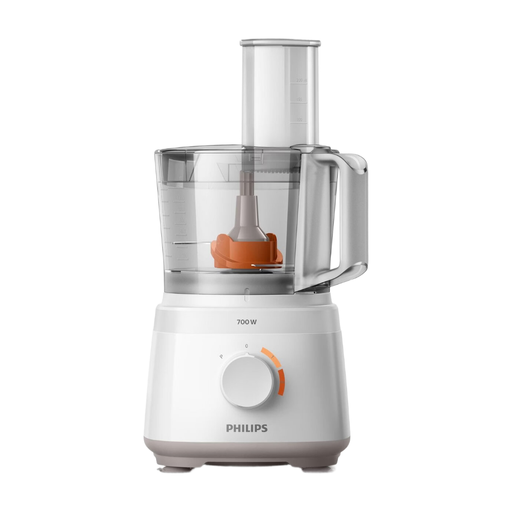
Why it suits this user: Its compact design, 1.5-litre bowl and accessory storage make it a good fit for smaller households and kitchens with limited space.
The product specifications list 19 functions and explain which accessories are included. This makes it easier to decide whether the model suits the recipes you make regularly.
700 watts; 1.5-litre bowl; 19 listed functions; dishwasher-safe removable parts; overheating protection according to the product specifications.
We’ve put together a complete, up-to-date list of products that meet these strict selection criteria and current European safety requirements.
Use these points to compare models fairly:
When looking at performance claims, check where they come from. A brand may cite a particular speed or result based on its own tests, for example. Don’t assume this is guaranteed for every kitchen or ingredient.
For everyday chopping, slicing and grating, a model between 600 and 800 watts is often enough. A more powerful model may be a better choice for heavy dough, large quantities or more intensive use. Always consider the bowl capacity, accessories and maximum running time too.
Not quite. A food processor is generally designed for chopping, slicing, grating and mixing. A food mixer for home use often has a mixing bowl, whisk and dough hook, making it better suited to kneading and mixing. Some multifunctional models combine both types of function.
Energy use depends on the appliance’s power and how long you use it. An 800-watt appliance running for five minutes would theoretically use around 0.067 kWh. In practice, food processors usually run for less time, often in short pulses. The purchase price and the cost of replacement accessories are therefore often more significant than the electricity used.
