
Vandaag of morgen in huis

Kwaliteit gegarandeerd

Welkomstaanbiedingen ontgrendelen: GRATIS bezorging | Tot 80% korting | Gratis 30 dagen JoyPlus-proefperiode
Download de app
A food processor can knead dough, slice vegetables, chop ingredients and make smoothies. But a long list of attachments doesn’t necessarily mean you’ll use the appliance often. Some models take up a lot of space, while others have a powerful blender function but are less suited to heavy dough.
So don’t focus only on wattage or the number of accessories included. Think about the tasks you do each week, the bowl capacity and how easy the appliance is to clean.
A 1000-watt food processor sounds powerful, but wattage doesn’t tell you everything about performance. Check whether the power is listed as rated power or peak power. For example, the Monsga SM100 is listed as having 1000 watts of peak power, alongside 600 watts of rated power. This difference matters when you’re working with heavy dough or using the appliance for a long time.
A 5 or 6-litre bowl may look spacious, but you can’t always fill it to the brim. The maximum amount of dough you can make may be less than the bowl’s total capacity. Also consider the space on your worktop: a stand mixer with a tilt-head needs room for you to change attachments.
A food processor with a blender, citrus press, meat grinder and several slicing discs is versatile, but each attachment needs to be stored and cleaned. Before you buy, check:
For smoothies, sauces and soft ingredients, a less powerful blender or hand blender may be enough. A more powerful motor is useful for ice, frozen fruit or fibrous ingredients. According to its product specifications, the Ninja BN750EU has a 1200-watt motor, a 2.1-litre jug and a 700 ml cup.
A food processor uses different attachments from a blender. Slicing discs and chopping blades are more important for vegetables, nuts and dough-like mixtures. A stand mixer is mainly designed for kneading, mixing and whisking. So consider the combination of power, overload protection and recommended operating time.
A compact blender jug or mixing cup can be handy if you’re cooking for one or two people. Families often benefit more from a 4 to 5.5-litre bowl. The Philips Series 7000 HR7962/21 has a 5.5-litre bowl and comes with a 1.5-litre glass blender attachment.
Bear in mind the difference between:
Stainless steel is commonly used for bowls and blades. Plastic bowls can be lighter, but check that they’re suitable for how you plan to use them. According to the model’s product specifications, a glass blender jug may be suitable for hot and cold preparations. Always follow the instructions, especially when handling hot liquids.
Key things to check include:
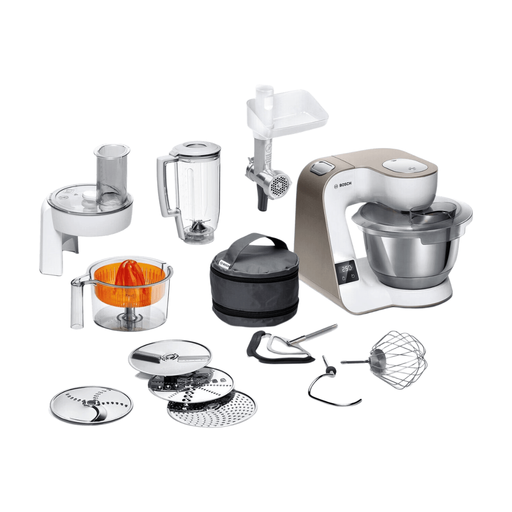
Why it suits this type of user: This model combines a food mixer with a blender jug and a range of accessories. It lets you get started with baking, grating, slicing and making simple smoothies without having to buy several appliances.
The specifications list 1000 watts, 7 speeds, built-in scales and a 1.25-litre blender jug. Check which accessories are included with the version you’re buying.
Built-in scales, timer, planetary action, 1.25-litre blender jug, plus dough and citrus attachments included.
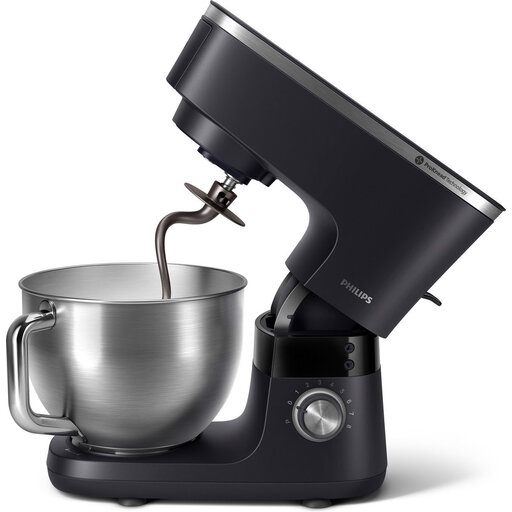
Why it suits this type of user: Ideal for home cooks and keen bakers who want one appliance for dough, batter, smoothies, sauces and minced meat preparations.
The product information lists a 5.5-litre bowl, 8 speeds, a 1.5-litre glass blender and a meat grinder. This makes its functions clearer than those of a bundle of separate attachments.
1000 watts, 5.5-litre bowl, 1.5-litre glass blender, smart timer and attachments for kneading and grinding.
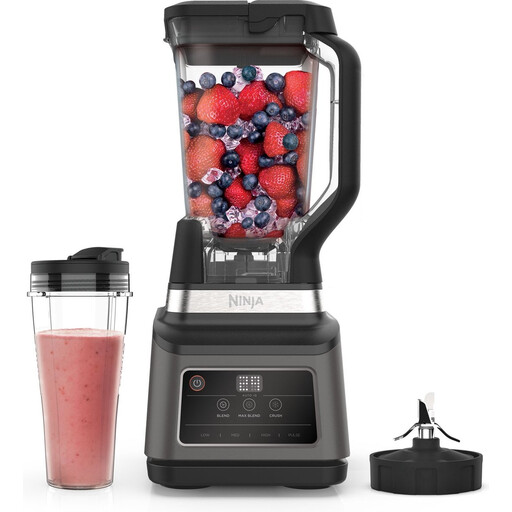
Why it suits this type of user: A practical choice if you mainly make smoothies, sauces, dips and recipes using ice or frozen fruit, and would also like a chopping function.
The set includes a 2.1-litre jug, a 700 ml cup and automatic programmes. Check the manual for fill-level markings, and don’t use hot liquids unless this is permitted.
1200 watts according to the product specifications, 4 speeds, two mixing container sizes and removable, dishwasher-safe parts.
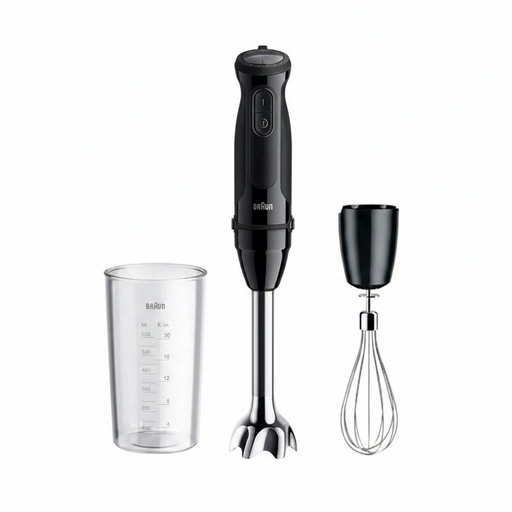
Why it suits this type of user: This hand blender is a good fit if you have limited storage space and mainly want to prepare soups, sauces, purées and small portions.
The variable speed control with 21 settings makes it easier to control the consistency than a single fixed speed. According to the safety information, the motor unit must be kept dry.
1000 watts, 21 speeds, whisk and chopping attachments, removable parts and dishwasher-safe food-contact parts.
We’ve put together a complete, up-to-date list of products that meet these strict selection criteria and the applicable European safety regulations.
It depends on how you’ll use it. For smoothies, batter and chopping, 1000 watts is often a practical specification. For heavy bread dough, the gearing, mixing action, maximum dough capacity and operating time are also important. So compare the rated power with the stated peak power.
A food processor is suitable for chopping, slicing, grating and sometimes kneading. A blender is mainly used for liquid or soft ingredients, such as smoothies and sauces. A hand blender takes up little space and is handy for soups and small portions. Some food processors combine several functions, but they generally take up more room.
Its lifespan depends on the build quality, how heavily it’s used, how well it’s maintained and how it’s stored. Use the appliance within its stated capacity, let the motor cool down and clean the blades and accessories according to the manual. Before buying, also check the warranty terms and whether replacement parts are available.
