
Vandaag of morgen in huis

Kwaliteit gegarandeerd

Welkomstaanbiedingen ontgrendelen: GRATIS bezorging | Tot 80% korting | Gratis 30 dagen JoyPlus-proefperiode
Download de app
A food processor can chop, slice, grate, mix, blend and sometimes even knead or grind. That sounds handy, but the differences between appliances are significant. A compact chopper isn't automatically suitable for dough, while a large kitchen machine with attachments might take up too much space for everyday use.
So, look out for these common pitfalls before you make a purchase:
The stated motor power is given in watts. A food processor for everyday use with 400 to 600 watts can be suitable for herbs, onions, nuts and smaller portions. For heavy dough, large quantities or hard ingredients, a more powerful model may be more practical.
Also look at the number of speeds and whether there's a pulse function. A pulse setting gives you more control over the texture of things like salsa, vegetables or mince. Check the instruction manual too: some models can only run for short periods at a time and need to cool down afterwards.
The product description for the ochama Food Processor 750W, for example, recommends short pulses and a maximum of 60 seconds of continuous blending, followed by a cooling period under heavy load. That's relevant information that isn't obvious from the wattage alone.
A small chopper is handy for garlic, herbs, nuts and small amounts of vegetables. For a family, 1 to 2 litres is often more practical. If you want to knead dough, you'll usually need a sturdy mixing bowl and a suitable dough hook.
Pay attention to the difference between:
A food processor with blender is particularly interesting if you want to prepare both solid ingredients and smoothies, sauces or soups. Do check whether it's a proper blender jug or just a mixing beaker.
Check what each attachment is suitable for. A vegetable chopper with slicing and grating discs has different capabilities from a stick blender with a small chopping beaker. A food processor with meat grinder can be handy for mince or sausages, but requires extra attention to assembly and cleaning.
Important points to check are:
Blades and slicing discs are sharp. Always unplug the appliance before changing or cleaning attachments. Do not process boiling liquids in appliances where the manual prohibits this.
The selection below links specific product specifications to different usage scenarios. Always check the current product page, included parts and compatibility before purchasing.
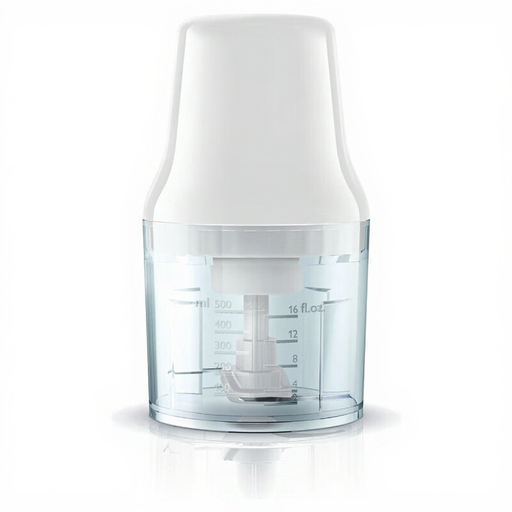
Why this suits the profile: This compact model is designed for simple chopping tasks like vegetables, herbs and nuts. The usable capacity of 0.5 litres is ideal for small portions and limited kitchen space.
The capacity is specified as 0.7 litres with a usable volume of 0.5 litres. This makes it clearer exactly how much you can actually process at one time.
450 W motor, stainless steel blade, press operation and dishwasher-safe attachments according to the product description.
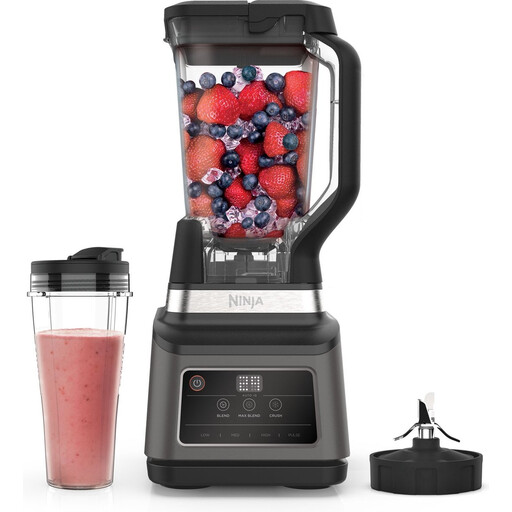
Why this suits the profile: If you want to make smoothies, sauces or crushed ice as well as chopping, you get a large jug and a smaller beaker in one system.
The product information separately lists a 2.1-litre jug and a 700 ml beaker. The automatic programmes are in addition to manual settings, not just a list of attachments.
1200 W according to the product description, four speeds and dishwasher-safe removable parts.

Why this suits the profile: This model is designed for households that combine multiple preparations: kneading, slicing, blending, juicing and grinding with various attachments.
The attachments are specifically named: meat grinder, blender, citrus press, vegetable slicer, grating discs and dough functions. Note the conflicting power ratings: the description states 900 W, while the specifications indicate 450 watts.
Stainless steel bowl of 3.9 litres and multiple functions. The product information states a capacity of up to 2.7 kg of kneaded dough.
We've put together a full, up-to-date list of products that fully meet these strict selection criteria and current European safety regulations.
No. A blender is primarily designed for liquids, smoothies, sauces and soft or frozen ingredients. A food processor is generally better suited to chopping, grating, slicing and mixing solid ingredients. A combination model can offer both functions, but check which bowl and blades are intended for each.
The lifespan depends on usage, maintenance and load. Use the appliance within its maximum capacity and recommended usage time. Let the motor cool down when the manual advises it. Check blades, locking mechanisms and the cable regularly for wear. The statutory warranty and any manufacturer's warranty are stated per product; for the models mentioned, this is 2 years.
The electricity consumption depends on the power and running time. A 500-watt appliance running for 5 minutes theoretically uses about 0.042 kWh. In practice, chopping and blending tasks are often shorter. So the biggest cost differences usually come not from electricity usage, but from the purchase price, replacement attachments and whether you genuinely use one appliance for multiple tasks.
