
Vandaag of morgen in huis

Kwaliteit gegarandeerd

Welkomstaanbiedingen ontgrendelen: GRATIS bezorging | Tot 80% korting | Gratis 30 dagen JoyPlus-proefperiode
Download de app
A food processor can chop vegetables, mix sauces, knead dough or mince meat. But a long list of functions doesn’t automatically make it a good buy. For a small household, a compact food processor may be more useful than a large appliance with accessories you’ll rarely use.
Focus on the bowl capacity, power, included attachments and how easy the appliance is to clean. Below, we’ll look at common pitfalls that are easy to overlook and the models that suit different needs.
A high wattage sounds appealing, but it doesn’t tell you everything about the results. The shape of the blades, bowl capacity, speed settings and maximum operating time are just as relevant. An electric chopper with 300 or 350 watts may be suitable for small portions of soft vegetables, while heavier dough or larger quantities call for greater capacity and power.
Also check whether the stated power is the maximum or continuous power. These figures aren’t always directly comparable.
A food processor with a large bowl can be handy for a family, but the stated capacity isn’t always the maximum amount you can process safely. For example, the Philips Avance HR7776/90 has a 3.4-litre bowl, while the product information gives a maximum capacity of 2.4 litres for dry or liquid ingredients.
For one person or a small household, a mini food processor with a capacity of 0.4 to 0.9 litres may be more practical. You’ll have fewer leftovers and less washing up.
A food processor with accessories may seem versatile, but every attachment needs to be stored, cleaned and assembled. Before you buy, consider whether you really need a mincer, citrus press, blender, dough hook or grater. If you’ll mainly use the appliance to chop vegetables, you don’t need an extensive set with dozens of functions.
Also check which parts are listed as dishwasher-safe in the product information. Always consult the manual for details of the specific parts and temperature settings.
Power is one of the key specifications to consider for chopping, puréeing and mixing. The models in this selection range from 300 watts to 1300 watts. A higher stated wattage may suit larger quantities or heavier preparations, but always follow the recommended portions and rest periods in the manual.
A pulse button gives you short bursts of power. This is useful when you want to control the texture of onions, nuts, meat or vegetables yourself. For sauces and smoothies, multiple speed settings or a dedicated blender function may be more practical.
Choose the capacity to suit the portions you usually prepare:
Measure the available space, too. As well as the width and depth, check the height, particularly if you need the appliance to fit under kitchen cupboards.
Stainless steel blades are commonly used for chopping and slicing. Check whether the appliance comes with one blade or several slicing and grating discs. A food processor used for baby food should be easy to take apart and clean thoroughly after use. Ideally, don’t process raw meat and cooked food without first cleaning all suitable parts.
If the bowl is made of glass, check the temperature limits. For example, the Bear QSJ-D03Q1 comes with two glass bowls, but the product information states that the bowl and lid are not heat-resistant and must not be used in a microwave.
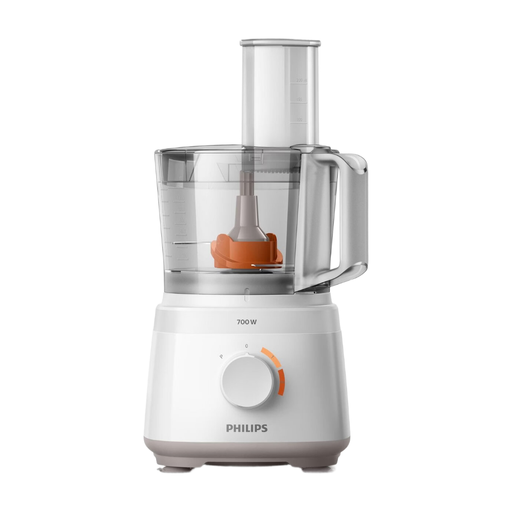
Why it suits this type of user: Its compact design, 1.5-litre bowl and 700-watt motor make it a good fit for everyday chopping, puréeing, grating and kneading, without taking up space on your worktop with a large appliance.
The product information lists 19 functions and storage space for accessories inside the bowl, helping to keep loose parts from taking up extra room.
700 watts, 1.5-litre capacity, reversible disc, kneading attachment and dishwasher-safe removable parts according to the product description.
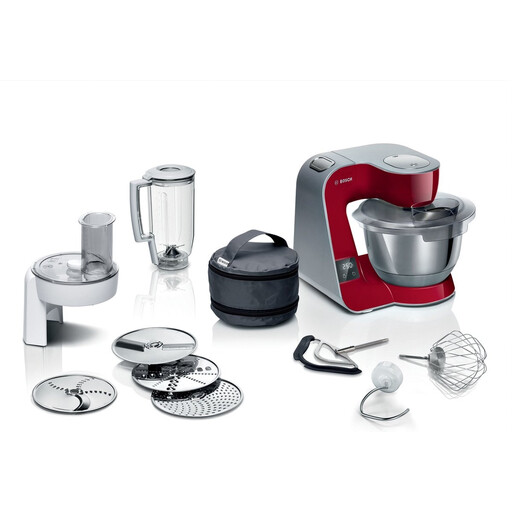
Why it suits this type of user: This model is designed for larger preparations and baking, with a 3.9-litre stainless steel bowl and a 1000-watt motor.
The bowl and built-in scales make the product specifications clearer for anyone who often follows recipes and works with precise quantities.
3.9-litre bowl, 1000 watts, built-in timer and scales, plus accessories for tasks including kneading and whisking.
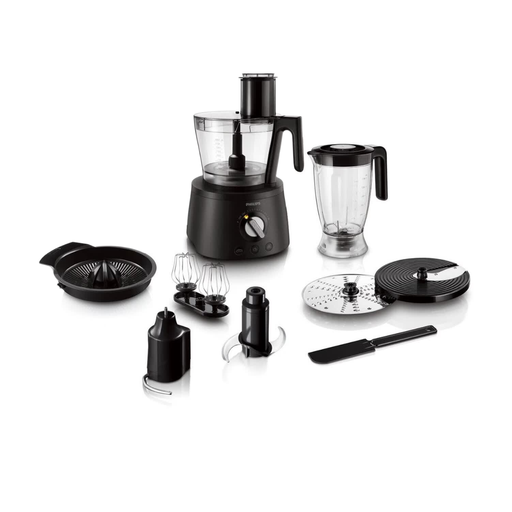
Why it suits this type of user: If you often prepare a variety of dishes, this model combines chopping, slicing, kneading, whisking and juicing.
The maximum filling quantities are listed separately: 2.4 litres for dry or liquid ingredients and 1000 grams of flour.
1300 watts, 3.4-litre bowl, 12 speeds plus pulse, and accessories including a dough hook, whisk, citrus press and slicing discs.

Why it suits this type of user: This is a blender and food processor in one, with a 1.3-litre bowl and a 600 ml personal blender with a drinking lid.
The functions and included attachments are clearly listed, so you can decide whether the blender function really suits your needs.
900 watts, 7 speed settings, and chopping, slicing, grating, puréeing, kneading, blending and ice crushing according to the product description.
We’ve put together a complete, up-to-date list of products that meet these strict selection criteria and the applicable European safety regulations.
Yes, a compact food processor can purée cooked vegetables, fruit and other suitable ingredients. A model such as the BC Babycare mini food processor has a 10 fluid ounce bowl, which is approximately 0.3 litres, according to the product information. That makes it suitable for small portions. Always check the age guidance, temperature limits and cleaning instructions.
Its lifespan depends on how you use, maintain and store it, and whether you follow the maximum operating time. Let the motor cool down when instructed in the manual, use the right quantity of ingredients and check the blades and fittings regularly. In the EU, consumers are generally entitled to a minimum two-year legal guarantee, as well as any additional rights under the applicable rules.
Energy use depends on the power rating and how long you use the appliance. A 700-watt appliance running for a few minutes uses less energy than the same appliance running for a long time under a heavy load. Using the pulse setting and chopping ingredients into smaller portions beforehand can help reduce preparation time. So don’t choose based on wattage alone: consider the bowl capacity and the tasks you’ll actually use the appliance for.
