What should you look for when choosing?
Food processor
Choose this option: if you want to mix dough and also use the appliance for chopping or slicing.
Bear in mind: a closed bowl gives you less access while mixing, and cleaning can mean extra work for a small job.
Stand mixer or hand mixer
Choose this option: if you mainly want to cream butter and sugar or regularly make light, airy cake batter.
Bear in mind: a stand mixer takes up space, and its suitability for firm biscuit dough depends on the model and attachment. The Dutch Consumers' Association reports that a stand mixer costs more on average than a food processor.
Mix by hand
Choose this option: if you’re making one modest batch and don’t want to store another appliance.
Bear in mind: you’ll do the mixing yourself, but won’t have any machine parts to clean.
Start by checking the right blade and the dough limit, then weigh up batch size against storage space and cleaning.
| What to consider |
What should you check? |
Who is this important for? |
| Suitable blade and mixing |
Check whether the exact model has a dough blade or another attachment that the manufacturer says is suitable. Follow your recipe’s order of steps and mixing time. |
I want butter, flour and sugar to come together with the right attachment, without assuming a blade designed for another task will do the job. Around 31% of consumers put dough suitability first. |
| Purchase cost and use |
Weigh up the purchase price against how often you’ll use the appliance and which supplied features you really need; consider mixing by hand or using a mixer you already own. |
If the appliance is mainly for one bring-and-share, I want to avoid paying for features I’ll hardly use. Around 25% of consumers put cost first. |
| Dough capacity per batch |
Work out the weight of your recipe and compare it with the stated limit for the exact model. Bosch lists a maximum dough capacity of 0.8 kg for the MCM3501M; that limit doesn’t automatically apply to other models or types of dough. |
If I’m baking for several guests, I want to know whether the recipe will fit in one go or whether I’ll need to make several batches. Around 25% of consumers put portion size first. |
| Storage and cleaning |
Check the dimensions, where you’ll store it and the washing instructions for each part; don’t assume everything is dishwasher-safe. |
In a shared kitchen, I want to know where the bowl and loose parts can be stored and how much washing-up there’ll be. Around 19% of consumers put space and cleaning first. |
Joybuy products
This selection includes food processors and kitchen machines. For the exact model, check that the attachment and permitted dough weight are suitable for your recipe, and review the relevant safety and food-contact information for the version on offer.
 No image available
Food processor and dough mixer, 4.5 l, 1300 W, 6+P, beige
The product name describes a food processor and dough mixer; check whether the supplied attachment is suitable for your recipe and what dough limit the manual specifies.
The product name lists a 4.5 l stainless steel bowl, 1300 W and 6+P.
View at Joybuy
 No image available
ochama food processor, 750 W, 1.8 l
The product name describes a food processor; check whether the exact model has a dough blade that the manufacturer says is suitable, and what quantity of dough is allowed.
The product name lists 750 W and a capacity of 1.8 l.
View at Joybuy
 No image available
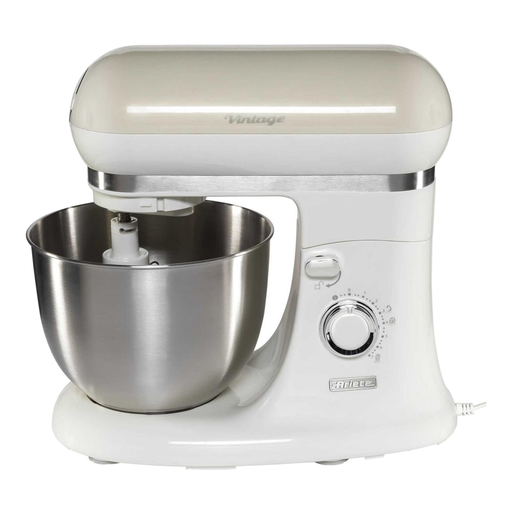
Ariete 1588/03 kitchen machine and food processor, 5 l
The product name describes a kitchen machine with a food processor; check whether the supplied attachment is suitable for firm biscuit dough and what dough limit applies.
The product name lists 1000 W, a 5 l bowl and planetary mixing action.
View at Joybuy
Frequently asked questions
Do you need a dough blade for butter biscuit dough?
Check the instructions for your exact appliance. KitchenAid uses a dough blade in its biscuit recipe, while Magimix specifies a kneading blade for a shortcrust pastry recipe. That doesn’t mean a dough blade is a universal requirement for every model.
Can you double your recipe if the bowl looks large enough?
Not without checking the dough limit. Bosch lists the MCM3501M’s 2.3 l bowl capacity and maximum dough capacity of 0.8 kg separately. Work out the weight of your recipe and make several batches if necessary.
How do you clean the food processor after mixing?
Switch off the appliance and follow the manual before removing any parts. Check the washing instructions for each part: the Dutch Consumers' Association warns that not every accessory is dishwasher-safe and that plastic parts can warp at too high a temperature.
Can guests taste raw biscuit dough?
The Netherlands Nutrition Centre advises against tasting raw dough, as raw eggs and flour can contain harmful bacteria. This is an added concern for pregnant people and those with weakened immune systems, among others; bake the biscuits according to your recipe.
What safety requirements apply to an electric food processor in the Netherlands?
The Netherlands Food and Consumer Product Safety Authority (NVWA) states that CE marking is mandatory for electrical products covered by those rules; electrical equipment within the voltage range of the Low Voltage Directive must meet the associated safety requirements. Parts intended to come into contact with food are also subject to the relevant rules for food-contact materials. Check the information for the exact version.


