A food processor can work for small batches of butter biscuit dough, provided the recommended blade or dough attachment and processing capacity are suitable for your recipe. Also measure the available width, depth and height. If you mainly want to knead for longer or whisk ingredients until light and fluffy, a stand mixer is usually more suitable, provided you have room for the appliance and space to use it.
Who is a food processor for butter biscuit dough suitable for?
Baker making small batches of biscuit dough
You want to mix butter and flour briefly without buying a machine for extended kneading. Check which blade is recommended and the quantity for each recipe; Magimix and KitchenAid describe dough attachments in their recipes and product information.
Baker with a narrow worktop
You need to be able to position, use and store the appliance. So compare its dimensions and the space needed for attachments, not just the bowl capacity. The Consumers’ Association describes food processors as narrower and taller than stand mixers.
Baker making larger batches
You’d like to mix a recipe in as few batches as possible. Compare the quantity of ingredients in your recipe with the stated processing or dough capacity; the total bowl capacity won’t tell you this on its own.
What should you look for when buying?
Compact food processor
Choose this if: you want to mix small quantities briefly and also chop or slice ingredients.
Trade-off: a small bowl may mean dividing a recipe into several batches; a food processor won’t necessarily replace extended kneading or whisking ingredients until light and fluffy.
Stand mixer with mixing bowl
Choose this if: you regularly want to mix, knead or whisk ingredients and have enough room for the appliance and space to use it.
Trade-off: the Consumers’ Association describes this type as generally more suitable for mixing, kneading and whisking; a food processor is better suited to slicing and chopping tasks.
Mix by hand
Choose this if: you only make a small batch now and then and don’t want another appliance to store.
Trade-off: you’ll do the mixing yourself; a Good Food recipe describes mixing shortbread dough by hand until it comes together.
| What to consider |
What to look for |
Who it matters most to |
| Suitability for butter biscuit dough |
Check which blade or dough attachment your recipe recommends, and follow the method and operating time in the manual. |
If I want to mix butter and flour briefly, I need to know which attachment suits my recipe. Around 36% of consumers prioritise suitability for butter biscuit dough. |
| Space on the worktop and in a cupboard |
Measure the available width, depth and height, and allow room to put the bowl in place and take it out. |
With a narrow worktop, I need to be able to position and use the appliance without blocking my workspace. Around 29% of consumers prioritise available space. |
| Recipe size and processing capacity |
Compare the ingredients in your usual recipe with the stated processing or dough capacity for that exact model. |
If I’m making a larger batch, I need to know whether it will fit in one go. Around 21% of consumers prioritise the quantity needed per mixing batch. |
| Cleaning and storing attachments |
Check the cleaning instructions for each part and see whether the attachments can be stored inside the bowl. |
After baking, I want to be able to clean and store the parts easily. For around 14% of consumers, cleaning and storage space are the most important considerations. |
Common buying mistakes
-
Confusing total bowl capacity with usable dough capacity
Total capacity and maximum processing capacity are different figures. For example, Magimix lists a total capacity of 1,7 L and a processing capacity of 600 mL for the Mini Plus; Bosch lists a 2,3 L bowl and a maximum dough capacity of 0,8 kg for the MCM3501M.
Compare your recipe with the stated processing or dough capacity for the exact model, not just the number of litres.
A lower processing capacity may mean you need to mix the dough in more batches.
-
Assuming every dough attachment is suitable for extended use
A dough setting alone doesn’t tell you how long the appliance can be used for. In one example in Kenwood’s quick-start guide, processing is limited to a maximum of 30 seconds to prevent overheating.
Follow the manual for the exact model. If you regularly knead for longer, also compare stand mixers designed for this type of use.
-
Measuring only the footprint
The appliance also needs to fit beneath any wall cupboards, with room to handle the bowl and attachments. According to the Consumers’ Association, food processors can be narrower and taller than stand mixers.
Measure the width, depth and height of the intended space, and decide where you’ll store the attachments after use.
An appliance that won’t fit under a cupboard, or whose parts don’t have a dedicated storage space, takes up extra room in your kitchen.
Brands to consider
Magimix
Magimix lists a width of 155 mm, a total bowl capacity of 1,7 L and a processing capacity of 600 mL for the Mini Plus.
- A Magimix recipe recommends the Mini Plus’s metal blade for shortcrust pastry.
- Compare the processing capacity with your recipe; the total bowl capacity doesn’t tell you how much dough you can process.
KitchenAid
KitchenAid lists a 1,7 L bowl, a multi-purpose blade and a dough blade for the 5KFP0719EBM.
- The manufacturer describes storage space for attachments inside the bowl and publishes recipes for its food processor.
- A manufacturer’s recipe isn’t an independent comparison; measure the space where you plan to put the appliance.
Bosch
Bosch lists a 2,3 L bowl, a maximum dough capacity of 0,8 kg and dimensions of 375 × 220 × 260 mm (h × w × d) for the MultiTalent 3 MCM3501M.
- The stated dough capacity and appliance width give you specific figures to compare with your recipe and worktop.
- A maximum dough capacity doesn’t prove that every butter biscuit recipe will mix in the same way.
Kenwood
Kenwood lists a 1,3 L bowl and functions for chopping, slicing, grating and processing dough for the MultiPro Go FDP22.140GY.
- Kenwood’s quick-start guide gives instructions for a sample dough preparation.
- The example instructions don’t set a standard mixing time or capacity for butter biscuit dough; check the manual for your recipe and model.
Joybuy products for preparing dough
This selection includes food processors and a stand mixer for anyone who wants to mix dough briefly. Check that the attachment and stated capacity for each model are suitable for your recipe.
 Image unavailable
ochama food processor, 750 W, 1,8 L
A compact food processor option; compare its operating time with the method in your recipe.
The product information lists a pulse function and a maximum processing time of 60 seconds per cycle, followed by a cooling period.
View at Joybuy
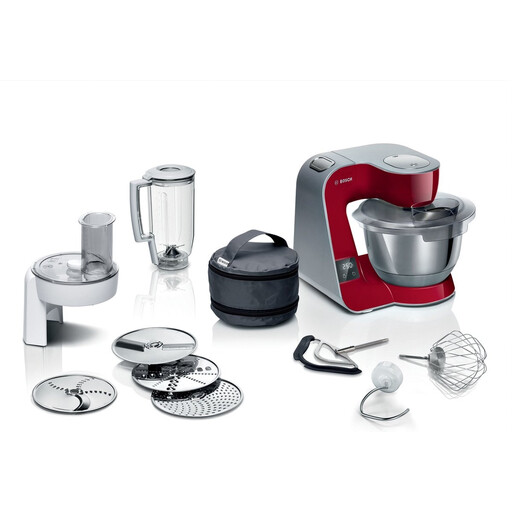 Image unavailable
Bosch MUM5X720 food processor, 1000 W, 3,9 L
An option to compare if you’re considering a larger machine for preparing dough as well as food processors.
The product description mentions kneading and quantities for cake batter and yeasted dough; check separately whether the attachment supplied is suitable for your butter biscuit recipe.
The title lists a 3,9 L bowl and an integrated scale.
View at Joybuy
 Image unavailable
Bosch MCM3200W MultiTalent 3, 800 W, 2,3 L
The product description mentions mixing and a pulse function, which you can compare with the short processing time in your recipe.
The product name lists a 2,3 L bowl; check the permitted dough capacity in the manual.
View at Joybuy
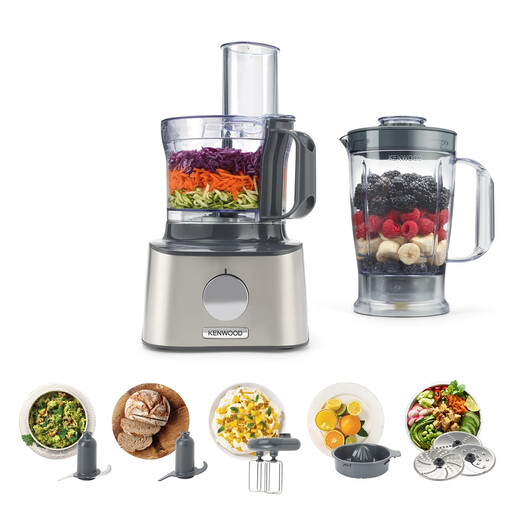 Image unavailable
Kenwood MultiPro Compact FDM301
The product description mentions kneading and a pulse function; check which attachment is right for your recipe and method.
The product description lists a 2,1 L bowl and attachments including one for kneading.
View at Joybuy
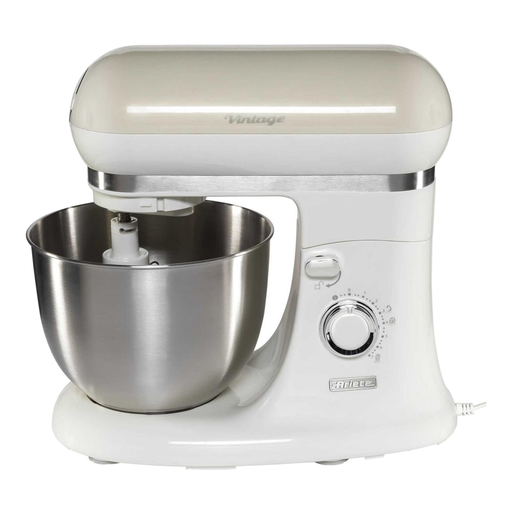 Image unavailable
Ariete 1588/03 stand mixer, 1000 W, 5 L bowl
A stand mixer to compare if you’re mainly looking for a mixing bowl and planetary mixing action; check that the available attachments are suitable for your recipe.
The product name lists a 5 L stainless steel mixing bowl and planetary mixing action.
View at Joybuy
Frequently asked questions
Can I always make butter biscuit dough in a food processor?
Not necessarily: only use a food processor as directed by the recipe and the manual for the exact model. Check which blade or dough attachment is recommended and what quantity is permitted. A stand mixer is generally more suitable for extended kneading or whisking ingredients until light and fluffy.
How can I avoid overmixing crumbly dough?
Follow the recipe and stop as soon as the dough starts to come together. Good Food recommends pulsing briefly for shortcrust pastry and warns that overworking the dough can make it tough. This isn’t a universal machine setting: also follow the operating time in the manual.
How do I compare bowl capacity with the quantity of dough?
Use the processing or dough capacity stated by the manufacturer, not just the number of litres the bowl holds. For example, Magimix lists a total capacity of 1,7 L and a processing capacity of 600 mL for the Mini Plus; Bosch lists a 2,3 L bowl and a maximum dough capacity of 0,8 kg for the MCM3501M.
What Dutch regulations apply to the machine and the bowl?
According to the Netherlands Food and Consumer Product Safety Authority, CE marking is compulsory for electrical products. Parts intended to come into contact with food must comply with the applicable rules for food contact materials. These general rules don’t in themselves confirm that a specific model complies; check the documentation for the exact model.


