
Workshop host preparing several batches
You want to grind successive batches during one workshop and are looking for a suitable bowl and a practical cleaning routine.


For dried bread, choose a food processor with a chopping blade; a pulse function lets you check the crumbs as you go. Choose a bowl size to suit your portions, but don’t assume the bowl capacity tells you how much bread it can process: check the manual for the exact model. For a few small portions, crumbling the bread by hand may be enough.
You want to grind successive batches during one workshop and are looking for a suitable bowl and a practical cleaning routine.
You want to show participants the difference between coarse and fine breadcrumbs, and need control over the chopping process, for example with a pulse function.
You’re making smaller batches and need to be able to move or put away the machine easily between uses.
Start with the chopping blade and the crumb texture you want. Then compare the bowl with your portion sizes and consider how much cleaning and storage space your workshop requires.
| What to consider | What should you check? | Who should consider this most? |
|---|---|---|
| Crumb texture | Check whether the exact model has a chopping blade and, if you want to stop and check as you go, a pulse function. | If I want participants to make coarse or fine breadcrumbs, I need to be able to check the texture step by step. Around 36% of consumers prioritise control over crumb texture. |
| Batches per run | Compare the bowl capacity and check the manual for instructions on processing dried bread. | With several participants, I want to know how much bread I can process per batch without mistaking the bowl capacity in litres for its bread capacity. Around 29% of consumers prioritise the amount processed per batch. |
| Cleaning between uses | Check which parts can be removed and how the manufacturer says to clean them. | When ingredients or participants follow one another quickly, I want to be able to clean the food-contact parts properly. Around 21% of consumers make cleaning between uses their top priority. |
| Work and storage space | Measure the space on your worktop and in your cupboard, and leave room to remove the bowl. | If space is limited, I want to be able to set the appliance up and put it away without blocking my workspace. Around 14% of consumers put limited work and storage space ahead of the other considerations. |
Bowl capacity tells you the size of the bowl, not how much dried bread you can safely process in one batch. This could lead you to plan for batches that are too large.
Use the capacity in litres to compare the physical size of the bowl, and check the manual for the exact model to find out what it can process.
If the permitted quantity is smaller, you may need to grind the bread in more batches.
According to the Consumentenbond, food processors are designed for tasks including chopping. So check which attachment comes with the specific model rather than relying on the product category alone.
Look in the product information and manual for a chopping blade suitable for the task you have in mind.
Using several bowls can help keep preparations separate, but it doesn’t replace cleaning between food preparations. If you prepare or sell food to customers as a business, the NVWA also sets out obligations relating to food safety and allergens.
Plan to clean between preparations, and check separately which hygiene and allergen rules apply to your workshop.
Allow time for cleaning and, where business rules apply, for food safety and allergen procedures.
Bosch Netherlands lists a 2.3-litre bowl, a chopping blade and a pulse function for the MultiTalent 3 MCM3501M.
Braun Household Netherlands lists a 2.1-litre bowl, a chopping blade and a pulse function for the PurEase FP 3132 BK.
Kenwood Netherlands describes the MultiPro Go FDP22.130RD as a compact model and lists a 2.1-litre bowl, a blade and a pulse function for the MultiPro Compact FDP31.170GY.
Magimix Netherlands lists three bowls of 2.6, 2.2 and 1.2 litres for the CS 3200XL.
These product options are chopping and food-preparation appliances for a range of tasks. The product information doesn’t confirm that every model is suitable for dried bread; check the manual for the exact model before using it to make breadcrumbs.
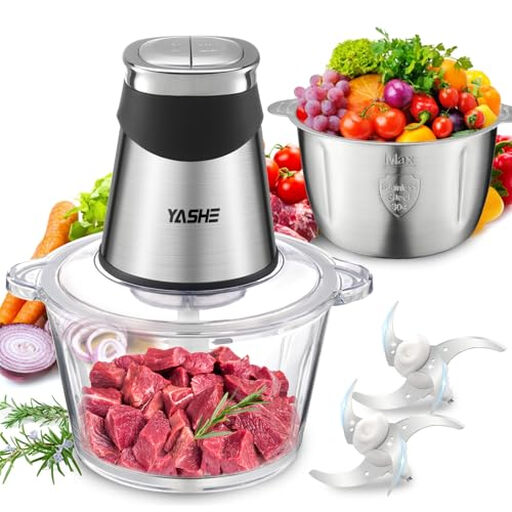 No image available
The two bowls may be useful for preparing different foods; first check whether this model can process dried bread.
1.8 and 2-litre bowls; 500 W; 2 speeds.
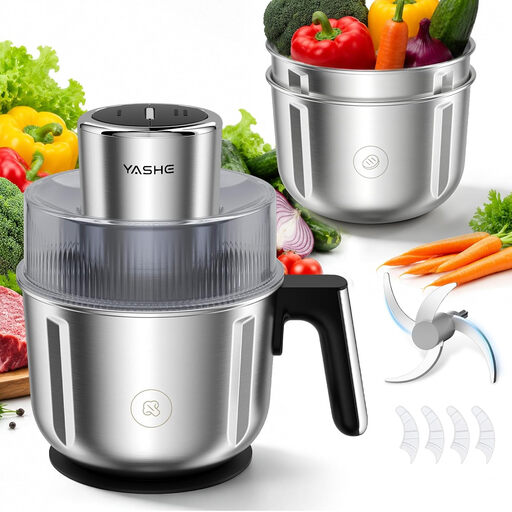 No image available
The different bowl sizes may suit preparations in several batches; check the manual to confirm whether the chopper can process dried bread.
Three bowls of 1.8, 2 and 2.5 litres; 2 speeds; magnetically attached blade.
According to the product description, the bowls can be nested for storage.
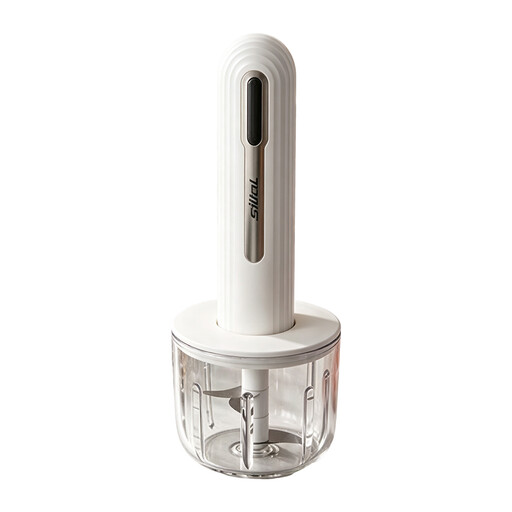 No image available
A compact chopper may be worth considering for small preparations; check whether the manual says it can grind dried bread.
Cordless operation; metal blades; removable parts.
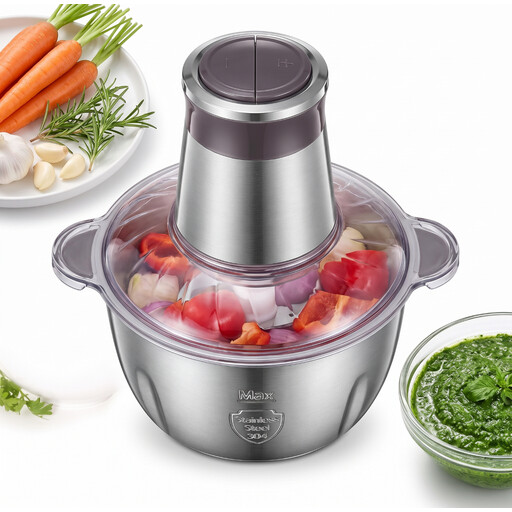 No image available
The stated bowl size can help you compare the space available; check the manual for the permitted quantity of dried bread.
350 W; 2.5-litre bowl; 2 speeds and 3 blades.
The product description specifies a stainless steel bowl.
 No image available
The product description mentions chopping and grinding; check whether the manufacturer says this model can process dried bread.
750 W; 1.8-litre capacity; removable parts.
For finely chopping bread, a food processor with a chopping blade is a sensible choice. The Consumentenbond describes a stand mixer as being mainly suited to mixing, kneading and whisking. For a small amount of dried bread that doesn’t need to be very fine, you can also crumble it by hand.
Let the bread dry out and cool completely before grinding it. Keep your hands away from the appliance and follow the manual for your chosen model when assembling, using and cleaning it.
Store them in a well-sealed container in a cool, dry, dark place, and check for any musty or rancid smell. The Voedingscentrum’s storage advice for opened, packaged breadcrumbs doesn’t automatically apply to homemade breadcrumbs, especially if you add fresh herbs or garlic.
If you prepare, process or sell food to customers as a business, the NVWA says you must work with an HACCP food safety plan or an applicable hygiene code. For unpackaged food, you must provide information about any allergens present; for cereals containing gluten, this means specifying the particular cereal. Whether these business rules apply to a private workshop can’t be determined simply from the words ‘cookery workshop’.
For a consumer purchase in the Netherlands, statutory rights may apply alongside a manufacturer’s warranty. If a product doesn’t perform as you could reasonably expect under normal use, the seller is responsible for offering an appropriate solution. If you’re buying it for business use at workshops, check separately which contractual terms and warranty conditions apply.