
Vandaag of morgen in huis

Kwaliteit gegarandeerd

Welkomstaanbiedingen ontgrendelen: GRATIS bezorging | Tot 80% korting | Gratis 30 dagen JoyPlus-proefperiode
Download de app
A food processor and blender in one can save space and prep time. But the difference between a handy all-in-one appliance and something that just takes up cupboard space can be greater than the product photo suggests. A high wattage, for example, doesn’t automatically mean an appliance is suitable for dough, raw vegetables and frozen fruit.
So focus on the functions you’ll use every week. A family has different needs from someone who mainly makes smoothies or regularly prepares bread dough.
A motor rated at 1,200 or 1,300 watts sounds impressive, but it doesn’t tell you everything about how the appliance performs in practice. Also check:
Some compact appliances, for example, have a short operating cycle followed by a mandatory cooling period. This matters if you want to process large quantities of soup, nuts or dough.
A product might be advertised as “10-in-1”, even though certain functions are only available with a specific attachment. So check that you’ll actually get what you need:
Also check what’s in the box. A blender with a food processor isn’t always a fully fledged food processor with a blender.
Slicing discs, blades and seals can trap food residue. An appliance you use every day should therefore be easy to take apart. Check whether removable parts are dishwasher-safe and whether the motor housing should only be cleaned with a damp cloth.
Dishwasher-safe doesn’t necessarily mean every part can go on every cycle, either. Follow the manufacturer’s temperature and cleaning instructions.
For everyday chopping, slicing and blending, power is just one factor. A food processor for dough generally needs a sturdy bowl, a suitable dough hook and motor control. If you mainly make smoothies, you’ll benefit more from a blender jug with enough capacity and a suitable blade system.
A powerful food processor can be a good choice for larger quantities, but always check the permitted capacity. Processing too many ingredients at once can strain the motor and lead to uneven results.
A 2- to 3-litre bowl is practical for families and meal prep. A blender jug of around 1.2 to 1.5 litres is suitable for several glasses of smoothies or a portion of soup. Don’t just look at capacity: check the appliance’s dimensions too. A tall blender jug, for example, might not fit under every kitchen cupboard.
Also check the weight and non-slip features. A stable base is important when processing hard vegetables, ice or dough.
Blades and slicing discs are sharp, so they need to be stored or fitted safely. On some models, a lid lock prevents the motor from starting if the bowl isn’t in place correctly. This is a useful safety feature, but it’s no substitute for careful use.
Only use the appliance with the specified mains voltage and follow the manual’s instructions for hot liquids. Some blenders can only process cooled ingredients. In the EU, consumers are entitled to the statutory legal guarantee of conformity; several models in this selection also come with a stated two-year guarantee.
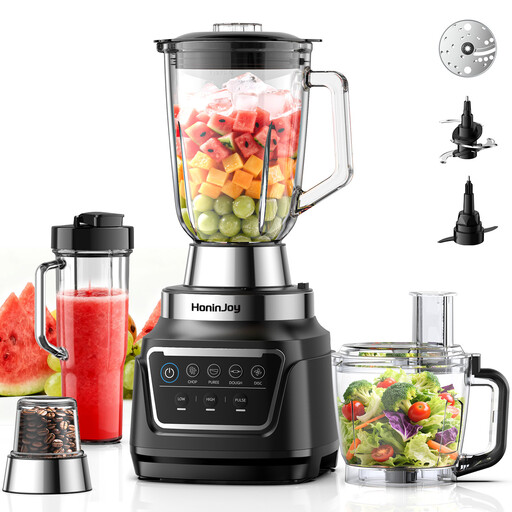
Why it suits this user: The set combines a 1.5-litre blender jug, a 2-litre food processor bowl, a chopper and a sports bottle, giving you several functions in one. It’s a practical choice for beginners who want to switch between smoothies, sauces and everyday meal prep.
The functions are matched to separate bowls and accessories. According to the product information, the removable parts are also suitable for the top rack of the dishwasher.
Maximum power of 1,300 watts, presets for chopping, puréeing, dough and discs, plus an 80-gram grinder.
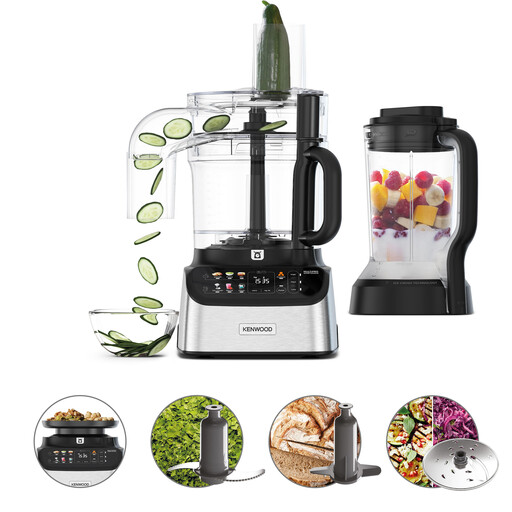
Why it suits this user: This model is designed for people who prepare a wide variety of dishes and value preset controls, built-in weighing and a generous bowl.
The product information specifies a 3-litre bowl, a 1.5-litre blender and a separate dough hook. This makes it clearer which tasks the set is designed for.
1,000-watt motor, integrated scales, six automatic programmes and a 2-in-1 disc for slicing and grating.
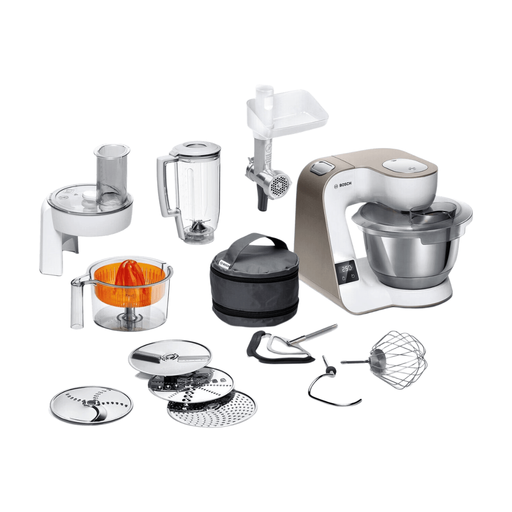
Why it suits this user: This food processor with blender is a good fit for home bakers and families who want to mix, knead dough, grate and prepare meat.
The included functions are clearly listed: blender jug, pastry set, meat grinder, citrus press, and grating and slicing accessories. Check the full list of included items before buying.
1,000 watts, a 1.25-litre blender jug, seven speeds, a pulse function and integrated scales.
We’ve put together a complete, up-to-date list of products that meet these strict selection criteria and the applicable European safety requirements.
That depends on the blender jug, blade system and ingredients the appliance is approved to handle. A food processor for smoothies should have enough capacity and be suitable for fruit, vegetables and, if applicable, ice, according to the manual. Don’t use hot liquids unless the manufacturer says it’s safe to do so.
Its lifespan depends on how you use and maintain it, and how hard you push it. Stick to the maximum quantities and operating times, let the motor cool down, and replace any damaged blades or seals. Wash the accessories after use, especially after handling raw meat or sticky dough.
Energy use depends on both the power rating and how long you use the appliance. A 1,000-watt appliance doesn’t automatically use 1,000 watts for an entire preparation. Short programmes, pulse functions and using the right quantity of ingredients can help keep the total operating time down. For an accurate estimate, check the energy label or technical specifications for the model you’re considering.
