
Vandaag of morgen in huis

Kwaliteit gegarandeerd

Welkomstaanbiedingen ontgrendelen: GRATIS bezorging | Tot 80% korting | Gratis 30 dagen JoyPlus-proefperiode
Download de app
A food processor with blender can seem like a convenient way to replace several kitchen appliances. One base unit may chop, slice, grate and mix, while a separate jug is suitable for smoothies or soup. However, multifunctional food processors vary considerably in capacity, accessories and ease of use.
The biggest disappointments are usually not caused by choosing the cheapest option, but by having the wrong expectations. First, check which functions you will actually use and whether the technical specifications suit your household.
A high maximum power rating may sound appealing, but it does not automatically tell you how long an appliance can process tough ingredients. Also check the recommended operating time, rest period and overheating protection. Some models are designed for short pulses, while others are better suited to regular kneading or larger quantities.
Also pay attention to the difference between rated power and maximum stated power. A product described as “1300W Max Power” should not automatically be compared with a model whose continuous power is specified.
A product title may mention a food processor with mixer, meat grinder, citrus press or dough function, even though not every accessory is included as standard. Check the contents of the box and find out whether an accessory is only suitable for a specific food processor model.
A 2-in-1 blender and food processor can be practical, but only if the blender jug, mixing bowl and blades suit the portions you prepare. For example, a small mixing cup is less suitable for a family that makes several smoothies at once.
More parts also mean more washing-up and more space needed in a kitchen cupboard. Check whether the parts can be removed, whether they are dishwasher-safe and under which conditions. “Dishwasher-safe” does not always mean that every part can be washed on every programme.
The motor base should generally not come into contact with water. Blades and slicing discs are sharp; unplug the appliance before changing or cleaning accessories.
For smoothies, sauces and soups, the capacity of the blender jug is important. A jug of around 1.2 to 1.5 litres is often suitable for several portions. A food processor bowl holding 1.8 to 3 litres provides more room for vegetables, batter or meal prep.
Pay attention to the difference between total and usable capacity. With liquids, you usually must not fill the jug to the brim. Hot ingredients require extra care: always follow the instructions and check that the appliance is suitable for them.
Anyone who mainly makes smoothies and soups will have different requirements from someone looking for a food processor for dough or a vegetable slicer and grater. Check whether the set includes:
According to some brands’ product information, certain models can also crush ice. Treat this as a manufacturer’s product specification and check the instructions to see which ingredients and quantities are permitted.
A powerful food processor is not identified by wattage alone. The number of speed settings, a pulse function, automatic programmes and the stability of the base all play a part. A pulse button gives you greater control when chopping, while preset programmes can be convenient for users who want to work quickly.
Important safety features include a lid lock, overheating protection and secure placement on the worktop. Never use an appliance above its maximum capacity, and keep hands and utensils away from rotating blades.

Why it suits this profile: The combination of chopping, blending, juicing and grinding provides a versatile foundation for everyday meals without immediately having to buy several separate appliances.
The product information states that it has a 1.8-litre bowl, removable parts and dishwasher-safe components. Before buying, check the exact limits in the instructions.
750W motor, 1.8-litre capacity and functions for chopping, blending, grating and grinding.
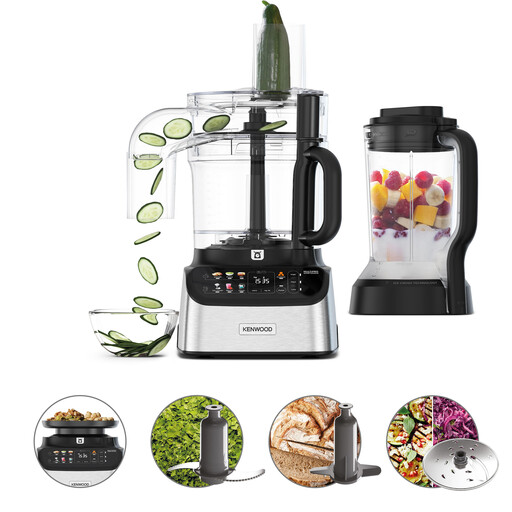
Why it suits this profile: This model is designed for users who prepare a wide range of dishes and value automatic programmes and weighing directly in the same bowl.
The set lists a 3-litre bowl, 1.5-litre blender, dough function, slicing and grating disc, and six presets. This makes the key functions clearly defined.
1000W power, digital scales, ice function and automatic operation.
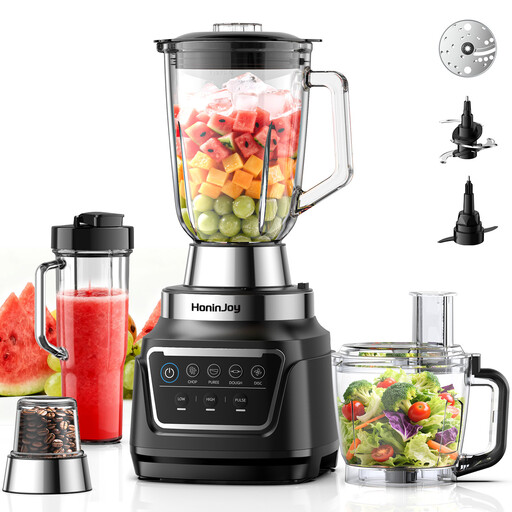
Why it suits this profile: This extensive set is aimed at households that regularly prepare smoothies, dough, chopped ingredients, grated vegetables and ground spices.
According to the product description, the set includes a 1.5-litre blender jug, 2-litre food processor bowl, 80-gram grinder cup and sports bottle. According to the manufacturer, the separate parts are suitable for the top rack of the dishwasher.
Stated maximum power of 1300W, several bowls and overheating protection.

Why it suits this profile: The spacious mixing bowl and accessories for dough, blending, grinding and slicing vegetables are well suited to families preparing larger quantities.
The product specifications state that it has a 3.9-litre stainless-steel bowl and a maximum dough capacity. Check the correct quantity for each recipe and accessory.
3.9-litre mixing bowl, dough set, blender, meat grinder, citrus press and vegetable slicer.
We have put together a complete, up-to-date list of products that fully meet these strict selection criteria and the applicable European safety regulations.
Use this short checklist before placing your order:
Yes, provided the appliance has a blender jug or suitable mixing cup with a blending blade. Check the capacity and the instructions for frozen fruit and ice. Not every food processor bowl is designed for liquids or hard ingredients.
That depends on the accessory supplied. A food processor with mixer can process dough if a dough hook or kneading blade is specified. Take the maximum quantity of flour or dough into account, and do not use the appliance for longer than stated in the instructions.
Consumption depends on the power rating and operating time. In theory, a 1000W appliance uses less energy when running for one minute than it does when operated continuously at the same power. Automatic programmes and short pulses can limit preparation time, but actual consumption varies according to the recipe and load.
