
Vandaag of morgen in huis

Kwaliteit gegarandeerd

Welkomstaanbiedingen ontgrendelen: GRATIS bezorging | Tot 80% korting | Gratis 30 dagen JoyPlus-proefperiode
Download de app
A food processor or blender can seem incredibly versatile on paper. In practice, however, some appliances can be a let-down. For example, motor power doesn't tell the whole story about performance, a large bowl might have less usable volume than you expect, and accessories can end up gathering dust in a cupboard.
For home bakers, cooking enthusiasts and families, the choice isn't just about wattage. It's more important to consider the types of food you'll be preparing, the capacity, the included attachments and how easy it is to maintain.
A product name might mention a power rating that differs from the nominal power. For instance, the Monsga SM100 is advertised with 1000 W peak power, while the product information also lists 600 W nominal power. The Adler AD 4216 states 500 W power and 1000 W maximum power.
So, don't just compare the numbers on the box. Check:
A 1000-watt blender might be fine for smoothies, sauces and soft ingredients, but the final result also depends on the blade design, jug shape and the amount of liquid.
A 5 or 6-litre mixing bowl sounds spacious, but you can't always fill it to the brim. According to the product information, the Monsga SM100 has a maximum capacity of 6 litres and a recommended usable capacity of 5 litres. What's more, the maximum amount of dough is lower than for liquid batter.
When choosing a food processor with a mixing bowl, pay attention to:
An appliance with lots of accessories might seem appealing, but check if they actually suit your recipes. A stand mixer with a whisk, beater and dough hook is mainly for baking. A hand blender with a chopper and whisk is more practical for soups, sauces, dips and small quantities.
Also, check if the parts are genuinely dishwasher-safe. For some models, this only applies to the detachable accessories. The motor unit, cord and blades should generally not be submerged in water. Sharp blades need to be cleaned carefully by hand, even if other parts can go in the dishwasher.
For batter, whipped cream and light mixtures, a moderate amount of power is often enough. If you regularly make bread dough, you'll benefit more from a stable drive system, a suitable dough hook and a clearly stated maximum dough capacity than from a high wattage figure alone.
A mixer for bread dough should ideally be able to run at a low to medium speed. This reduces the strain on the motor and stops ingredients from flying out of the bowl.
For blenders, the RPM (revolutions per minute) is also relevant. The KitchenAid 5KHBV83EDG, for example, lists 180 W and a maximum of 18,000 revolutions per minute. The Braun MQ50051M has 1000 W and 21 speeds. These specifications aren't directly comparable, as they are for different types of appliances and uses.
A planetary mixing action makes the attachment move around the bowl while also rotating on its own axis. According to the product information from Bosch and Monsga, this is designed to mix ingredients more evenly. Think of this as a technical feature, not a guarantee of perfect results for every recipe.
Also, look out for non-slip feet or suction cups. A food processor should stand on a flat, dry and sturdy worktop while kneading. A tilt-head design makes it easier to change accessories.
Multiple speeds are useful when you want to switch between gentle mixing, whisking and kneading. A pulse function is especially handy for chopping and brief mixing. For a smoothie blender, automatic programmes can be a nice feature if you don't want to set the blending time yourself.
Also look for:
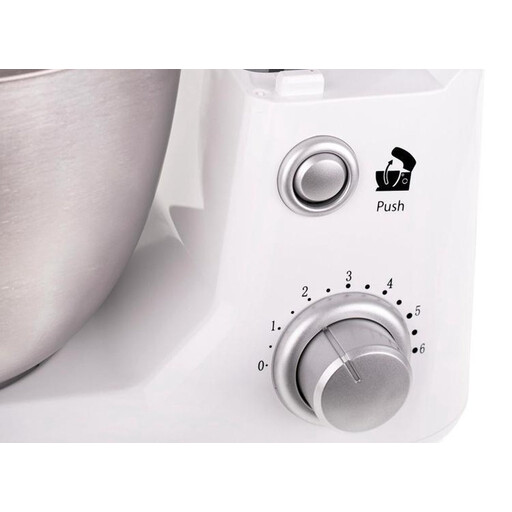
Why it's a good fit: A straightforward stand mixer for cake batter, whipped cream and general household use, with six speeds and a 4-litre bowl.
The product information lists both 500 W and 1000 W maximum power. This makes it important to consider the nominal rating and usage limits in your comparison.
Planetary mixing action, stainless steel bowl, splash guard, dough hook, whisk and beater.
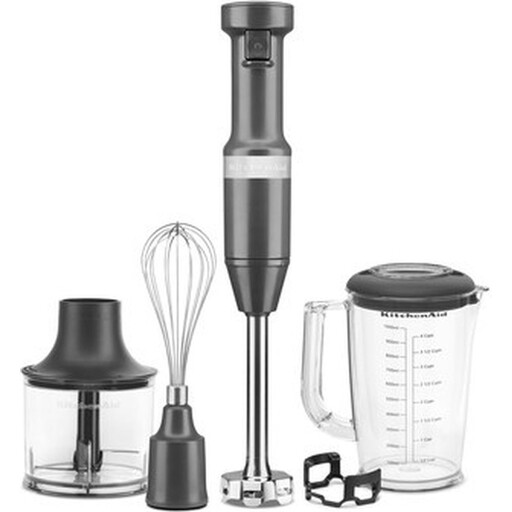
Why it's a good fit: A compact hand blender for those who want to prepare sauces, soups, purées and small portions directly in a pan or measuring jug.
The set doesn't just include a blending wand: it also comes with a whisk, measuring jug, chopper and spiralizer. Always check the cleaning instructions for each part.
180 W power, max. 18,000 rpm, stainless steel blade and a 1-litre capacity.
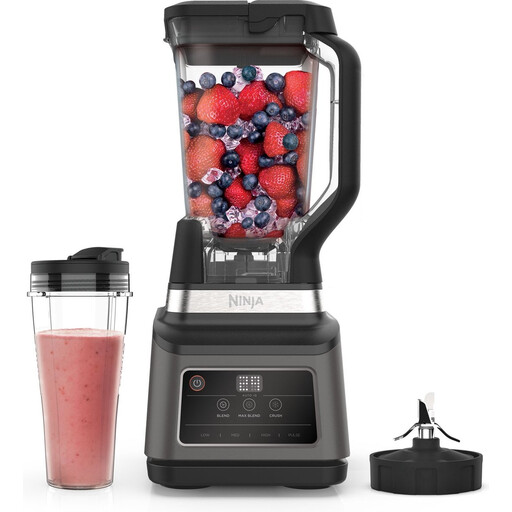
Why it's a good fit: Ideal for families who make large batches of smoothies, sauces or cold preparations and also want a food processor function.
As well as automatic programmes, the appliance offers manual settings. The product information mentions a 2.1-litre jug and a 700 ml cup; be sure to observe the maximum fill line.
1200 W according to the product information, four speeds, automatic programmes and dishwasher-safe detachable parts.
We've put together a complete, up-to-date list of products that fully meet these strict selection criteria and comply with current European safety regulations.
Before use, read the manual and check that the bowl, lid and any attachments are securely locked in place. Keep your hands and kitchen utensils away from moving parts. Unplug the appliance from the socket before changing or cleaning accessories.
The blades on stick and hand blenders are sharp. Use short pulses when the manual advises it, and let the appliance cool down if a maximum operating time is mentioned. A blender is not automatically suitable for hot liquids. For example, the Philips HR3020/20 states that ingredients should be no hotter than 80 °C, while the Ninja BN750EU instructions say to let hot liquids cool down first.
A stand mixer is primarily designed for kneading, mixing and whisking in a bowl. A blender makes liquid or semi-liquid creations like smoothies, sauces and soups. A food processor focuses more on chopping, slicing and mixing. A hand blender is compact and can often be used directly in a pan or measuring jug.
Power consumption depends on the wattage and how long you use it. An appliance rated at 1000 W will theoretically use 0.1 kWh if it runs for six minutes. In practice, a blender is usually only used for short periods. So, as well as the wattage, consider the preparation time, programmes and portion size.
The lifespan depends on usage, maintenance, load and storage. Don't exceed the maximum capacity, use the correct speed for dough, and clean accessories straight after use. In the Netherlands and the EU, consumers are covered by the legal guarantee of conformity; some product pages also mention a two-year manufacturer's warranty. Keep your proof of purchase and check the terms and conditions for each product.
