
Baker with limited cupboard space
You want to be able to store the appliance and its essential parts together. So measure not only the motor unit, but also the space needed for accessories that won’t fit inside the bowl.


For small batches of jam biscuit dough, a food processor may be suitable if the instructions allow you to mix shortcrust pastry using the correct blade. For frequent or prolonged kneading, a stand mixer is generally a better choice, according to Consumentenbond. Measure the appliance with the parts you want to store, and compare your recipe quantity with the model-specific dough capacity. Before buying, also check that the food-contact parts of the exact version meet the applicable Dutch requirements.
You want to be able to store the appliance and its essential parts together. So measure not only the motor unit, but also the space needed for accessories that won’t fit inside the bowl.
You want to know whether your recipe can be mixed in one go. Compare the recipe weight with the stated dough capacity; the bowl’s volume is not necessarily a reliable guide.
You want to do more than make biscuit dough, such as chopping or grating. Think about whether you’ll really use the extra functions, and allow for the storage and cleaning of the parts that come with them.
First measure your available storage space, then check that the right attachment and dough capacity suit your recipe. Only factor in extra functions if you’ll use them.
| What to consider | What should you check? | Who is this important to? |
|---|---|---|
| Will everything fit in the cupboard? | Measure the height, width and depth, and check which accessories can be stored inside the bowl. | I want to store the appliance and its parts together after use. Around 36% of consumers say storage space is their main concern when buying. |
| Can the appliance mix my batch of dough? | Check which blade or dough attachment is suitable, and compare your recipe with an explicitly stated maximum dough weight. | I want to make my recipe with the right attachment without mistaking bowl capacity for dough capacity. Around 29% of consumers give getting the right batch size their top priority. |
| Will you use the extra functions? | Compare the included accessories with the tasks you actually do, and allow for the space needed to store them. | I want to be able to chop or grate too, but don’t want to store parts I never use. Versatility is the top priority for around 21% of consumers. |
| How much maintenance does it need? | Read the cleaning instructions for each part and check what aftercare is required for that particular version. | I don’t want to clean lots of unnecessary parts after a small baking task, and I want to know what aftercare to expect. Around 14% of consumers put maintenance and aftercare first. |
Capacity in litres and the maximum amount of dough are two different things. For example, Bosch lists a 2.3 l bowl for the MCM3501M, as well as a separate maximum dough weight of 0.8 kg. For the Mini Plus, Magimix lists a 1.7 l bowl and a processing capacity of 600 ml; this is not a stated maximum dough weight.
Only compare figures for the exact model and the same type of capacity with the quantity in your recipe.
Parts that need to be washed by hand take extra time to clean after use.
The Mini Plus is a compact option to compare if cupboard space matters and you make small batches.
The 5KFP0719EBM is a compact food processor to consider if a dough blade and storage space for accessories inside the bowl suit the way you’ll use it.
The MultiTalent 3 MCM3501M is an option to compare if a stated dough weight matters more to you than the smallest possible footprint.
The MultiPro Compact FDP31.170GY is worth comparing if you want to combine a dough attachment with other food preparation functions.
Below are food processors and stand mixers to help you make your choice. For each version, check whether the included blade is suitable for your dough and whether its permitted capacity is right for your recipe.
 No image available
For jam biscuit dough, check whether the instructions allow you to use the right attachment with your recipe.
The product name lists a 4,5 l stainless steel bowl and a 6+P speed setting.
 No image available
For biscuit dough, this is suitable only if the instructions for this version allow mixing with a suitable dough attachment.
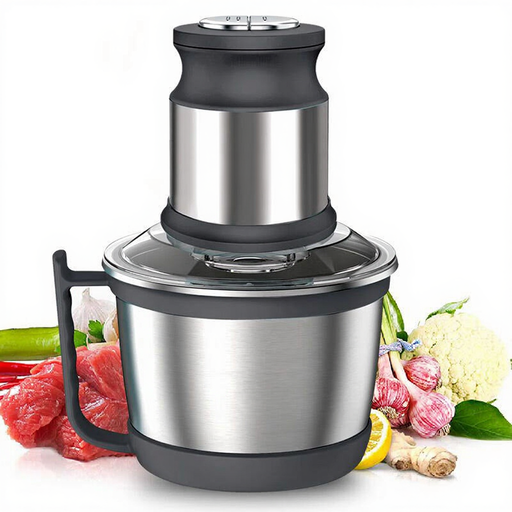
The product name lists a 3 l bowl and chopping and grinding functions.
 No image available
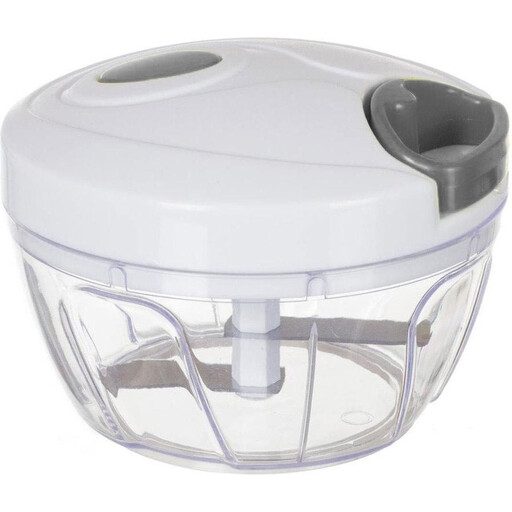
Compare your recipe quantity with the specifications for this version, and check which attachment is intended for dough.
The product name lists 400 mL; this does not automatically mean that is the maximum dough capacity.
 No image available
Check the instructions to make sure the right accessories and capacity are suitable for mixing your biscuit dough.
The product name lists 800 W and a 2,3 l bowl; bowl capacity is not the same as maximum dough weight.
 No image available
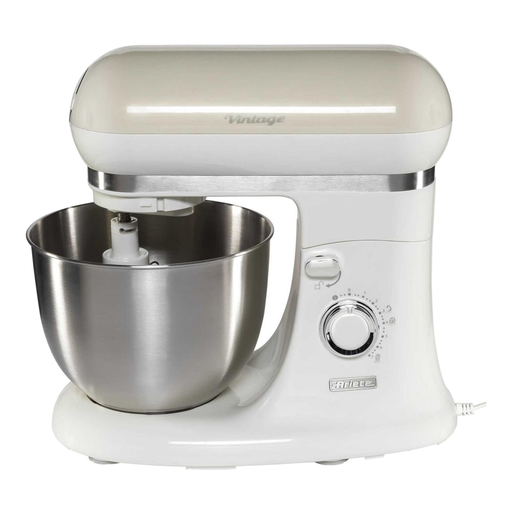
For jam biscuit dough, check that the exact version comes with the right dough attachment.
The product name lists a 5 l stainless steel mixing bowl, 1000 W and planetary mixing action.
Not necessarily. According to Consumentenbond, a food processor can mix or knead light dough briefly, while a stand mixer is generally better for frequent or longer kneading. Magimix describes making shortcrust pastry with the Mini Plus’s metal blade, but that doesn’t mean every recipe or model is suitable.
Follow the instructions for the exact model when cleaning the bowl, blades and any other parts that come into contact with food. According to Consumentenbond, accessories are not always dishwasher-safe, so check the cleaning instructions for each part.
If a product does not meet the required standard during normal use, the retailer is responsible for providing an appropriate remedy free of charge under Dutch statutory warranty law, according to ACM ConsuWijzer. This statutory warranty does not have a fixed two-year term.
According to the Netherlands Food and Consumer Product Safety Authority, CE marking is compulsory for products covered by the Commodities Act Decree on Electrical Equipment; the low-voltage rules referred to apply to a nominal AC voltage of 50–1000 V. Parts intended to come into contact with food must meet the applicable Dutch food-contact requirements. Check this for the exact version; these general requirements do not confirm that a specific model meets them.