What should you look for when buying?
Food processor
A good fit if: you mix for short periods, work in batches and want to use the appliance for tasks such as chopping or slicing too.
Bear in mind: the Consumers’ Association describes a food processor as less suitable for kneading than a stand mixer. Also check the dough limit for the specific model.
Stand mixer with a dough hook
A good fit if: mixing or kneading dough is the main task, especially if you’ll be doing it repeatedly during workshops. The Heel Holland Bakt recipe recommends this option for spiced biscuits.
Bear in mind: if slicing, grating and chopping are important too, compare the functions available on the specific model.
Mixing by hand
A good fit if: you’re making a small batch or want participants to do the mixing themselves; the recipe also gives hand-mixing as an option.
Bear in mind: mixing by hand takes time and needs supervision during the workshop.
| What to consider |
What should you look for? |
Who is this important for? |
| Batch size and quantities |
Compare the weight of your recipe with the maximum dough quantity for the specific model. Treat processing quantity and total bowl capacity as separate figures. |
If I’m making several batches one after another, I want to know how much dough I can process each time. Around 36% of consumers prioritise batch size. |
| Dough attachment |
Check which dough hook, kneading hook or dough blade is included with that exact model. Also consider whether short mixing will be enough or whether you mainly need to knead. |
If dough is the main task, I want to know in advance whether the included attachment suits the way I’ll be using it. Around 29% of consumers prioritise the mixing attachment. |
| Cleaning and safe use |
Check the cleaning instructions for the parts and plan to clean between batches. Don’t let participants taste raw dough. |
If different participants will use the appliance, I want to factor in cleaning and the safe handling of raw dough. Around 21% of consumers prioritise cleaning and shared use. |
| Use beyond the workshop |
Decide which other tasks you’ll genuinely use it for and check which accessories are included with the model. Remember to consider storage too. |
If I want to use the appliance for other kitchen tasks as well, I weigh up those functions against its ability to handle dough. Around 14% of consumers prioritise versatility. |
The stated capacities aren’t directly comparable. Bosch lists a 3.9 l bowl and a maximum processing quantity of 1.5 kg of dough for the MC812M865. Magimix gives a total capacity of 3 l and a processing quantity of 1.3 l for the CS 4200XL. These capacity figures alone don’t tell you the maximum weight of biscuit dough the appliance can handle.
Products for mixing dough and kitchen preparation
This selection includes stand mixers and food processors for mixing dough and other kitchen preparation tasks. Check the attachments and specifications of each model to make sure it’s right for your workshop.
 No image available
Dough mixer with food processor, 4.5 l, 1300 W, beige
The included kneading hooks are designed for mixing and dough preparation.
The product name lists a 4.5 l stainless steel bowl, 1300 W and six speeds with a pulse function. The description mentions a tilt-head design and splash guard.
View on Joybuy
 No image available
ochama food processor, 750 W
The product description lists a dough attachment for preparing dough.
It also mentions a whisk and a mixing attachment. Check which accessories are included with the model you choose.
View on Joybuy
 No image available
Bosch MUM 54251
The product description mentions dough preparation and mixing, as well as other kitchen preparation tasks.
Listed functions include chopping, slicing and grating, with two speeds and a pulse function.
View on Joybuy
 No image available
Bosch MCM3200W MultiTalent 3, 800 W
The product description mentions dough preparation and mixing, as well as everyday kitchen tasks.
Listed functions include chopping, slicing and grating, with two speeds and a pulse function.
View on Joybuy
 No image available
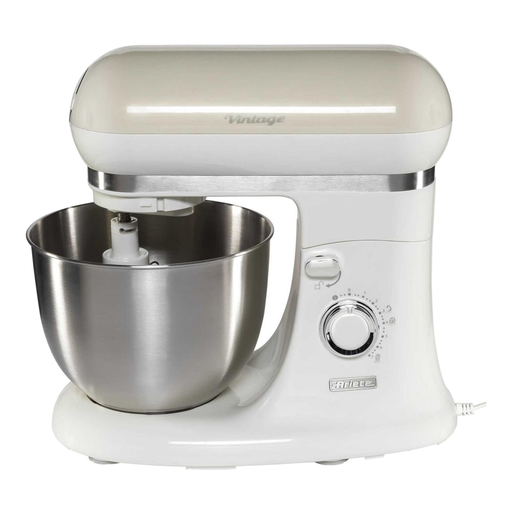
Ariete 1588/03, 1000 W
The product description mentions preparing dough with the mixing arm and kneading up to 2.7 kg of dough.
The product name lists a 5 l stainless steel mixing bowl. The description says the appliance is intended for domestic use only.
View on Joybuy
Frequently asked questions
Is a food processor or a stand mixer better for spiced biscuit dough?
A food processor may be suitable for short mixing sessions and other preparation tasks, provided the specific model and attachment are up to the job. If mixing or longer kneading is the main task, consider a stand mixer with a mixing arm and dough hook instead. The Heel Holland Bakt recipe also gives hand-mixing as an option.
Can I use bowl capacity to plan workshop batches?
Don’t use bowl capacity as a substitute for the permitted dough quantity for a specific model. Bosch lists the MC812M865’s 3.9 l bowl capacity and maximum processing quantity of 1.5 kg of dough separately. Magimix also distinguishes between total capacity and processing quantity for the CS 4200XL.
How should I handle raw biscuit dough during a workshop?
Don’t let participants taste raw biscuit dough: according to the Netherlands Nutrition Centre, both raw eggs and flour can contain harmful bacteria. Wash your hands before and after preparing raw dough, bake the biscuits thoroughly and follow the cleaning instructions for the parts of the model you choose.
Does a paid baking workshop need to register or provide allergen information?
That depends on what the organiser offers and how often food is sold. According to the NVWA’s step-by-step guide, registration and a food safety plan are required if you sell food several times a year; the guide says that registration isn’t required if you sell food once a year. The NVWA also explains how customers must be given information about allergens in unpackaged food offered or sold. Running a workshop alone doesn’t make it clear which obligations apply to the organiser.
Does an appliance used for a business workshop have the same warranty as one bought for private use?
Not automatically. According to ACM ConsuWijzer, a business owner who uses a contract mainly or exclusively for business purposes isn’t covered by consumer protection; the situation may be different if the appliance is used mainly for private purposes. Before buying, ask which terms of use and warranty apply to your situation, and distinguish between the manufacturer’s warranty and statutory consumer rights.


