
Baking for a group
You want to make biscuit dough for several lunch guests. Compare the weight of your recipe with the stated dough limit, rather than relying on the bowl capacity alone.


A food processor may be suitable for biscuit dough that you mix briefly, provided the attachment and permitted dough quantity are right for your recipe. The Dutch Consumers’ Association distinguishes this from light sponge mixture and prolonged kneading, which are generally better suited to a stand mixer with the appropriate attachment. A larger bowl doesn’t, in itself, tell you how much dough you can process.
You want to make biscuit dough for several lunch guests. Compare the weight of your recipe with the stated dough limit, rather than relying on the bowl capacity alone.
As well as mixing dough, you want to chop, slice or grate ingredients, so you’re checking which accessories you’ll actually use.
Your kitchen is short on space. The appliance’s dimensions and the room needed for separate parts matter to you, even if that means you may need to work in batches.
| What to consider | What should you check? | Who is this important for? |
|---|---|---|
| Suitable attachment | Check whether your recipe calls for biscuit dough or light sponge mixture, and which attachment the manual recommends for the exact model. | If your main concern is making sure the appliance suits your type of dough, choosing the right mixing task comes first. Around 36% of consumers prioritise suitability for briefly mixing biscuit dough. |
| Dough per batch | Compare the weight of your full recipe with the model’s dough limit; don’t use the bowl capacity in litres as a substitute. | If you want to make lunch-time dough in as few batches as possible, the permitted batch size is important. Around 29% of consumers prioritise the amount of dough per batch. |
| Cleaning and storage | Check which accessories are included and read the cleaning instructions for each part. | If you want to be left with less washing-up and fewer loose parts after baking, easy cleaning and storage are important considerations. Around 21% of consumers prioritise cleaning and managing accessories. |
| Available space | Measure the space on your worktop and in your cupboard, then compare it with the appliance’s external dimensions. | If you’re short on worktop or cupboard space and are happy to make several batches if necessary, the appliance’s fit could be the deciding factor. Around 14% of consumers give limited kitchen space top priority. |
Bowl capacity and the amount of dough you’re allowed to process are two different things. For example, Bosch lists a 2.3 l bowl and a maximum of 0.8 kg of dough separately for the MCM3501M.
Weigh or calculate the dough in your recipe and compare it with the limit for the exact model. If your batch is too large, you may need to process it in several batches, provided the manual allows this.
The Dutch Consumers’ Association distinguishes between briefly mixing light dough in a food processor and making light sponge mixture with the whisk attachment of a stand mixer.
First check what mixture or dough your recipe calls for, then choose the appliance type and attachment designed for the job.
Cleaning instructions may vary from one part to another. For the FDM316SS, Kenwood excludes the blender unit and the multimill blades from the parts that can be cleaned with the rest.
Check the instructions for each accessory before cleaning it; using the wrong method could mean extra hand-washing or having to replace a part.
The MultiTalent 3 MCM3501M is worth considering if you’re looking for a food processor with a stated dough limit and several food preparation functions.
The MultiPro Compact+ FDM316SS is an option to compare if you’d also like to weigh ingredients directly in the bowl as well as prepare dough.
The 5KFP0719EBM is a compact food processor to consider if a dough blade and storage space for accessories inside the bowl suit the way you use it.
The Mini Plus is worth considering if a slim appliance is important and you can process your recipe in batches if necessary.
This Joybuy selection includes food processors and stand mixers to compare when choosing an appliance for biscuit dough. For each exact model, check that the included attachment and permitted quantity suit your recipe.
 No image available
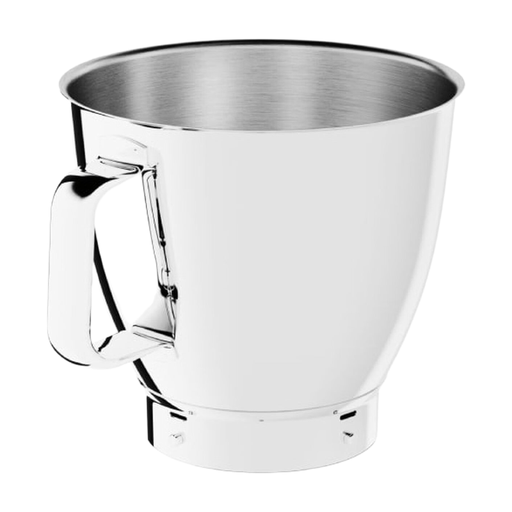
The product title describes a dough mixer and food processor; check whether the included attachments are suitable for your biscuit dough.
The title lists a 4.5 l stainless steel bowl, six speeds plus a pulse function, and a pasta maker.
 No image available
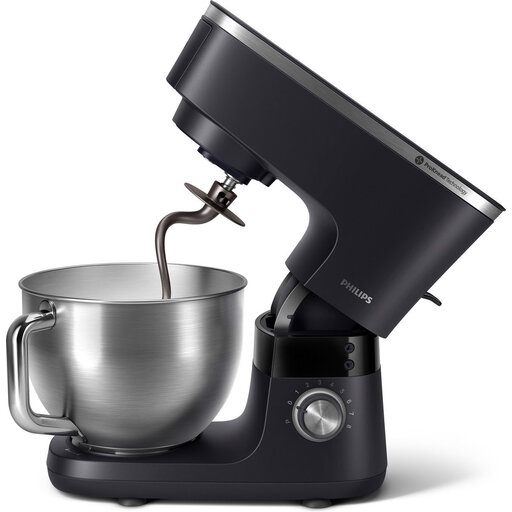
The product title describes a stand mixer with included attachments; check which ones are intended for your recipe.
The title lists a 700 W motor and a 4.3 l stainless steel bowl.
 No image available
This model is sold as a food processor; check which attachment comes with this version and whether it’s suitable for your recipe.
The product title lists 800 W and a 2.3 l bowl. Bowl capacity isn’t a dough limit.
 No image available
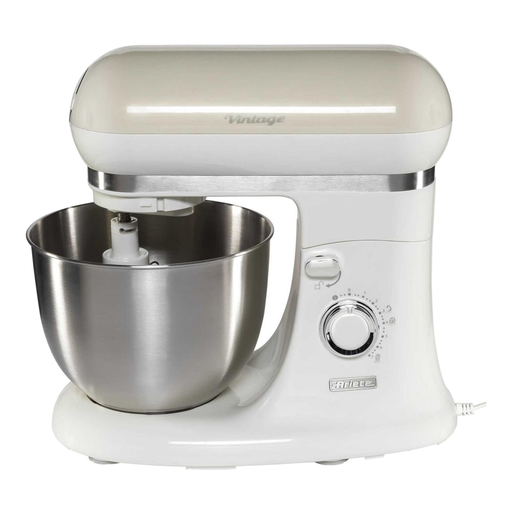
The product information lists a dough hook; check the manual to see whether it’s suitable for the type of dough and batch size in your recipe.
The title lists eight speeds. The product name also mentions a blender attachment and a grinding accessory.
 No image available
The product information lists a dough attachment; check whether the manual recommends it for your dough and batch size.
The title lists a 5 l stainless steel bowl and planetary mixing action.
These are different mixing tasks. The Dutch Consumers’ Association describes a food processor as suitable for briefly mixing light dough, and recommends a stand mixer’s whisk and open bowl for light sponge mixture. So first check what your recipe calls for.
Follow the manual for your exact model. Kenwood advises against overloading the blade, recommends using the dough attachment for bread dough, and says to hold the blade by its grip, away from the sharp edges, when handling or cleaning it.
Check this for each part and model. Bosch says that the MCM3501M accessories are generally dishwasher-safe; for the FDM316SS, Kenwood excludes the blender unit and multimill blades.
There’s no fixed statutory guarantee period in the Netherlands, but you’re entitled to a product that meets reasonable expectations. According to the Dutch government, the seller must deal with a fault; depending on the problem, you may be entitled to a free repair, replacement or refund. Normal wear and tear or damage caused by incorrect use isn’t automatically covered.
According to the Netherlands Food and Consumer Product Safety Authority, CE marking is compulsory for electrical products, and parts that come into contact with food must meet the applicable requirements for food-contact materials. These general rules don’t confirm that any individual product on sale demonstrably meets all the requirements.