
Baker with limited worktop space
You want to make small batches of biscuit dough without leaving a large appliance on the worktop. When choosing, remember to allow space for any separate parts too.


A compact food processor may be a good fit if you want to bring small batches of dough together quickly and chop ingredients too. Check that the blade supplied and the instructions are suitable for your recipe. If you mainly want to knead for longer or whisk a light batter, a stand mixer is worth comparing: the Dutch Consumers' Association says stand mixers generally handle baking tasks better, but you’ll also need space for the appliance and its accessories.
You want to make small batches of biscuit dough without leaving a large appliance on the worktop. When choosing, remember to allow space for any separate parts too.
You want to know in advance what quantity of dough the model you choose can handle, so you can decide whether to divide your recipe into batches.
As well as quickly mixing dough, you want to chop or slice ingredients, and weigh up whether those extra functions are worth the additional cleaning.
A good fit if: you have limited worktop space and want to bring dough together quickly, as well as chop or slice ingredients.
Bear in mind: check the instructions for your recipe; a small bowl may mean you need to work in batches.
A good fit if: you often make larger batches and have room for a bigger appliance.
Bear in mind: a stated maximum dough weight hasn’t been tested with your recipe; measure your storage space too.
A good fit if: your main baking task is kneading for longer or whisking a light batter.
Bear in mind: compare the space needed for the machine and its accessories; the Dutch Consumers' Association describes a food processor as more versatile for chopping and slicing.
For almond biscuit dough, compare the blade function and model-specific instructions with your recipe. Then check that the batch, appliance and separate parts will fit in your kitchen.
| What to consider | What to look for | Who is this important for? |
|---|---|---|
| Mixing dough | Check which blade is included and what quantity and running time the manual recommends for dough. | If I mainly want to mix almond biscuit dough, I want to know whether the function and instructions suit my recipe. Around 29% of consumers put dough suitability first. |
| Kitchen space | Measure the space on your worktop and in your cupboard; include separate accessories and any storage box. | In a small kitchen, I want room for both the appliance and its parts without having to leave the worktop permanently cluttered. Around 29% of consumers prioritise a size that fits their space. |
| Batch size | Compare your recipe quantity with the stated maximum dough weight; don’t try to work it out from the capacity in litres alone. | If I’m making a larger batch, I want to know whether I’ll need to divide the dough between several batches. Around 24% of consumers prioritise batch capacity. |
| Cleaning and functions | Check which parts you use and follow the cleaning instructions for each one. | For small batches, I want the cleaning effort to be worth the convenience of chopping or slicing with the same appliance. Around 18% of consumers prioritise convenience and versatility. |
Bowl capacity and the maximum quantity of dough are two different specifications. For example, Bosch lists a 2.3-litre bowl capacity and a maximum dough processing capacity of 0.8 kg for the MCM3501M.
Compare your recipe with the limit stated for the exact model. Don’t assume it can handle the same quantity of dough based on the litres alone.
If your batch exceeds the stated quantity, you may need to mix it in several batches and do extra cleaning.
An appliance may take up little space on the worktop, but separate parts or a storage box need a home too. Magimix lists three bowls and a storage box for the CS 3200 XL.
Measure the space where you can store both the machine and the parts you use.
Extra bowls and accessories need cupboard space if you don’t leave them on the worktop.
According to the Dutch Consumers' Association, a food processor can knead light dough briefly, but a stand mixer generally does a better job. Bringing dough together quickly is not the same as kneading a heavy dough for a long time.
Let your main baking task guide the type of appliance you compare, then follow the manual for the model you choose.
According to the Dutch government, if a problem is covered by the statutory guarantee, the retailer must provide a solution; it’s not the manufacturer’s responsibility.
Before adding a paid warranty package to your order, check what extra rights it provides.
The MultiPro Go is a compact model worth comparing if you want to process small batches quickly.
The MultiTalent 3 MCM3501M is worth comparing if a clearly stated maximum dough weight is important to you.
The Mini Plus is worth comparing for smaller quantities; the CS 3200 XL comes with several bowls and a dough blade.
The Dutch 5KFP0719EAC is worth comparing if an included dough blade and storing accessories in the bowl are important to you.
This selection includes compact food processors and stand mixers to compare for dough preparation, functions and the space they take up in your kitchen.
 No image available
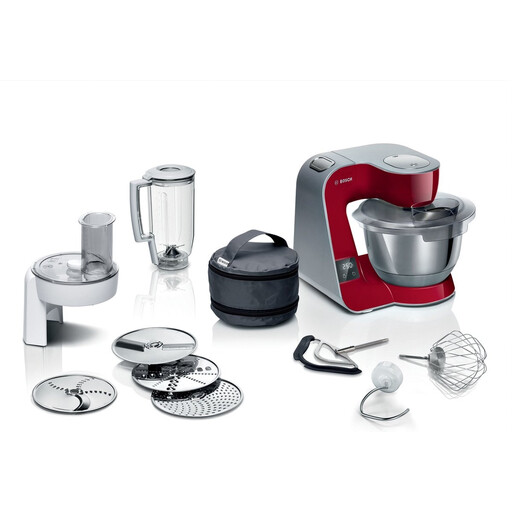
Compare this model if you’re looking for a dough mixer with a food processor function; check the manual to see whether it’s suitable for your recipe and batch size.
The product title lists a 4.5 L stainless steel bowl, 1300 W and 6 speeds. It also mentions a pasta maker.
 No image available
Compare this stand mixer if you want to knead dough as well as mix ingredients. Check your recipe separately, as the dough types listed aren’t necessarily the same as almond biscuit dough.
The product information lists a 3.9 L mixing bowl, an integrated scale, a maximum of 1.9 kg of yeast dough and a maximum of 2.7 kg of cake batter.
 No image available
Compare this compact food processor if you want to mix dough and chop, slice or grate ingredients too.
The product information lists a 2.3 L bowl, 800 W and functions for chopping, mixing, slicing and grating. Check the instructions for your dough recipe.
 No image available
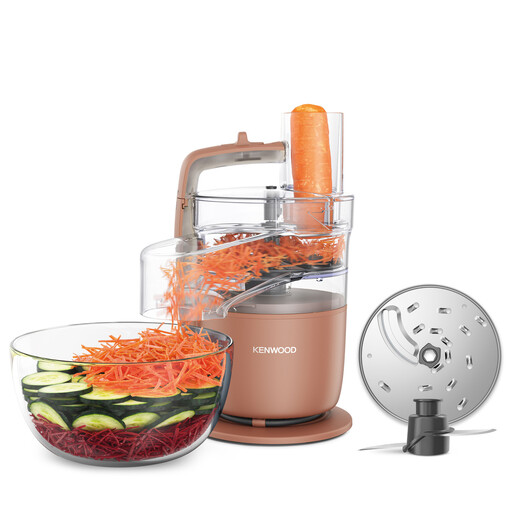
Compare this compact model if you want to chop, slice or grate ingredients as well as mix dough briefly.
The product information lists a 1.3 L bowl and functions for chopping, grating and slicing. Kenwood’s manual gives a maximum of 30 seconds for a specific dough example; this isn’t a proven limit for almond biscuit dough.
 No image available
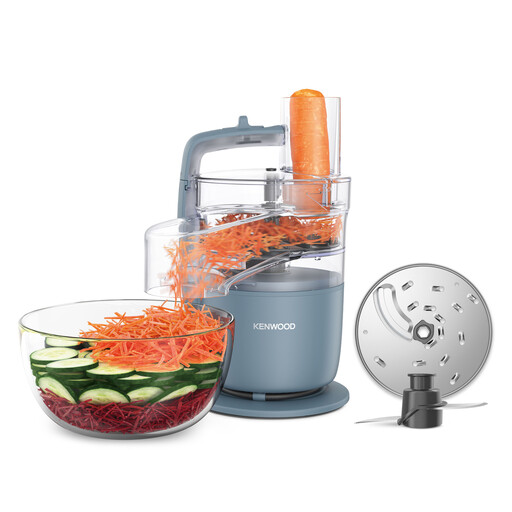
Compare this compact model if you’re looking for a food processor for mixing and other food preparation tasks.
The product information lists a 1.3 L bowl, functions for chopping, slicing, mixing and grating, and a compact storage design with a cord storage system. Check the manual for your dough recipe.
Not necessarily: Kenwood’s example uses 250 g of flour and 150 g of water, which is a different mixture from almond biscuit dough. So don’t treat the stated 30 seconds as a proven limit for your recipe, and compare the ingredients with the manual for the exact model.
No, bowl capacity and maximum dough quantity are different specifications. For example, Bosch lists a 2.3-litre bowl capacity and a maximum dough capacity of 0.8 kg for the MCM3501M. Use the limit for the specific model and don’t try to work it out from the litres alone.
Follow the cleaning instructions for each part separately. Accessories aren’t always dishwasher-safe, and some plastic parts can warp at excessively high temperatures. Also check that the bowl and lid are locked securely in place.
If the problem is covered by the statutory guarantee, the Dutch government says the retailer must provide a solution. A paid warranty package is only worthwhile if its terms give you more rights than you already have.
According to the Dutch government, a 14-day cooling-off period applies to many distance purchases. Check the terms and any exceptions that apply to your purchase.