
Lunch-maker looking for smooth hummus
You want to blend cooked beetroot and chickpeas into a smooth dip, and are looking for a suitable blade or an alternative you already own.


If you only make beetroot hummus occasionally, first see whether a stick blender you already own will do the job: Voedingscentrum lists one as an option alongside a food processor. A food processor makes more sense if you also use it regularly to slice or grate vegetables. When choosing, look for a clearly stated purée function, the usable capacity and how much cleaning is involved; a large total bowl capacity doesn’t tell you how much thick hummus you can make in one go.
You want to blend cooked beetroot and chickpeas into a smooth dip, and are looking for a suitable blade or an alternative you already own.
You don’t always make a full bowl and want to know how much a compact appliance can actually process.
You want to use the same appliance for slicing and grating vegetables, too, and are weighing this up against the extra parts and cleaning.
Choose this option: if you’re mainly making hummus for this lunch and already have a suitable stick blender; Voedingscentrum lists one as an option alongside a food processor.
Bear in mind: the recipe doesn’t compare how smooth the different appliances make the mixture.
Choose this option: if you regularly want to purée small quantities and are looking for a compact appliance with a specifically listed blade or purée function.
Bear in mind: the Magimix Mini Plus lists a total capacity of 1,7 l but a processing capacity of 600 ml; these figures don’t tell you how much beetroot hummus it can hold.
Choose this option: if you regularly slice or grate vegetables as well as making hummus; Bosch lists these accessories for the MultiTalent 3 MCM3501M.
Bear in mind: a larger bowl and extra accessories need storage space and cleaning, and the bowl capacity alone doesn’t determine how much hummus you can make.
The Voedingscentrum recipe uses 250 g of drained chickpeas and 200 g of cooked beetroot, along with other ingredients. So compare the stated processing capacity with the portion you make, rather than looking only at the bowl’s total capacity.
| What to consider | What should you check? | Who should pay particular attention? |
|---|---|---|
| Smooth puréeing | Check whether the exact model lists a purée function and a suitable blade; a chopping blade alone doesn’t guarantee the result. | I want a smooth dip, so I’m looking for a specifically listed purée function, not just a chopping blade. Around 40% of consumers give smooth puréeing top priority. |
| Suitable portion size | Compare the stated processing quantity or usable capacity with the portion in your recipe. | I want the bowl to suit the quantity I usually make, without relying only on its total capacity. Around 30% of consumers put portion size first. |
| Cleaning and storage | Check the manual to see which parts are dishwasher-safe and how many accessories you’ll need to store. | After puréeing, I want as few loose parts as possible to wash and put away. Around 20% of consumers prioritise easy tidying. |
| Extra vegetable prep | Check which slicing and grating discs are included with the exact model. | If I’m also using the appliance for vegetables, I want to know whether it comes with the right discs. Around 10% of consumers prioritise extra slicing and grating functions. |
Manufacturers may list total capacity and processing capacity separately. For example, Magimix gives the Mini Plus a total capacity of 1,7 l and a processing capacity of 600 ml. For the Braun FP3132BK, the stated usable capacity of 1,2 l applies specifically to liquids.
Compare the usage limits for the exact model with your recipe, and check whether the manufacturer specifies a minimum quantity.
A lower permitted quantity may mean you have to work in several batches.
A stick blender is also an option in the Voedingscentrum recipe. For a small batch, a food processor may mean extra parts to clean and store.
First decide whether you’ll regularly slice and grate ingredients. If not, compare a food processor with the stick blender you already own.
The FlexPrep FP5E is a compact food processor with a 1,1 l capacity and a listed purée function.
The Mini Plus has separate large and small bowls for different quantities.
The PureEase FP3132BK combines puréeing with slicing, grating and pulse control.
The MultiTalent 3 MCM3501M is designed for a range of vegetable-preparation tasks.
These Joybuy product picks focus on puréeing for beetroot hummus, from compact portions to models with larger bowls or extra functions. Check the quantity and usage restrictions for each product to make sure they suit your recipe.
 No image available
The product description mentions blending and preparing baby food, which are suitable for puréed recipes.
The title lists 750W, a capacity of 1.8L, and slicing and grating discs. According to the description, cut ingredients into 2 cm pieces and don’t process boiling liquids.
 No image available
The product description mentions puréeing and blending; the two bowls may suit different quantities.
The title lists 2L and 0.6L glass bowls and 300W; the description mentions two speeds and dishwasher-safe bowls. According to the description, the bowls and lid aren’t heat-resistant; avoid temperature changes of more than 50 °C.
 No image available
The product description lists puréeing and preparing cooked ingredients among its uses.
The title lists three stainless-steel bowls and 350W; the description mentions two speeds and pulse control. The bowls can be nested for storage, according to the description. The stated maximum operating time is 30 seconds per cycle.
 No image available
The product description mentions puréeing and making dips, with short pulses to adjust the texture as you go.
The description lists a glass bowl and stainless-steel blades. According to the product information, cut large ingredients into 2 cm pieces first; don’t run the motor for more than 30 seconds at a time.
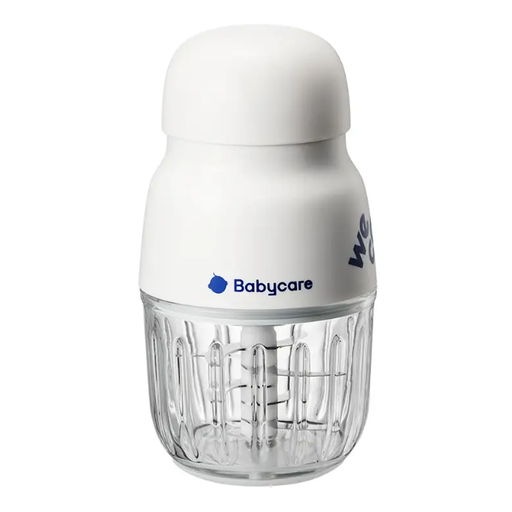 No image available
The product description mentions smooth purée and presents this model as suitable for small batches.
The description lists a 10 fl oz glass bowl, a stainless-steel blade and one-button operation. The product information focuses on baby food; bear the stated bowl capacity in mind when choosing.
No. The Voedingscentrum recipe mentions both a food processor and a stick blender. Purée the cooked beetroot and chickpeas until they’re as smooth as you like; according to the recipe, a little water or a few ice cubes can help with puréeing.
First check that the bowl and lid are fitted securely. If the appliance slows down during use, try processing a smaller quantity. Only add liquid if it suits your recipe.
It depends on the appliance and the part. Check the manual for the exact model to see which parts are dishwasher-safe and what washing temperature is permitted; Consumentenbond warns that plastic parts can warp if the temperature is too high.
For electrical food processors sold in the Netherlands, the relevant European requirements for electrical equipment and the associated CE marking apply; the specific requirements depend on the appliance. Parts that come into contact with food must comply with Dutch rules on food-contact materials, as explained by the Netherlands Enterprise Agency and the Netherlands Food and Consumer Product Safety Authority. These product regulations alone don’t prove that a specific model complies with them.
For homemade plain hummus, Voedingscentrum recommends keeping it in the fridge for 1–3 days. This is storage advice for plain hummus, not specific advice based on separate testing of the beetroot recipe.