
Making one bowl of dip
You want to briefly mix roasted aubergine with tahini and seasonings without having to wash a large bowl for a small portion. The recipe from Uit Paulines Keuken uses short bursts of blending for a chunky dip.


For one small bowl of roasted aubergine dip, a compact appliance with a chopping blade and pulse function is a practical choice. A larger food processor is mainly useful if you also want to chop or grate ingredients for more people. Compare the usable capacity, not just the total bowl capacity, and weigh up extra features against the effort of carrying, storing and cleaning the appliance. Short pulses make it easier to check the texture as you go.
You want to briefly mix roasted aubergine with tahini and seasonings without having to wash a large bowl for a small portion. The recipe from Uit Paulines Keuken uses short bursts of blending for a chunky dip.
You’re taking the appliance with you or have little worktop space, and want to know how much room the machine and its separate parts will take up. The Magimix Mini Plus specifications show why total capacity and processing capacity need to be considered separately.
You’re making more dip and may also want to slice or grate vegetables; a larger bowl and extra accessories could then matter more than a compact design. The Consumers' Association lists slicing, grating and chopping among the key functions of food processors.
For baba ganoush, Uit Paulines Keuken recommends blending briefly until you have a chunky dip. A pulse function lets you check the texture as you go, but it doesn’t tell you on its own how a particular appliance will process the dip.
| Buying concern | What to look for | Who considers this important? |
|---|---|---|
| Texture of the dip | Check whether the model has a chopping blade and pulse function; assess the texture as you prepare the dip. | If I prefer my dip chunky, I want to check the texture during short pulses; around 33% of consumers prioritise this control. |
| Carrying and storage | Compare the dimensions, weight and storage space needed for separate parts of the exact model. | In a small holiday kitchen, I want to know how much room the machine and accessories take up; around 27% of consumers give carrying and storage the most consideration. |
| Cleaning | Check the cleaning instructions for each part; don’t assume the same dishwasher guidance applies to the whole appliance. | After making a small portion, I want as few parts as possible to clean; around 20% of consumers put easy cleaning first. |
| Portion size and extra features | Distinguish between total bowl capacity and usable capacity, and check which blades and discs are included. | If I’m cooking for a group or want to prepare other ingredients, a larger bowl could be useful; around 20% of consumers prioritise capacity and versatility. |
According to Magimix, the Mini Plus has a total capacity of 1.7 l and a stated processing capacity of 600 ml. Total capacity therefore doesn’t automatically tell you how much you can process in one go.
Look up the processing capacity of the exact model and compare it with the portion in your recipe.
ACM ConsuWijzer distinguishes between the statutory guarantee and a commercial guarantee. The seller remains responsible if the product doesn’t meet what you could reasonably expect from it.
Read what an additional plan covers and keep it separate from your statutory rights.
The MultiPro Go range is worth comparing if you’re looking for a compact appliance for chopping, with the option to slice or grate too.
The MultiTalent 3 MCM3200W is worth considering if you want to slice and grate as well as make dips.
The Mini Plus is worth comparing if you’re considering a compact machine and usable capacity matters more to you than bowl capacity alone.
The MultiQuick 5 hand blenders are an alternative if you don’t need a food processor’s slicing and grating functions.
This selection ranges from small choppers to food processors with larger bowls. Focus on how the portion size, controls and extra features compare with the space and cleaning you’re prepared to manage in your holiday home.
 No image available
Two bowl sizes let you match the capacity to what you’re preparing; check which bowl is right for your portion.
Specifications: 2 l and 0.6 l glass bowls; 300 W.
The product information warns that the bowls and lids are not heat-resistant; don’t use them in the microwave.
 No image available
The product description recommends using short pulses to achieve the desired texture.
Specifications: 2 l glass bowl, 300 W, two speeds and 304 stainless steel blades.
Cut large ingredients into 2 cm pieces beforehand and don’t run the motor for more than 30 seconds at a time. Don’t immerse the motor unit in water.
 No image available
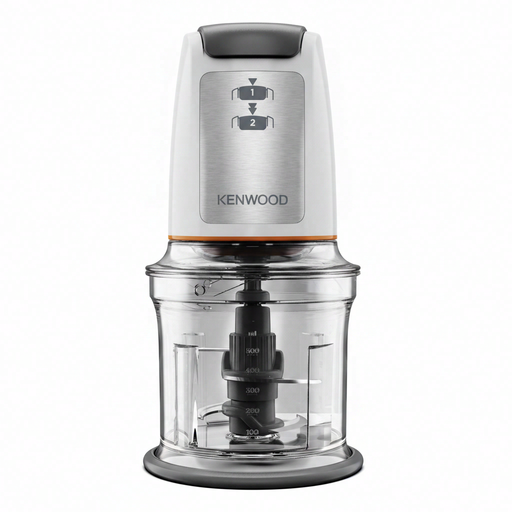
This mini chopper is a compact option for chopping ingredients for dips.
According to the product information, use the chopper for no more than 30 seconds at a time, then let it cool for 2 minutes.
 No image available
The pulse function and manual controls give you the option to check the texture as you process ingredients.
Specifications: 1.3 l bowl, chopping blade and pulse function.
The blades and discs are sharp; handle them with care.
 No image available
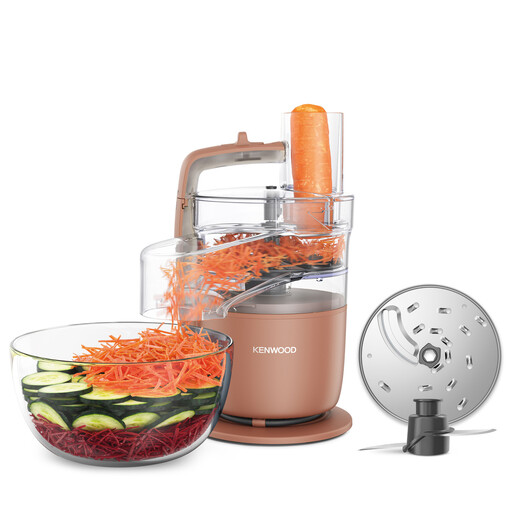
This larger food processor could suit you if you want to chop, slice or grate ingredients as well as make dips; bear in mind how much worktop and storage space it needs.
Specifications: 2.3 l bowl, two speeds and pulse function. Bosch lists slicing and grating accessories.
Not necessarily: the recipe from Uit Paulines Keuken blends it briefly for a chunky dip. Start with a short burst, then decide what texture you’d like.
Don’t leave leftovers out of the fridge for more than two hours. The Netherlands Nutrition Centre advises keeping leftovers in the fridge for no more than two days; also follow general food-storage advice to cool them quickly and keep them covered.
Don’t assume you can. Check the manual for the exact model and each part; the Consumers' Association points out that accessories aren’t always dishwasher-safe and plastic parts can warp at too high a temperature.
If a product doesn’t meet what you could reasonably expect from it, the seller must put things right, according to ACM ConsuWijzer. This could mean a repair, replacement or refund; there isn’t one fixed statutory guarantee period that applies to every appliance.
A CE marking is required for electrical equipment covered by the Dutch Commodities Act Decree on Electrical Equipment. The Netherlands Food and Consumer Product Safety Authority gives kitchen appliances as an example of electrical equipment. Check the marking and instructions on the actual product; a mention on a sales page isn’t an independent product inspection.