
Home baker who makes their own pastry
You want to mix the ingredients carefully and bear in mind that homemade puff pastry still needs to be rolled out, folded and chilled afterwards. The preparation steps are in line with Good Food recipes.


A food processor is most useful when you make your own pastry and want to mix the ingredients for the first stage briefly and carefully. If so, choose a model with a suitable mixing method and processing capacity for your recipe. You don’t need one for the pastry if you’re using ready-made puff pastry, and homemade puff pastry still needs to be rolled out, folded and chilled. Check the attachments and electrical specifications for the exact model, too.
You want to mix the ingredients carefully and bear in mind that homemade puff pastry still needs to be rolled out, folded and chilled afterwards. The preparation steps are in line with Good Food recipes.
You want to match the amount you make each time to your recipe, so you know whether you can prepare it in one batch or need several. Bosch Netherlands and Magimix Netherlands provide processing capacities for specific models.
You make smaller quantities and want to factor in the appliance, its attachments and cleaning. Compare the storage options and cleaning instructions for the exact model; KitchenAid, for example, lists in-bowl accessory storage for the 5KFP0719EBM.
Start with the type of pastry: you don’t need a food processor to make the pastry if you’re using ready-made puff pastry. For homemade pastry, it can help with the initial mixing stage, but it won’t roll, fold or chill the pastry for you. If you mainly need to knead, mix or whisk for a long time, compare stand mixers too: the Consumers’ Association describes the different core tasks of stand mixers and food processors.
| What to consider | What should you check? | Who should give this more weight? |
|---|---|---|
| Control over the pastry | Check for a pulse setting, the blade or dough tool supplied, and instructions for your type of pastry. | If you make your own pastry, you’ll want to be able to pause the mixing and check the dough. Around 36% of consumers say control over the dough is their main buying consideration. |
| Quantity per batch | Compare the weight of your recipe with the model’s maximum dough capacity; bowl capacity and processing capacity aren’t the same thing. | If you’re making several batches for a picnic, you’ll want to know how much dough you can process at a time. Around 29% of consumers prioritise the quantity per batch. |
| Storage and cleaning | Check the dimensions, storage space for attachments and cleaning instructions for each part. | If you have limited cupboard space or want to tidy up quickly after baking, loose parts matter too. Around 21% of consumers prioritise storage and cleaning. |
| Use beyond baking | See which slicing discs and blades come with the model you’re considering, and whether you’d use them for other regular kitchen tasks. | If you usually use ready-made puff pastry, you’ll want to know whether the appliance is useful for other food preparation too. Around 14% of consumers value it mainly for uses beyond this baking task. |
The bowl’s capacity doesn’t tell you how much dough you can process at once. This may mean you need to divide your recipe into several batches.
Compare the weight of your recipe with the stated dough capacity for the exact model you’re considering.
Making several batches may mean extra preparation and washing up.
After mixing homemade puff pastry, you still need to work in the butter, roll it out, fold it and chill it. A dough blade won’t do these steps for you.
Choose based on the pastry-making method you want to use, not just because a model comes with a dough tool.
Even with a food processor, you’ll still need time for the rest of the pastry preparation and chilling.
An extended warranty is only a worthwhile extra if its terms offer something beyond your rights against the seller.
Read the warranty terms and compare them with your rights if a product doesn’t conform to the contract. The Dutch Government explains these rights and notes that there is no fixed statutory warranty period in the Netherlands.
The MultiTalent 3 MCM3501M is a model to consider if you want to compare stated dough capacities and attachments.
According to KitchenAid, the 5KFP0719EBM combines a 1.7 L bowl with a dough blade and slicing discs.
The CS 3200XL is a model to consider if you want to compare multiple bowls and preparation options.
The MultiPro Go FDP22.130RD is a compact model to include in your comparison.
Product picks for mixing and preparing dough with a food processor or stand mixer.
 No image available
This model could suit you if you want to adjust the mixing as you go and divide the recipe into suitable batches.
The product information lists two speeds and a pulse function. Before buying, check the electrical specifications and markings for this exact model.
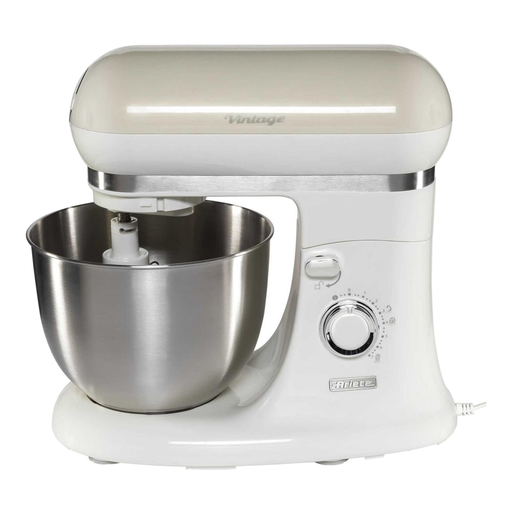 No image available
This model could suit you if you want to mix dough in a stand mixer; match the quantity to your recipe and the manual.
The product information lists a dough tool and a mixing tool. Before buying, check the electrical specifications and markings for this exact model.
No. A food processor can help with the first stage of a particular preparation method, but it won’t take care of the rest. You’ll still need to work in the butter, roll out and fold the pastry, and chill it, as described in Good Food recipes.
Keep chilled food chilled and, ideally, take it in a cool bag. The Netherlands Nutrition Centre recommends keeping opened apple turnovers in the fridge for no more than three days and throwing away chilled food if it has been left unrefrigerated for more than two hours.
You have rights against the seller if a product doesn’t conform to the contract; an extended warranty doesn’t replace those rights. According to the Dutch Government, there is no fixed statutory warranty period in the Netherlands. So compare the terms of any extra warranty with your rights against the seller.
The NVWA classifies kitchen appliances as electrical equipment. CE marking is mandatory for electrical equipment covered by the Dutch Commodities Act Decree on Electrical Equipment; the low-voltage rules cited apply to a rated AC voltage of 50–1000 V. Check the specifications and markings on the exact model you’re considering.