What should you look for when choosing?
First choose the type of appliance to suit your mixing task. Then compare the dough limit, accessories and storage space required for the exact model.
Compact food processor
A good fit if: you usually mix a small batch briefly and have limited storage space.
Bear in mind: the usable capacity and instructions for your dough; Kenwood’s example for the FDP22 does not prove that it can handle the right amount for every biscuit recipe.
Larger food processor
A good fit if: you want to make a larger batch and the manual confirms that your dough is within the model’s limit.
Bear in mind: a higher stated dough capacity doesn’t make a larger machine any smaller; the manufacturer’s figures aren’t a test of your almond biscuit recipe.
Stand mixer with mixing arm
A good fit if: prolonged kneading or whipping until light and fluffy is a more frequent priority than chopping and brief mixing.
Bear in mind: compare the attachments with your recipe; a food processor may be a better fit if chopping and brief mixing are important.
| What to consider |
What should you check? |
Who should consider this most? |
| Mixing method and attachment |
Check the blade or dough attachment supplied and the instructions for the exact model. |
I want to mix the dough briefly and with control, without choosing an unsuitable attachment. Around 40% of consumers prioritise the mixing method. |
| Batch size and dough limit |
Weigh your recipe and compare the total amount with the dough limit; don’t confuse it with the bowl capacity. |
If I’m baking for guests, I want to know whether the manual allows me to make my batch in one go. Around 30% of consumers prioritise the permitted batch size. |
| Dimensions and storage |
Measure the available space and allow room for the bowls and accessories, too. |
I have limited cupboard space and want to know in advance where I can keep the machine and its parts. Around 20% of consumers prioritise compact storage. |
| Cleaning and parts |
Check whether each part is dishwasher-safe and whether a suitable replacement part is available. |
After baking, I want to be able to clean and maintain the parts I’ve used easily. Around 10% of consumers prioritise ease of maintenance above all else. |
Products at Joybuy
Below are food processors for brief mixing, plus a stand mixer as an alternative if you mainly want to mix biscuit dough.
 No image available
Dough mixer and food processor, 4.5 L, beige
The product name specifies a 4.5 L bowl; check the manual for the permitted amount of dough for your recipe.
The product name lists a stainless steel bowl, 1.300 W, six speeds and a pulse function.
View at Joybuy
 No image available
Kenwood FDP23.380GR GO Blend food processor, Eucalyptus Green
This food processor may suit brief mixing; check the permitted amount of dough for your recipe and the attachment supplied.
View at Joybuy
 No image available
Bosch MCM3200W MultiTalent 3
For this model, Bosch states a maximum dough capacity of 0.8 kg and a pulse function; check that the permitted amount suits your recipe.
Bosch gives the mixing bowl a capacity of 2.3 litres. The manufacturer lists a universal blade; check which dough attachments are supplied with this version.
View at Joybuy
 No image available
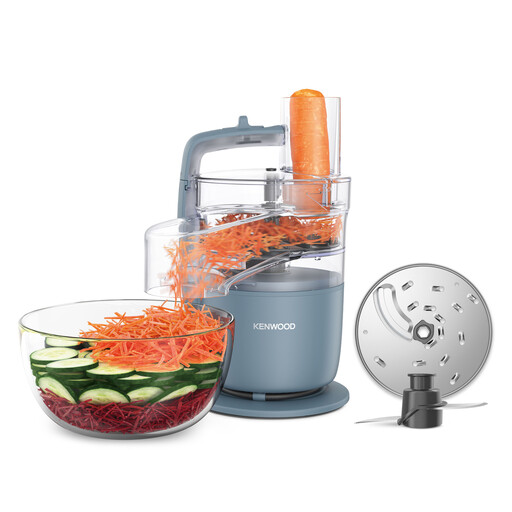
Kenwood MultiPro Go FDP22.130GY
A compact food processor may suit small, quick preparations; check the fill line and instructions for your dough.
The Consumentenbond lists a capacity of 1.3 litres to the brim and 0.8 litres to the fill line for this model. Kenwood’s dough example warns against processing for more than 30 seconds; that example doesn’t determine the right amount for your recipe.
View at Joybuy
 No image available
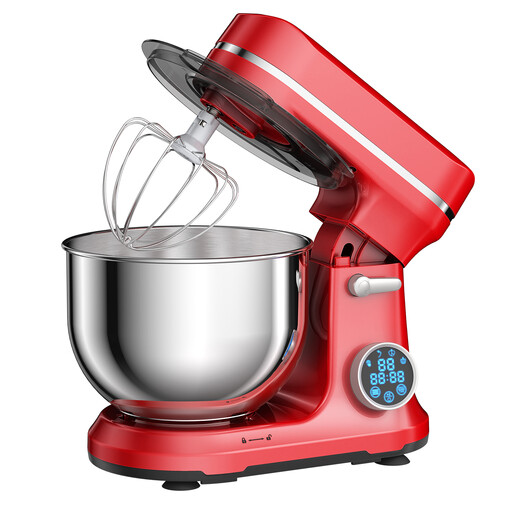
BioloMix BM602E stand mixer, 5 L, red
This is a stand mixer, not a food processor; consider it as an alternative if you mainly want to mix biscuit dough.
The product name specifies a 5 L bowl, 1.200 W and 11 adjustable speeds. Check the manual for the suitable quantity and mixing method.
View at Joybuy
Frequently asked questions
Is a food processor better than a stand mixer for almond biscuit dough?
Not in every situation. The Consumentenbond describes a food processor as suitable for briefly mixing light dough, while a stand mixer is generally better suited to prolonged kneading and whipping until light and fluffy. Follow the instructions for your recipe and the exact appliance.
Can I taste biscuit dough before it’s baked?
The Voedingscentrum advises against eating raw biscuit dough, as raw egg and flour may contain harmful bacteria. Bake the biscuits before serving them.
What should I consider if my guests have a nut allergy?
Ask about allergies in advance and check the ingredients you use. The NVWA includes almonds in its allergen information about nuts. The legal information requirement described by the NVWA applies to businesses offering food to consumers and does not automatically apply to a private gathering.
What about guarantees and spare parts?
In the Netherlands, the statutory guarantee does not have a fixed two-year term. According to ACM ConsuWijzer, it depends on what you can reasonably expect from the product, and the seller is responsible. Check the manufacturer’s guarantee and the availability of a specific spare part separately.
Which product rules are relevant to a food processor in the Netherlands?
Your Europe explains that CE marking is only compulsory when applicable harmonised EU rules require it. For parts that come into contact with food, the NVWA describes the rules for food contact materials. Check the product information for the exact appliance; a general product description alone does not show that a specific item meets all applicable requirements.


