
Vandaag of morgen in huis

Kwaliteit gegarandeerd

Welkomstaanbiedingen ontgrendelen: GRATIS bezorging | Tot 80% korting | Gratis 30 dagen JoyPlus-proefperiode
Download de app
A food mixer can knead bread dough, mix batter and whip cream without you having to spend ages using a hand mixer. Some models can also be expanded with a blender, mincer or pasta roller. However, a high wattage or a long list of features does not automatically mean that an appliance is right for your kitchen.
For home bakers, keen cooks and families, three things matter most: the actual capacity, the accessories you will genuinely use and how the machine sits on your worktop. Below, you can find out what to look for and which models suit different uses.
A power rating of 1,000 or 1,300 watts sounds appealing, but the figure does not tell you everything about performance. Manufacturers may list peak power and rated power differently. The drive construction, maximum dough quantity and recommended operating time are just as relevant.
A food mixer for heavy bread or pizza dough therefore needs more than a powerful motor. Check whether the manual specifies a maximum dough quantity and whether the appliance needs to cool down between uses.
A 6-litre mixing bowl does not mean that you can fill it completely with dough. Capacity is a technical measurement; ingredients expand and dough puts more strain on the motor than liquid batter. For example, a manufacturer may state a maximum total capacity of 6 litres but recommend a working capacity of 5 litres.
So look at the stated capacity for dough, batter and, where applicable, whipped cream. This prevents a large bowl from proving less suitable for family-sized batches in practice.
A mixer with a dough hook, whisk and flat beater is suitable for basic recipes. A multifunctional food mixer may also include a blender or mincer. However, separate accessories, such as a pasta roller or extra dough hook, are often model-specific.
Always check the exact model number and connection. For example, an accessory for a Kenwood Chef series will not automatically fit every kitchen mixer. Also consider cleaning: some parts can go in the dishwasher, while others must be washed by hand.
A medium-weight model is often sufficient for cake batter, whipped cream and lighter doughs. If you regularly make wholemeal bread, brioche or pizza dough, you will benefit more from a machine with a stable drive and clear instructions for maximum quantities.
An electric mixer with multiple speed settings gives you greater control. Always start heavy dough at a low speed. A pulse function is useful for short bursts, but it does not replace a long kneading setting.
Also look for safety features such as overheat or overload protection. These functions do not mean that you can ignore the maximum quantity, but they can switch the motor off if the load becomes too high.
A food mixer with mixing bowl made from stainless steel is durable and generally does not absorb odours or colours from ingredients. Plastic bowls are often lighter, but may be more prone to scratches. Check the appliance dimensions too: a stand mixer usually stays on the worktop and needs to fit beneath kitchen cupboards.
Practical guidelines:
For a food mixer for baking, three attachments form the basic set:
A food mixer with blender or mincer can save space if you use these functions regularly. A blender attachment, for example, is useful for smoothies, soups and sauces. Only use extra functions if fitting, cleaning and storing the accessories remain practical for you.

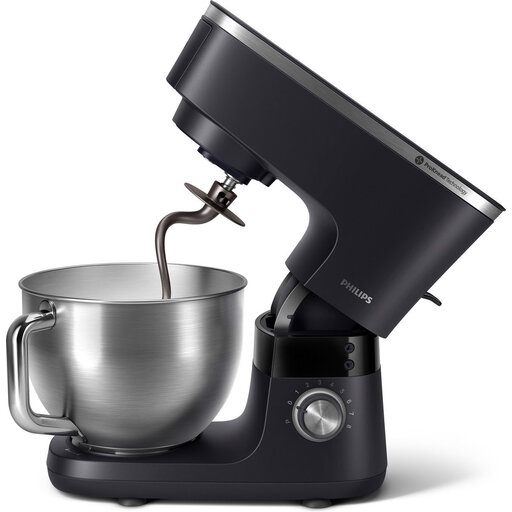
Why it suits this profile: This model provides a straightforward foundation for cakes, bread, pizza and pastries, without additional blender or mincer attachments.
The product information specifies 10 speeds, a pulse function and a 5-litre stainless-steel bowl. Before use, check the maximum dough quantity in the manual.
5-litre stainless-steel bowl, 10 speeds, dough hook, whisk, beater and tilt-head design.
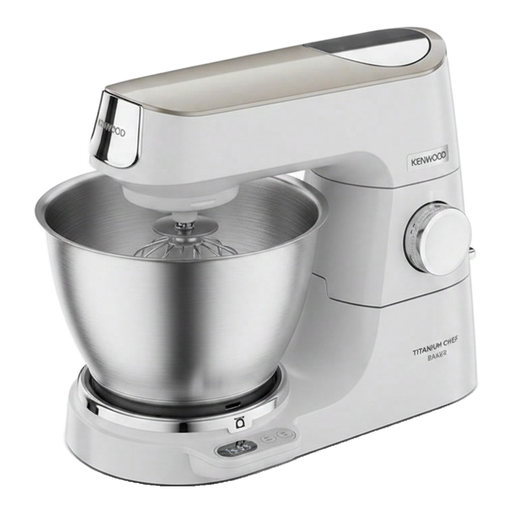
Why it suits this profile: Ideal for bakers who want to weigh ingredients directly in the bowl and value a metal housing and stainless-steel bowl.
The built-in scales mean you do not need a separate bowl for every ingredient. The stated 5-litre bowl and 1,200 watts make the specifications easy to verify.
Built-in scales, variable speed with pulse function, dough hook, whisk and K-beater.
Why it suits this profile: A practical choice for anyone who wants to prepare smoothies, sauces, soups or mince as well as bake, using a single appliance.
The included 1.5-litre glass blender and mincer are clearly listed. This means you are not paying in advance for accessories that would otherwise need to be bought separately later.
5.5-litre bowl, 1,000 watts, 8 speeds, blender, mincer, splash guard and timer.
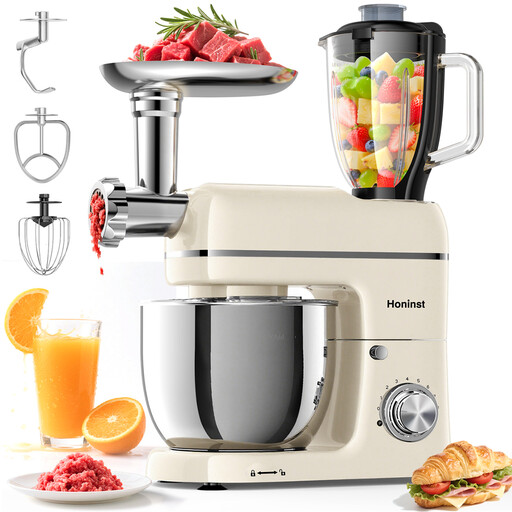
Why it suits this profile: The combination of mixing, kneading, blending and mincing is ideal for households that want to carry out several kitchen tasks with one food mixer.
The product listing specifies a 6 QT stainless-steel bowl, 8 speeds plus pulse and a safety lock on the tilt head. Use only approved accessories and normal household quantities.
Maximum stated power of 1,300 watts, 6 QT bowl, blender, mincer, dough hook, whisk and beater.
We have put together a complete, up-to-date list of products that fully meet these strict selection criteria and the applicable European safety regulations.
A stand mixer will generally last longer when you do not put unnecessary strain on the motor. Use a low to medium speed for dough and follow the maximum quantities stated in the manual. Stop the machine if the motor clearly slows down or becomes hot.
These habits can also help:
Bear in mind that a mixer with dough hook does not do the same job as a food processor. The dough hook kneads dough; cutting, grating and mincing accessories have their own connection and instructions for use.
For one or two people, a bowl of around 3.8 to 5 litres is often practical. Families or users who make larger quantities of bread dough may want to consider 5 to 6.5 litres. Always check the recommended dough capacity, not just the bowl’s total capacity.
An extremely high wattage is not necessary for light batter and whipped cream. For heavy dough, the combination of motor, drive, speed control and maximum dough quantity is particularly important. Compare the stated power with the usage limits in the manual.
Energy consumption depends on the power rating and operating time. A 1,000-watt appliance running for ten minutes theoretically uses around 0.17 kWh. In practice, a food mixer often does not run continuously at maximum power. Accessories, cleaning and any replacement attachments also determine the overall cost.
