
Vandaag of morgen in huis

Kwaliteit gegarandeerd

Welkomstaanbiedingen ontgrendelen: GRATIS bezorging | Tot 80% korting | Gratis 30 dagen JoyPlus-proefperiode
Download de app
A food mixer can whisk batter, knead dough and mix sauces. However, not every appliance is suited to every kitchen. A powerful stand mixer takes up space, while a hand mixer is easier to store. A blender, on the other hand, is designed for liquid preparations and has different blades and a different jug.
The biggest purchasing mistakes usually arise from three misunderstandings:
By considering these points in advance, you can avoid ending up with a kitchen mixer that proves too small, too noisy or difficult to clean after just a few preparations.
A hand mixer is practical if you bake occasionally and have limited storage space. You use it in a separate bowl and can store the appliance in a drawer after use. Pay attention to its weight, the shape of the handle and whether beaters and dough hooks are included.
An electric mixer with five to seven speed settings is generally suitable for cake batter, whipped cream and mashed potato. A hand mixer is less comfortable for heavy yeast dough: you have to hold the appliance continuously, which puts more strain on the motor.
A stand mixer or dough mixer with a mixing bowl stands independently on the worktop. This is useful if you regularly make bread, brioche, pizza or biscuit dough. Do not only check the power rating; pay particular attention to the stated maximum dough capacity.
A food mixer for bread and cakes becomes more versatile when it comes with a K-beater, whisk and dough-hook mixer as standard. This allows you to use one appliance for kneading, mixing and aerating ingredients.
A blender works differently from a food mixer. Its blades are designed to finely chop ingredients and circulate liquids. For smoothies, puréed soup and sauces, a jug blender or stick blender is often the more logical choice.
When choosing a blender, check the difference between the jug’s total capacity and its maximum working capacity. The Philips HR3020/20, for example, has a 2-litre jug but a stated working capacity of 1.5 litres. This is relevant information for families who want to prepare several portions at once.
Compare the rated power where this information is available. Some product descriptions mainly quote peak power. The Monsga SM100, for example, lists 1000 watts of peak power and 600 watts of rated power. These two figures are not equivalent.
Also check the operating-time instructions. The AUCMA ASM1559 states a maximum continuous operating time of six minutes, while the ROUNY stick blender requires one minute of rest after one minute of use. For preparing several batches of dough, this limitation is more important than simply choosing the highest wattage.
A food mixer with a mixing bowl of 4 to 5 litres is sufficient for many households. For large families or several loaves of bread, 6 to 7 litres may be more practical, but a larger bowl also requires more worktop space.
Look at:
The Kenwood Go has a 4-litre stainless-steel bowl and a stated capacity of up to 1.4 kg of dough, equivalent to 800 grams of flour. This is more useful than simply describing it as a ‘large bowl’.
Check whether the accessories you need are included. For baking, a whisk, flat beater and dough hook are more useful than separate accessories that you have to buy later.
Also look for:
The motor unit of an electric mixer, blender or food mixer must not be submerged. Always unplug the appliance before changing accessories or cleaning it. The statutory guarantee in the EU is at least two years; some manufacturers also offer their own manufacturer’s warranty.
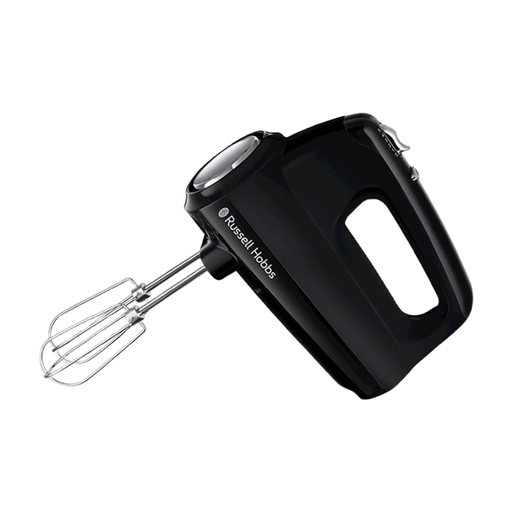
Why it suits this profile: This compact hand mixer is designed for cake batter, whipped cream and light mixing tasks. With five speed settings, a pulse function and a weight of around 1 kg, it is easy to use and store.
The specifications list the operating power of 185 watts and peak power of 350 watts separately. This allows you to assess the motor ratings more realistically.
Five speed settings, pulse function, compact housing and dishwasher-safe detachable parts according to the product description.

Why it suits this profile: This stand mixer combines a relatively compact design with a 4-litre stainless-steel bowl, six speed settings and a pulse function. It is ideal for home bakers who bake regularly but have limited space.
The stated dough capacity of 1.4 kg makes it clear what quantities the appliance is designed for. However, check the colour: the listing says Grey, while the details state Storm Blue.
800 watts, six speed settings, pulse function, plus a K-beater, whisk, dough hook and splash guard included as standard.

Why it suits this profile: The 6-litre bowl and included dough hook are suitable for families and users who regularly make bread, pizza, cakes or larger quantities of batter.
The product information states quieter operation at 68–72 dB, four suction cups and a maximum continuous operating time of six minutes. Plan heavy preparations in batches.
450 watts, six speed settings plus pulse function, tilt-head design and three standard accessories: whisk, dough hook and mixing beater.
We have put together a complete, up-to-date list of products that fully meet these strict selection criteria and the applicable European safety regulations.
A lower power rating is often sufficient for light batter and whipped cream. For bread and pizza dough, the drive system, maximum dough capacity and permitted operating time are more important than wattage alone. Therefore, compare rated power with rated power and peak power with peak power.
It depends on what you are preparing. A stand mixer is more convenient for regular kneading and larger quantities because it operates independently. A hand mixer is lighter, easier to store and practical for small quantities of cake batter or whipped cream.
The lifespan depends on the workload, maintenance and whether you use it in accordance with the manual. Overloading, running it continuously for too long and allowing insufficient rest can put strain on the motor and drive system. Clean the accessories after use, keep the motor unit dry and do not use larger quantities than the manufacturer recommends.
