
Vandaag of morgen in huis

Kwaliteit gegarandeerd

Welkomstaanbiedingen ontgrendelen: GRATIS bezorging | Tot 80% korting | Gratis 30 dagen JoyPlus-proefperiode
Download de app
A food mixer can make mixing, whisking and kneading much easier. But having lots of speed settings or a powerful motor doesn’t automatically make it the right choice for your kitchen. Home bakers often pay too little attention to the actual capacity, the accessories included and how easy the appliance is to clean.
The main pitfalls when choosing a food mixer, stand mixer or kitchen mixer are:
A stainless steel mixing bowl is practical for batters, cream and dough. Don’t just look at the number of litres: check the recommended maximum quantity of ingredients, too. A model with a 4-litre bowl may be enough for a small household, while a 5 to 6.5-litre bowl gives you more room for larger batches.
According to the product information, the Kenwood Go has a 4-litre bowl and can handle up to 1.4 kg of dough, made with a maximum of 800 g of flour. The Honinst and Aucma models are listed with larger bowls, but always follow the manual for maximum quantities and operating times.
A low start speed is useful for cake batter and whipped cream, as it helps prevent splashing. You may need a higher speed for whisking egg whites. 10 speeds give you more options in between, but six settings may be enough for everyday use.
A 400, 450 or 500-watt motor doesn’t, on its own, tell you how well an appliance will handle heavy bread dough. Also look for:
Don’t use a mixer for bread dough for longer than the manufacturer recommends. According to the Honinst product information, heavy yeast dough may only be suitable for a limited operating time, after which the machine needs to cool down. The Aucma 6L is listed with a maximum continuous operating time of six minutes.
A dough hook is designed for heavy dough, a whisk for light mixtures such as cream and egg whites, and a beater or flat beater for cake batter, biscuit dough and sauces. Check whether these parts are included as standard and what they’re made of.
Cleaning requirements also vary by model. The Ariete 1588/04 Vintage’s bowl and whisk are listed as dishwasher-safe in the product description. The beater, dough hook and splash guard must be washed by hand. Hand mixer accessories are often dishwasher-safe, while the motor housing should only be wiped with a damp cloth.
For any appliance, check the EU user manual, statutory guarantee and safety instructions. Unplug the machine before changing accessories or cleaning it.

Why it suits this type of user: This model combines a 5-litre bowl with 10 speeds and a pulse function. It’s a good fit for beginners who want to make cakes, bread, pizza and batters without opting for a large appliance straight away.
The product information lists a dough hook, whisk, beater, splash guard and non-slip suction cups. For heavy dough, make sure you check the permitted quantities in the manual.
5L stainless steel mixing bowl, 400W motor, 10 speeds plus pulse function, and a tilt-head design.
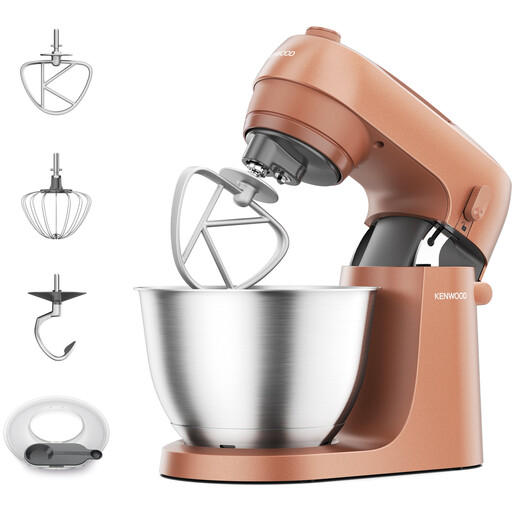
Why it suits this type of user: Its compact housing, 800W power and front-mounted controls make it a good choice for people who bake regularly but have limited worktop space at home.
The stated maximum dough capacity gives you a clearer idea of what to expect from the 4L bowl, so you’re not basing your choice on wattage alone.
4L stainless steel bowl, 6 speeds plus pulse function, and three accessories: K-beater, whisk and dough hook.
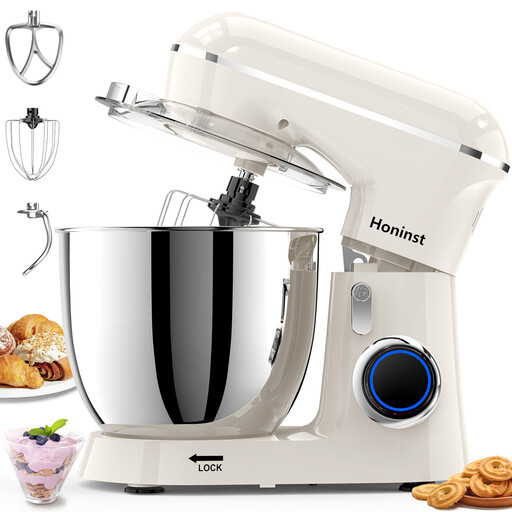
Why it suits this type of user: The larger bowl and 10 speeds are a good fit for families and anyone who makes a variety of recipes, from bread and pizza to cakes and pastries.
The product information says the machine has non-slip suction feet and overheating protection. Its stated noise level of less than 60 dB is a manufacturer’s claim; your experience may vary depending on how you use it.
6.5QT stainless steel mixing bowl, 10 speeds, tilt-head design, plus a dough hook, whisk and beater.
We’ve put together a complete, up-to-date list of products that meet these strict selection criteria and the applicable European safety requirements.
A handheld electric mixer takes up less space and is suitable for cake batter, whipped cream and small quantities of dough. According to the product information, the Tefal Prep’Mix+ HT4621 has a 500W motor, five speeds, a turbo function, a whisk, dough hooks and a stainless steel blending foot for soups and sauces.
A stand mixer is more practical if you regularly make larger batches or want to keep your hands free while preparing food. On the other hand, it’s heavier and takes up worktop space. So, when choosing a food mixer for baking, the right option mainly depends on your batch size, storage space and the types of recipes you make.
Yes, many models come with a dough hook for bread and pizza dough. Always follow the maximum quantities and recommended operating time in the manual. Heavy dough puts more strain on the motor than cake batter.
Five to six speeds are often enough for everyday baking. Ten speeds give you more control, from slow mixing to powerful whisking. A pulse function can be useful for short bursts of power.
Its lifespan depends on how heavily it’s used, how well it’s maintained and whether it’s stored correctly. Let the motor cool down after heavy kneading, don’t exceed the maximum quantity and check the accessories regularly for wear. Statutory guarantees and any additional manufacturer’s guarantees vary by product.
