What should you look for when buying?
Penn State Extension recommends cutting tomato slices evenly and drying them without overlapping. So compare the usable rack area with the batch you want to prepare for your workshop.
| What to consider |
What should you check? |
Who is this important for? |
| Room for your batch |
Compare the usable rack dimensions with the quantity and size of the slices, and check the external dimensions too. |
If I’m drying a large workshop batch, I want to fit the slices without overlapping and plan how many cycles I’ll need. Around 36% of consumers prioritise enough room for a batch. |
| Drying time and checking |
Check the adjustable temperature range, timer and how easily you can access the racks while the food is drying. |
If my workshop is shorter than the drying cycle, I want to be able to check the batch later or prepare a sample in advance. Around 29% of consumers prioritise planning and checking. |
| Space on the worktop |
Compare the external dimensions and rack layout with the space you need for slicing and other workshop activities. |
If I’m using a shared worktop, I want to leave room to prepare the tomatoes and handle the racks. Around 21% of consumers prioritise available worktop space. |
| Checking and cleaning |
Check how to remove the racks and any drip tray, and follow the cleaning instructions for the model. |
After a demonstration, I want to be able to check and clean the parts before using the work area again. Around 14% of consumers prioritise ease of maintenance. |
Food dehydrators at Joybuy
These food dehydrators selected from Joybuy’s range are stackable models with multiple racks for spreading out a workshop batch.
 No image available
YASHE GGJ-261B food dehydrator
The five adjustable trays provide several levels for spreading out a workshop batch; compare the usable area with the number of slices.
The product specifications list temperature control from 35–70 °C, a 72-hour timer and a power rating of 240 W.
The timer doesn’t tell you when the tomatoes are actually dry, so allow time to check the results.
Joybuy
 No image available
YASHE GGJ-261A food dehydrator
The five adjustable trays provide several levels for spreading out tomato slices; check the rack dimensions before planning your batch.
The product name lists 240 W, temperature control from 35–70 °C and BPA-free trays.
Joybuy
 No image available
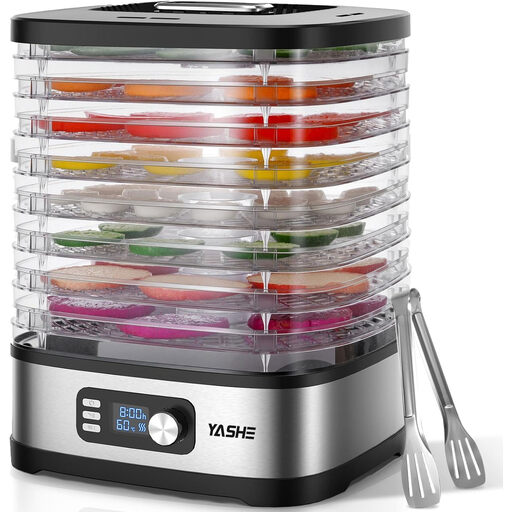
YASHE GGJ-261C food dehydrator
The eight trays provide several levels for spreading out a workshop batch; the number of trays alone doesn’t determine how many slices will fit without overlapping.
The product name lists mesh screens, a fruit roll tray and stainless steel tongs as included accessories. Check which accessories you need for tomatoes before use.
Joybuy
 No image available
YASHE FD-1019 food dehydrator
The five stainless steel trays provide several levels for spreading out slices; compare the usable area with your workshop batch.
The product name lists an adjustable timer and temperature, 360° airflow and a power rating of 400 W.
A timer can’t predict when tomatoes will be dry, so allow time to check the results.
Joybuy
 No image available
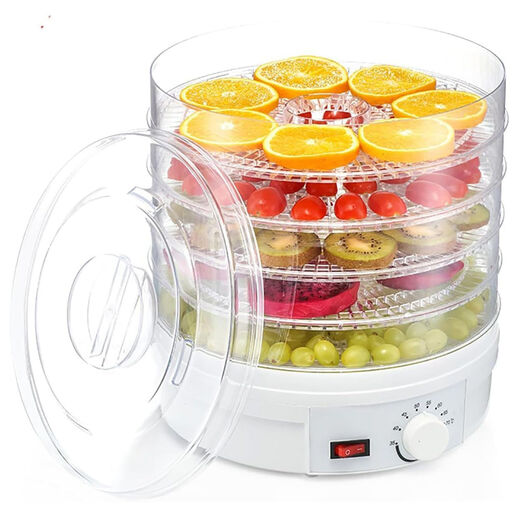
Food dehydrator with five tiers, 35–70 °C, 350 W
The five tiers provide several levels for spreading out slices; check the rack dimensions to see how much space your batch needs.
The product name lists temperature control from 35–70 °C and a power rating of 350 W. The product description mentions removable, dishwasher-safe trays.
Joybuy
Frequently asked questions
Will tomato slices dry during a single workshop?
Not necessarily: Penn State Extension gives a drying time of six to 24 hours for the tomato preparation described. Cut the slices evenly, lay them out without overlapping and, if necessary, prepare a batch in advance so you can show dried tomatoes during the workshop.
How should I handle and store dried tomatoes afterwards?
Allow dried food to cool completely before packing it, and use clean, dry, airtight containers. This advice for storing dried food does not automatically apply to tomatoes in oil.
Can I give people homemade tomatoes in oil to take away without refrigerating them?
Don’t assume that you can. Voedingscentrum warns that Clostridium botulinum can be present in home-preserved vegetables. Storage advice for an opened, packaged product is not a validated storage period for a homemade recipe.
What food safety rules apply to a paid workshop?
According to the NVWA, you must register and work with a food safety plan or hygiene code if you sell food to consumers several times a year. Whether this applies to a particular workshop depends on the business activity; don’t assume that the word ‘workshop’ alone means registration is required.
Who should I contact if a food dehydrator I bought as a consumer develops a fault?
According to ACM ConsuWijzer, the seller is responsible if a product breaks sooner than you could reasonably expect when used normally. Your statutory rights are separate from any manufacturer’s guarantee; there is no single fixed statutory guarantee period for every food dehydrator.


