What should you look for when choosing?
For tomato slices after an evening class, the main considerations are when you can start, batch size, available kitchen space, and how easy the dehydrator is to clean and store. First decide how many slices you want to spread out at once, then look for a timer and dimensions that suit your needs.
| What to consider |
What to look for |
Who is this important for? |
| Planning a late start |
Check the timer range and temperature settings; assess the tomatoes themselves when the cycle ends. |
If I can only start after an evening class, I want to be able to set the running time without relying on the timer to tell me whether the tomatoes are dry. Around 33% of consumers prioritise this late start. |
| Spreading out a larger batch |
Compare the rack dimensions and number of racks with the number of slices you want to lay out without overlapping. |
If I’m drying lots of slices at once, I want enough room to spread them out without them touching. Around 27% of consumers give batch size the highest priority. |
| Kitchen space |
Compare the overall dimensions with the space available for using and storing the appliance, and weigh them against the rack area. |
In a small kitchen, I want the dehydrator to fit without taking up unnecessary worktop or cupboard space. Around 20% of consumers put available space first. |
| Cleaning and storage |
Check whether the racks are removable and what cleaning methods the manual allows; use clean, dry, airtight containers for storage. |
If I want to keep cleaning and storage hassle to a minimum, I look at maintenance and suitable containers. Around 20% of consumers make this their top priority when choosing. |
Food dehydrators at Joybuy
The models below are food dehydrators to compare for drying tomato slices. Check the stated number of trays, temperature control and timer where listed, and bear in mind how much space you have available.
 Image unavailable
YASHE GGJ-261B food dehydrator
The timer lets you set a drying cycle after an evening class, but check for yourself whether the tomatoes are dry.
Five height-adjustable trays; temperature control from 35–70 °C; 72-hour timer; 240 W.
View at Joybuy
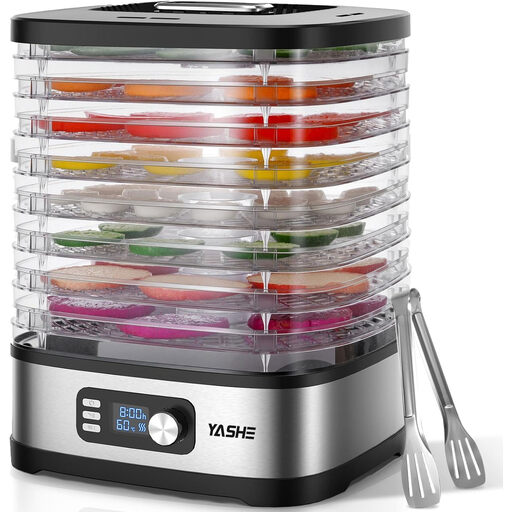 Image unavailable
YASHE GGJ-261C food dehydrator, 8 trays
The eight trays provide separate surfaces for spreading out tomato slices; check the drying result yourself, even when using the timer.
1–72-hour timer; temperature control from 35–70 °C; mesh screens, a fruit roll tray and stainless steel tongs are listed.
View at Joybuy
 Image unavailable
YASHE FD-1019 food dehydrator
The timer can help if you’re starting late, but it won’t tell you whether the tomatoes are dry enough.
Five stainless steel trays; 1–48-hour timer; temperature control from 35–70 °C; 360° airflow and 400 W are listed. According to the product information, the trays rotate and are height-adjustable; automatic shut-off is also listed.
View at Joybuy
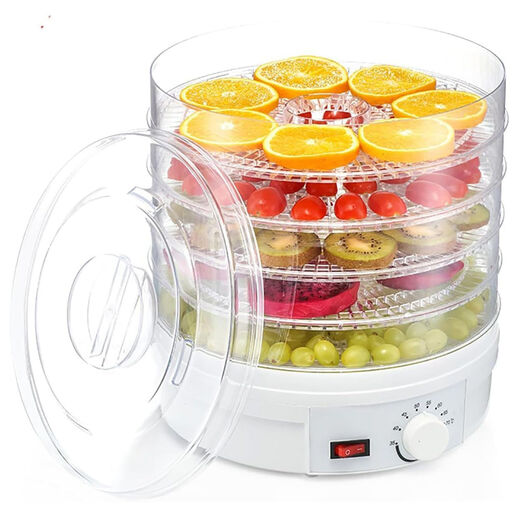 Image unavailable
Food dehydrator, 5 tiers, 35–70 °C
The five tiers provide several surfaces for tomato slices; check the result yourself once they’re dry.
Temperature control from 35–70 °C; 350 W. Removable trays and dishwasher-safe trays are listed.
View at Joybuy
 Image unavailable
Rommelsbacher DA 650 food dehydrator
The seven trays and stated drying area are worth considering if you want to spread out lots of slices at once; also bear in mind how much kitchen space you have.
Seven trays; 0.5 m² drying area; temperature control from 35–75 °C; timer of up to 99 hours and automatic shut-off are listed.
View at Joybuy
Frequently asked questions
Will my tomato slices definitely be ready when the timer stops the next morning?
No. A timer doesn’t confirm that the tomatoes are dry. Penn State Extension gives a drying time of 6–24 hours for the method described, with a leathery to crisp finish; check the slices yourself.
How should I arrange the slices on the racks, and when should I pack them?
Arrange slices of a similar thickness so they don’t touch or overlap; Penn State Extension recommends this when drying on racks. Once dried, let the tomatoes cool completely before placing them in clean, dry, airtight containers. The University of Georgia’s National Center for Home Food Preservation recommends letting food cool completely, as warm food can cause moisture to form inside the container.
Can I store dried tomatoes with garlic or herbs in oil at room temperature?
No. Oregon State University Extension advises keeping these mixtures refrigerated and using them within four days, or freezing them for longer storage. Make sure the tomatoes are completely dry first, and don’t treat the mixture like a regular supply of dried slices.
How can I estimate the electricity costs, and what if the dehydrator breaks?
To estimate the electricity cost, you’ll need the average energy use during your drying cycle, the actual running time and your own tariff; the rated power alone won’t give you a reliable cost. ACM ConsuWijzer explains that if a product breaks sooner than you could reasonably expect under normal use, the seller is responsible for offering an appropriate solution.
What product regulations apply to a food dehydrator in the Netherlands?
Electrical equipment that is required to carry the CE marking must comply with the applicable EU product rules; a CE mark on its own doesn’t prove that a specific model meets every requirement. Parts intended to come into contact with food must comply with the applicable EU rules on food contact materials, including Regulation (EC) No 1935/2004. The European Commission outlines these rules for food contact materials.


