
Same-day & Next-day Delivery

Quality Guaranteed

Unlock Your Welcome Offers: FREE Delivery | Up to 80% OFF | Free 30-day JoyPlus trial
Download the APP
A food container seems simple: fill it, close the lid and take your meal with you. In practice, most problems are caused by choosing the wrong capacity, a mediocre seal or a material that does not suit how you use it. A container for leftovers in the fridge is, after all, different from an insulated food container for a hot lunch on the go.
Whether you cycle to the office every day, pack lunch for school, go camping or prepare meals in advance, focus on the features you actually need. Marketing terms such as “extra fresh”, “stays hot for a long time” or “leakproof” only mean something when the underlying specifications are clear.
A plastic storage container may be suitable for the fridge, freezer and microwave. However, it will not automatically keep your meal hot or cold for hours. For soup that you want to eat at lunchtime, you need an insulated food container with, for example, double-wall vacuum insulation.
A meal prep container is particularly useful when you can heat your meal up where you are. A food jar makes more sense when there is no microwave available.
A screw-top lid with a sealing ring generally closes differently from a loose lid on a rectangular container. Check whether the product description explicitly states that the container is airtight or leakproof. Also look at how the lid should be cleaned. A worn silicone ring can affect the seal.
You should also transport hot food upright and tighten the lid properly. Very hot contents can create pressure. Always follow the manufacturer’s instructions for use.
A capacity of 500 ml sounds generous, but the shape and opening determine how convenient the container is to use. A slim food thermos is easy to carry, but may be more difficult to clean. A wide opening is more practical for pasta, stews and food eaten with a spoon.
Also consider the weight. An stainless steel food container weighing around 700 grams may be sturdy, but it adds to the weight of your bag alongside your meal.
For one lunch, 470 to 500 ml is often a good choice. This is suitable for soup, porridge, pasta or a modest meal. If you want to take a larger portion or a meal for several people with you, it is better to look at around 700 to 1,000 ml.
Sets with different sizes are useful for leftovers and meal prep. A set containing 500, 1,000 and 2,000 ml containers offers more flexibility than three identical containers. Rectangular shapes often make efficient use of the space in your fridge and freezer.
With food thermoses, brands sometimes state a maximum heat- or cold-retention time. According to Stanley’s product description, the Classic Legendary Food Jar keeps food hot for up to 20 hours and cold for up to 24 hours. According to Thermos’s product description, the THERMOcaf Food Jar keeps contents hot for up to 9 hours and cold for up to 14 hours. Such performance figures are brand claims made under specific conditions; the actual duration depends on factors including the starting temperature, how full the container is and the ambient temperature.
A standard lunch container without vacuum insulation is not intended to maintain a temperature for long periods. Choose based on your routine, rather than simply relying on a large number on the packaging.
Stainless steel is sturdy and suitable for transport, but many stainless steel containers are not suitable for microwave use. According to the product description, polypropylene, as used in the Mepal Cirqula range, can be used in the fridge, freezer, microwave without the lid and dishwasher.
Check each component:
A container that can only be washed by hand, such as the 710 ml Thermos Stainless King mentioned above, may work perfectly well, but requires more maintenance than a model that is dishwasher-safe.
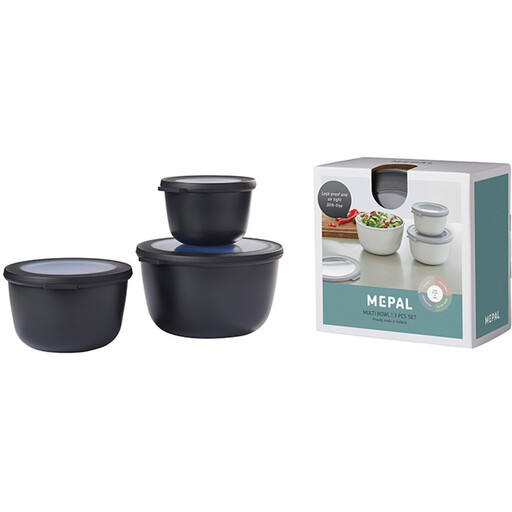
Why it suits this profile: The set containing 500 ml, 1,000 ml and 2,000 ml containers is ideal for anyone who wants to store leftovers, soup and meal prep in different quantities. According to the product description, the containers are suitable for the fridge, freezer, microwave without the lid and dishwasher.
The different sizes mean you do not need a new type of container for every portion. The transparent lid makes it easy to identify the contents.
Set of three sizes; airtight and odour-proof lids according to the product information; BPA-free polypropylene.
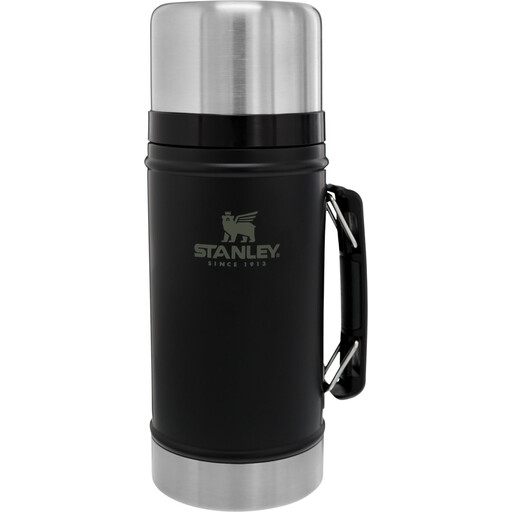
Why it suits this profile: This model is designed for larger meals and outdoor use. The product description mentions double-wall vacuum insulation, a wide opening, a leakproof closure and a folding handle.
The wide opening makes filling, eating and cleaning easier. The capacity prevents you from overfilling a small container.
0.94 l capacity; 18/8 stainless steel; dishwasher-safe according to the product description; lid can be used as a cup.
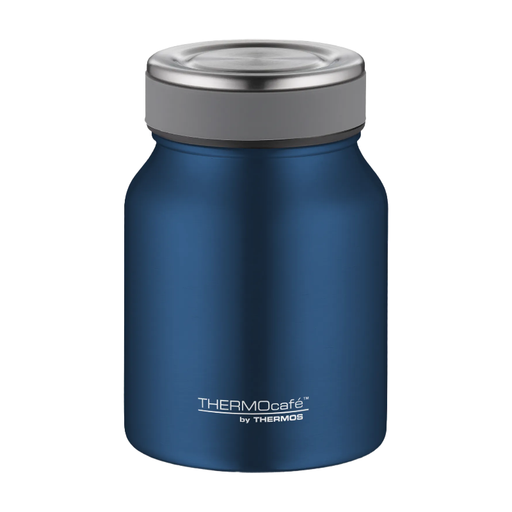
Why it suits this profile: A compact food thermos for work, train journeys and outdoor activities. According to the product description, this model has a 6.5 cm opening, a silicone sealing ring and a dishwasher-safe design.
The wide opening makes cleaning easier than with a very slim food jar. The manufacturer states that it has a leakproof screw cap; tighten it fully before transport.
500 ml capacity; stainless steel with a copper-plated inner wall according to the product information; keeps food hot for up to 9 hours and cold for up to 14 hours according to Thermos’s own product claim.
If you mainly store food at home and heat it up where you are, a set of food storage containers will usually be more useful than a food thermos. According to the product description, the Mepal Cirqula Rectangular Multi Bowl Set with 750, 1,500 and 3,000 ml containers is suitable for the fridge, freezer, microwave without the lid and dishwasher. The rectangular shape is practical for stacking and storage.
For hot soup when there is no microwave available, the Stanley and Thermos models make more sense. Do check the care instructions for each model: according to the product information, the 710 ml Thermos Stainless King is not dishwasher-safe, while other versions state that they are.
We have put together a complete, up-to-date list of products that fully meet these strict selection criteria and the applicable European safety regulations.
For a standard lunch, 470 to 500 ml is often enough. A big eater, or anyone taking a full meal with sauce, pasta or stew, should choose around 700 to 1,000 ml instead. Also consider the internal shape: usable space can vary between models.
That depends on the material. According to the product description, plastic containers such as the Mepal Cirqula are suitable for microwave use, but the lid must be removed. Stainless steel and vacuum containers are generally not suitable for microwave use. Always check the product specifications before heating a container.
Rinse the container after use and remove food residue straight away. A wide opening makes brushing easier. Check whether the bowl, lid and sealing ring can each go in the dishwasher. For models that must be washed by hand, use warm water, mild washing-up liquid and a soft brush. Allow all components to dry completely before closing the container.
