
Small-batch maker
You mainly make tapenade or other dips in modest quantities and don’t want to store a large bowl or lots of separate accessories.


If you mainly make small batches of olive tapenade, start by comparing mini choppers with pulse control and a bowl that suits your recipe. A larger bowl doesn’t prove that an appliance will handle a small quantity well. A compact food processor makes more sense if you also regularly want to slice or grate, but you’ll need space for the bowl and accessories. The Consumers’ Association distinguishes food processors by functions such as chopping, slicing and grating; the listed functions are not the result of a comparative tapenade test.
You mainly make tapenade or other dips in modest quantities and don’t want to store a large bowl or lots of separate accessories.
You want to be able to stop chopping and check that the tapenade is still coarse enough; pulse control can be useful for this.
You want to use the same appliance for regular slicing and grating too, and are happy to make room for the extra parts.
First decide how much tapenade you usually make and how much space you have. Then consider whether you’ll really use extra functions such as slicing and grating.
Choose this if: you mainly want to chop and mix small batches.
Bear in mind: you may need to work in several batches for larger quantities; also check the height beneath your wall cabinets.
Choose this if: you regularly want to slice or grate vegetables as well as make tapenade.
Bear in mind: a larger bowl and extra discs take up more storage space and mean more washing up.
Choose this if: you also want to purée soups or other dishes, and the chopper is included with the exact model.
Bear in mind: a hand blender without a chopper attachment is a different package.
| What to consider | What should you check? | Who is this important for? |
|---|---|---|
| Small batches and limited space | Measure the available width, depth and height; compare the bowl capacity with your recipe, but don’t treat it as the minimum processing quantity. | If you have little worktop space and usually make a small batch, you’ll want an appliance that’s easy to put away too. Around 36% of consumers say small batches and limited worktop space are their main buying priorities. |
| Preferred texture | Check whether the exact model has pulse control and lets you check the texture as you go. | If you prefer your tapenade coarse, you’ll want to be able to pause chopping and check it along the way. Around 29% of consumers prioritise control over texture. |
| Extra kitchen functions | Check which blades and slicing or grating discs are included with the model, and whether you’ll use them regularly. | If you often slice or grate vegetables, one appliance for several tasks could be practical. Around 21% of consumers give regular multi-purpose use their highest priority. |
| Cleaning | Check the cleaning instructions for each part and find out how to remove the blade; keep the motor unit dry. | If you want to tidy up quickly after making a small batch, consider the separate parts and how they need to be cleaned. Around 14% of consumers say ease of cleaning is their deciding buying priority. |
The stated bowl capacity doesn’t tell you the minimum quantity the blade can process effectively.
Choose a bowl that suits your usual recipe and, if you’re unsure, ask for the minimum processing quantity of the exact model.
A dishwasher-safe claim may apply only to certain removable accessories, not automatically to the motor unit.
Check the instructions for each part before cleaning the appliance.
Model variants and bundles can differ; a hand blender on its own doesn’t mean a chopper attachment is included.
Check the full model code and the contents of the pack for the version you’re buying.
If the chopper attachment isn’t included, you may need to buy an extra accessory.
Offers both a mini chopper and a food processor with slicing and grating discs; compare the exact model code.
The MMR08A1 is a chopper option if you don’t need slicing and grating discs.
The 5KFC3516EER is a mini chopper that lets you add liquid while mixing.
The Daily Collection HR1393/90 is a compact chopper alternative; check the full model code.
The MultiQuick 5 range is worth considering if you’re looking for a hand blender with a chopper attachment; check whether it’s included with the version you choose.
The products shown range from a hand-operated chopper to multi-purpose appliances. Compare the listed bowl capacity with your recipe, and check that your chosen model is suitable for a small batch.
 No image available
An option if you want to chop, purée, slice or grate as well as make tapenade; check that the bowl and accessories will fit in your kitchen.
The product name lists 750W and 1.8L. The bowl capacity doesn’t confirm which small quantities it can process well.
 No image available
Worth considering if you want to blend as well as chop; check that the chopping function on this version suits the amount of tapenade you usually make.
The product name lists 600W, 1.5L and three speed settings.
 No image available
The product information mentions chopping and mixing with pulse control; check the texture as you go rather than expecting a particular tapenade consistency.
The product name lists three bowls of 2.5L, 2.2L and 1.8L. Check whether any of them suits the quantity you want to make.
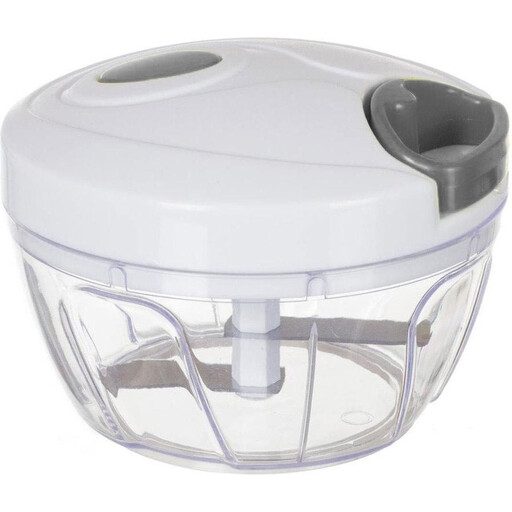 No image available
A hand-operated option if you want to chop small batches without an electric motor.
The product name lists a capacity of 400 mL; the stated bowl capacity doesn’t tell you which quantity it will process best.
 No image available
An option if you want to purée or whisk as well as chop; check the product page to see which accessories are included with this exact version.
This version is described as a hand blender with a chopper and whisk. Check the bowl capacity before comparing it with the amount of tapenade you make.
No, not for chopping olives. The Consumers’ Association distinguishes stand mixers, which are mainly for mixing, kneading and whisking, from food processors, which are designed for tasks including chopping. Choose based on the other jobs you regularly want the appliance to do.
Keep the motor unit out of water and check the instructions to see which removable parts are dishwasher-safe. Clean kitchen utensils thoroughly and avoid cross-contamination if you also use them for raw foods.
Treat homemade tapenade carefully as prepared leftovers: according to the Netherlands Nutrition Centre, put it in a well-sealed container in a fridge at 4 °C within two hours and keep it there for no more than two days. The separate storage advice for an opened jar of olive tapenade doesn’t automatically guarantee the same shelf life for a homemade recipe.
No. According to ACM ConsuWijzer, the statutory guarantee is separate from any manufacturer’s or seller’s guarantee. How long you can reasonably expect a product to work properly depends on the product and the circumstances. If a product is faulty, contact the seller.
The NVWA states that CE marking is compulsory for electrical products and includes kitchen appliances among electrical devices. Check the product information and safety instructions for the version you choose. CE marking is not a comparative quality test for tapenade.