
Vandaag of morgen in huis

Kwaliteit gegarandeerd

Welkomstaanbiedingen ontgrendelen: GRATIS bezorging | Tot 80% korting | Gratis 30 dagen JoyPlus-proefperiode
Download de app
A food chopper can take a lot of chopping off your hands. However, models vary considerably in how they work, their capacity, materials and ease of cleaning. A compact mini chopper is handy for herbs and small portions, while an electric chopper with a glass bowl is better suited to larger quantities of vegetables, nuts or meat.
The product name doesn’t always tell you everything. Before you order, look out for these common pitfalls.
Manufacturers sometimes quote the bowl’s total capacity, even though you can’t fill it completely and still expect ingredients to be processed evenly. Check whether the stated capacity is, for example, 500 ml, 830 ml, 900 ml, 1 litre or 1.5 litres, and think about how much you usually prepare at a time.
A mini chopper is enough for chopping herbs or garlic, or making a small portion of dressing. If you make soup bases, mince or several portions of pesto, a multi-purpose chopper with a larger bowl is a better choice.
A food chopper that chops, purées, mixes and grinds sounds versatile. In practice, the blade, controls and ease of cleaning matter most. A model with one simple pulse control may be more convenient than one with lots of separate parts.
Also check whether the blade can be removed and whether the bowl, lid and blades are dishwasher-safe. With manual models, make sure the pull cord, handle or cutting mechanism feels sturdy.
“Rust-proof” or “professional” doesn’t tell you much without further details. Check the materials used for the blades, bowl and housing. Stainless steel is often used for blades; glass is less prone to absorbing odours and becoming discoloured than some plastics. A wooden handle can feel comfortable to hold, but needs different care from a product that is entirely dishwasher-safe.
A manual chopper works without electricity and is suitable for small quantities of herbs, onions or soft vegetables. You control the pace, but the result depends on how you operate it and how much you put in.
An electric chopper saves effort and is handy if you use it regularly. Check the motor power, but consider it alongside the bowl capacity and blade design. A higher wattage on its own doesn’t guarantee an even result.
Choose a capacity to suit your everyday needs:
A compact vegetable chopper takes up less space on your worktop. Do check its dimensions, especially if you plan to store it in a kitchen cupboard.
A stainless steel blade is a popular choice for vegetables, herbs and nuts. A pulse setting lets you process ingredients in short bursts and helps prevent soft ingredients from being processed for too long. Some models offer two speeds.
Also look for a bowl or lid lock, a stable base and clear assembly instructions. Always handle blades with care and keep them out of children’s reach. Follow the manufacturer’s instructions for maximum quantities and suitable ingredients.
The following selection is based on verifiable details such as controls, capacity, materials, functions and maintenance. How suitable each one is depends on your kitchen routine.
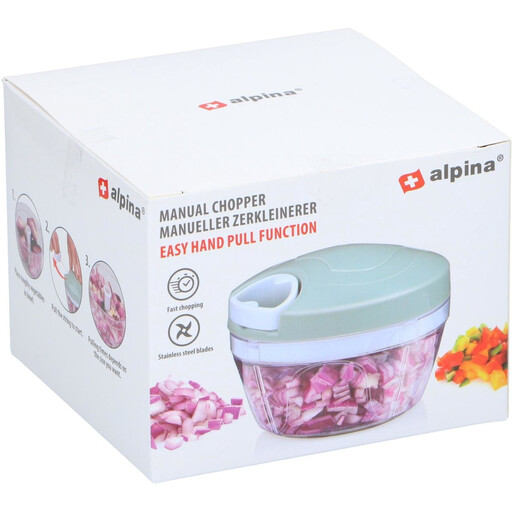
Why it suits this profile: This compact manual chopper works without a cable or motor and is designed for chopping nuts, vegetables and herbs, among other things. At 10 cm long and weighing 210 grams, it’s easy to store.
The simple manual operation means you don’t pay for functions you don’t need. Check beforehand exactly how the model works, though.
Stainless steel component, ergonomic handle, compact size and, according to the product information, dishwasher-safe.
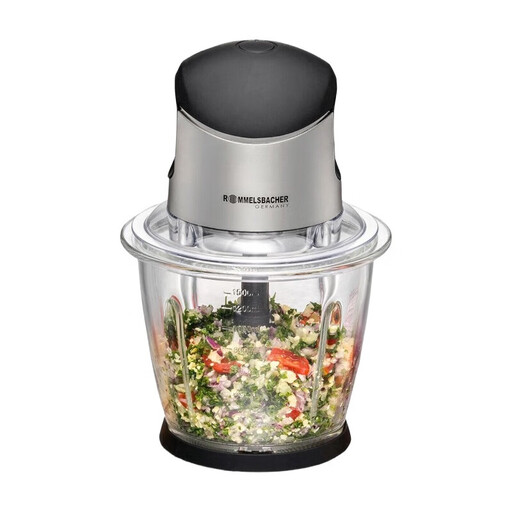
Why it suits this profile: The 1.5-litre glass bowl and 500-watt power are a good fit for households that regularly process larger quantities.
The stated bowl capacity, motor power and material specifications make it easier to compare with other models than relying on general marketing terms alone.
1.5-litre glass bowl, four-wing stainless steel blade, low vibration level according to the product description, and removable dishwasher-safe parts.
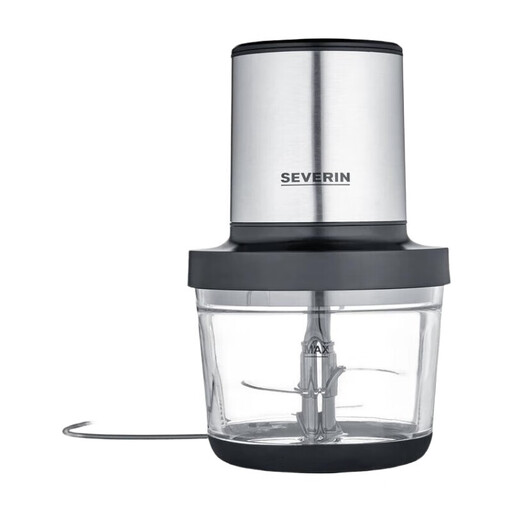
Why it suits this profile: This electric food chopper has a 1,000 ml glass bowl, a pulse function and a brushed stainless steel blade. It’s a good fit if you regularly prepare vegetables, herbs, nuts or meat.
The glass bowl lets you see what’s inside and, according to the product information, doesn’t absorb odours or stains. The pulse function gives you more control than continuous operation alone.
400 watts, 1,000 ml bowl capacity, stainless steel blades and a stated ice-crushing function.
Not every task calls for a food chopper. A salt mill with an adjustable grind setting is designed for dry salt crystals. Peugeot Fidji models are manual and refillable. For dry spices, nuts or coffee, a separate spice grinder or nut chopper may be more practical. Always check whether the product is designed for dry, wet or both types of ingredients.
For slicing and grating, a vegetable slicer or mandoline attachment is a better choice than a chopper. If you mainly want to finely chop fresh herbs, you can also browse the herb chopping tools range.
We’ve put together a complete, up-to-date list of products that meet these strict selection criteria and the applicable European safety regulations.
Electricity use for a short chopping cycle is generally low, but the exact amount depends on the motor power and how long you use it. A manual chopper doesn’t use electricity. Choose an electric model for speed and convenience, rather than based on wattage alone.
First unplug it and carefully remove the blade. Wash the parts according to the instructions. Only put parts in the dishwasher if they’re explicitly labelled dishwasher-safe. Never immerse the motor base.
Its lifespan depends on the materials, how often you use it, whether it’s overloaded and how well it’s maintained. Let the motor cool down between demanding chopping sessions, and cut large ingredients into smaller pieces first. Store blades dry and regularly check that the bowl, lid and drive mechanism still fit securely.
