
Vandaag of morgen in huis

Kwaliteit gegarandeerd

Welkomstaanbiedingen ontgrendelen: GRATIS bezorging | Tot 80% korting | Gratis 30 dagen JoyPlus-proefperiode
Download de app
A great meal starts with great prep, but the endless chopping of onions, herbs, and vegetables can be a real chore. An electric food chopper promises to speed up this process. However, the market is flooded with models that over-promise and under-deliver. As a Joybuy Product Recommendation Officer, I'm here to help you make the right choice based on facts, not clever marketing.
Before you make a purchase, it's important to recognise the common pitfalls that lead to buyer's remorse.
To find a model that will last for years and perform well, focus on the specifications that truly matter.
The bowl is where all the action happens. The choice of material directly impacts ease of use and hygiene.
Capacity is just as important. For chopping an onion or some herbs, 500 ml is sufficient. If you cook for a family or want to make larger batches of pesto or soup bases, look for a bowl of 1 litre or more.
Don't be dazzled by high wattage. An electric food chopper with a power rating between 300W and 500W is more than sufficient for most household tasks, including grinding harder ingredients.
More important than raw power are the speed settings.
The effectiveness of a multi-chopper depends on its blades. Most models have two or four blades. A four-blade system, often on two different levels, ensures a more even result because the ingredients circulate better through the bowl. Stainless steel blades are the standard, offering the necessary durability and sharpness. Check if the blades can be removed easily and safely for cleaning.
Based on objective specifications, we have selected a few models that suit different user profiles.
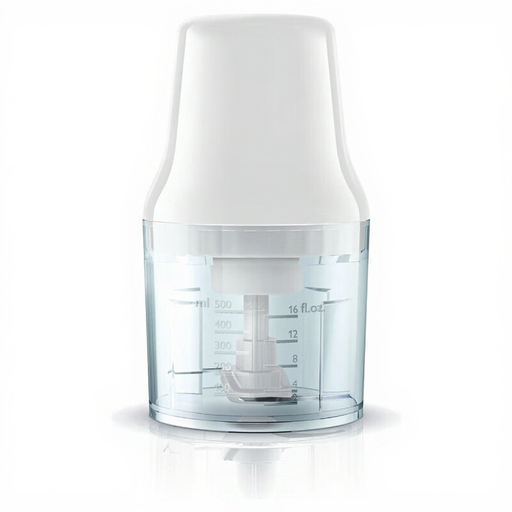
Why This Fits Their Persona: Ideal for those who need to quickly chop an onion, garlic, or herbs daily without pulling out a large appliance. Its compact size fits in any kitchen.
Its simple operation (press down on the lid) and dishwasher-safe parts bypass the pitfall of a complex and hard-to-clean design.
Power: 450W motor is powerful enough for most daily tasks. Usable capacity: 0.5 litres, perfect for small portions.

Why This Fits Their Persona: For the chef who needs flexibility. With two different-sized bowls, you can process a large batch of vegetables and a small amount of herbs simultaneously without mixing flavours.
The two glass bowls are a direct solution to the pitfall of an impractical plastic bowl. Glass is hygienic, scratch-resistant, and doesn't absorb odours.
Dual bowls: 2L and 0.6L glass bowls with their own blade sets. 2 speeds: Control over the texture for both soft and hard ingredients.
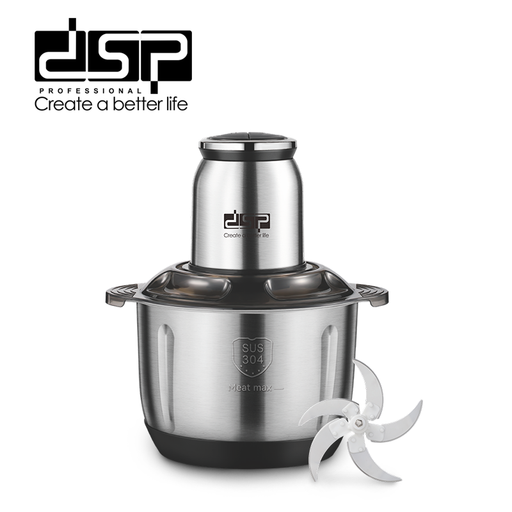
Why This Fits Their Persona: Perfect for preparing meals for large groups. The huge capacity makes it possible to process large quantities of meat, vegetables, or other ingredients in one go.
This model focuses on pure functionality for large volumes. The 500W motor is efficiently paired with a 5-leaf blade and two speeds, allowing it to avoid the wattage trap and actually perform.
Extra-large capacity: 5-litre stainless steel bowl. Powerful and versatile: 500W motor with 2 speeds and a 5-leaf blade for efficient chopping.
We have compiled a complete, up-to-date list of products that fully meet these strict selection criteria and safety standards.
Some food choppers can, but not all. Always check the manufacturer's product description. To crush ice, you need a model with a powerful motor (usually 400W or more), sturdy blades, and a robust bowl (glass or stainless steel is more suitable for this than plastic). Use the pulse function to avoid overloading the motor.
Safety first: always unplug the appliance before you start. Carefully remove the blade assembly; they are extremely sharp. Most bowls, lids, and blades are dishwasher-safe, but check the manual to be sure. If washing by hand, use warm water with washing-up liquid and a brush to avoid getting close to the blades. The motor unit should never be submerged in water; wipe it clean with a damp cloth.
A food chopper (or onion chopper) specialises in chopping, puréeing, and mixing. It's a compact appliance for quick, daily tasks. A small food processor is often more versatile and comes with extra accessories like discs for grating or slicing. If you just need a quick vegetable chopper, a food chopper is the more efficient and compact choice. If you're looking for an all-in-one appliance, a small food processor might be a better, albeit larger, investment.
