
Vandaag of morgen in huis

Kwaliteit gegarandeerd

Welkomstaanbiedingen ontgrendelen: GRATIS bezorging | Tot 80% korting | Gratis 30 dagen JoyPlus-proefperiode
Download de app
A good food chopper saves you from tears when chopping onions and shaves minutes off the prep time for almost any meal. But the market is flooded with appliances that overpromise and underdeliver. As a Joybuy Product Recommendation Officer, I'm here to help you separate fact from marketing fiction, so you can choose a model that truly works for your kitchen.
Before making a purchase, it's crucial to recognise the common pitfalls. Many consumers are lured by specifications that look great on paper but disappoint in practice.
To avoid buyer's remorse, focus on the specifications that truly matter. These are the three most important factors that determine the performance and lifespan of your food chopper.
The bowl is where all the action happens. Your choice of material directly impacts durability and hygiene.
Capacity is just as important. A mini chopper of 0.5 litres is perfect for chopping an onion or some herbs. For preparing family meals, making soups, or a larger batch of hummus, a 1.5 to 2-litre model is a better choice.
Don't be fixated on high wattage. An efficient electric food chopper typically has a power rating between 200W and 500W. What's more useful are multiple speed settings:
A pulse function gives you short bursts of power, which is useful for maximum control over the texture.
The blades are the heart of the machine. Most choppers have two or four blades. Models with four blades, often arranged in two tiers, provide a more even and faster result. Stainless steel (SS) blades are the standard due to their durability and sharpness.
For convenience, it's crucial that the parts are easy to disassemble. Choose a model where the blades, bowl, and lid are dishwasher-safe. This makes an electric vegetable cutter not just a cooking aid, but an appliance you'll actually use often.
Below are some popular choices, matched to different user profiles. We've focused on specifications that avoid the common pitfalls and offer practical value.
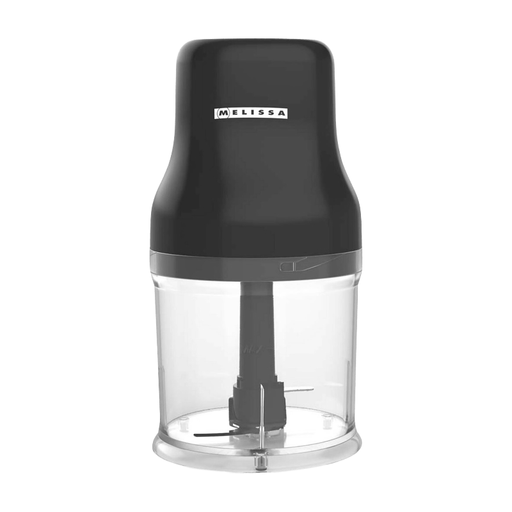
Why This Fits Their Persona: Perfect for those who need to quickly chop an onion, garlic, or herbs without pulling out a large appliance. Its compact size makes it an ideal mini chopper for kitchens with limited storage space.
This model focuses on simplicity. It doesn't have an unnecessarily high wattage, but an efficient 200W motor that's perfect for its 0.5L bowl. The one-button operation prevents complexity.
Very compact and budget-friendly. The bowl and blades are dishwasher-safe, which makes cleanup simple.

Why This Fits Their Persona: Ideal for families preparing larger portions. The 2L bowl is spacious enough for sauces, soups, or prepping vegetables for an entire meal. It's also suitable for making fresh baby food.
The sturdy glass bowl avoids the problems of cheap plastic: no stains, odours, or instability. The two speeds offer genuine control for different ingredients, from soft onions to hard nuts.
The large 2L glass bowl is hygienic and durable. Its 300W motor with two speeds is versatile enough for most tasks in a family kitchen.
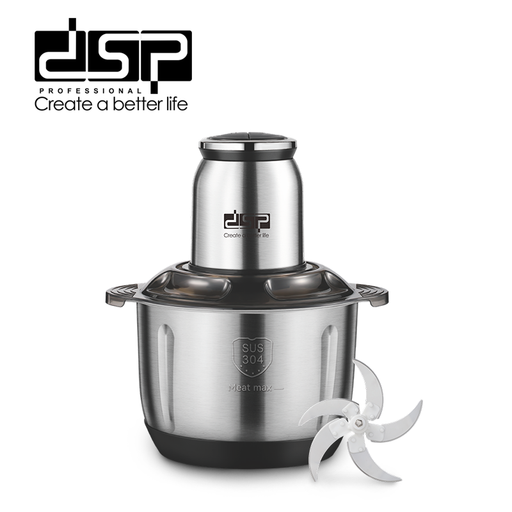
Why This Fits Their Persona: For those who want to do more than just chop. This multi-chopper also functions as a meat grinder thanks to its powerful motor and large stainless steel bowl. It's ideal for making your own minced meat, sausages, or large batches of pesto.
This is not your average chopper. The stainless steel bowl is indestructible and hygienic. The 500W motor isn't a marketing gimmick here; it's necessary for the large 5L capacity and tougher tasks like grinding meat.
Very large 5L capacity and a durable stainless steel bowl. The powerful motor and 5-leaf blade make it suitable for heavy-duty jobs like grinding meat.
We have compiled a complete, up-to-date list of products that fully meet these strict selection criteria and UK safety regulations.
Some models can, but always check the manufacturer's specifications. A chopper with a powerful motor (at least 400W), a sturdy (preferably glass) bowl, and robust blades is required for this task. Using a model not designed for it risks damaging the blades or the motor.
A food chopper (or multi-chopper) is primarily designed for chopping, grinding, and puréeing. It's a compact appliance for quick, daily tasks. A small food processor is often more versatile and comes with extra attachments for tasks like grating, slicing, or even kneading. For basic jobs like chopping onions or grinding nuts, a food chopper is typically more practical and easier to clean.
Safety first: always unplug the appliance before you begin. Remove the blade assembly by gripping it by its plastic top; never touch the cutting surfaces directly. Many bowls and blades are dishwasher-safe (check the manual). If washing by hand, use a dish brush with hot, soapy water to avoid direct contact with the sharp edges.
