
Shoppers with an allergy or coeliac disease
You need to avoid a particular ingredient or gluten. So compare the allergen information on the current packaging of the exact version you want to buy with what you need to avoid.


If you have a food allergy, first choose a breakfast cake whose current ingredients, allergen information and any cross-contamination warning are suitable for what you need to avoid. Individually wrapped portions are handy for a lunchbox or sharing, but the packaging format says nothing about whether a product is suitable for someone with an allergy. Even a gluten-free version may contain milk or lupin.
You need to avoid a particular ingredient or gluten. So compare the allergen information on the current packaging of the exact version you want to buy with what you need to avoid.
You’re looking for portions that can go straight into a lunchbox for school, work or a day out. For example, Peijnenburg says its Naturel 10-pack contains ten individually wrapped slices weighing 28 g each. Check the allergen information on packs like these too.
You’re looking at a zero version or breakfast cake with no added sugar. Check the nutritional information and allergen details separately: a sugar claim doesn’t tell you which allergens a product contains.
Start with the allergens you need to avoid. Then consider whether individual portions, a gluten-free version or a sugar claim suit the way you plan to use it.
| What to consider | What to check when buying | Who it matters to |
|---|---|---|
| Suitability for an allergy | Read the ingredients, allergen information and any cross-contamination warnings on the pack you’ve chosen. | If I need to avoid a particular allergen, I want to know whether this specific version is suitable; around 36% of consumers put this check first. |
| Individual portions | Check whether the slices are individually wrapped and how much each portion weighs. | For a lunchbox or sharing, I want to take portions with me without having to cut them first; around 21% of consumers prioritise this convenience. |
| Gluten-free version | As well as checking the gluten-free label, look at the other ingredients and allergens, including milk and lupin. | When I need to avoid cereals containing gluten, I first look for a suitable version without overlooking other allergens; this is the main priority for around 29% of consumers. |
| Sugar claim | Compare the claim with the nutritional information, and check the allergen details separately. | I want to compare a zero version or a product with no added sugar, but I still need to check for allergens; around 14% of consumers say this sugar choice is their priority. |
According to Peijnenburg, the Naturel 10-pack contains rye flour, and this version may contain milk, hazelnuts, almonds and other cereals containing gluten. The individual wrapping doesn’t change that information.
Check the ingredients and any warnings on the specific pack, even if the portions are individually wrapped.
Peijnenburg lists lupin protein concentrate and whey protein concentrate from milk in its gluten-free naturel version.
Compare the full ingredients and allergen information with everything you need to avoid, not just the gluten-free label.
Albert Heijn says that AH Ontbijtkoek zero gesneden contains cereals containing gluten and rye; barley, oats and wheat may also be present.
Consider the sugar claim and allergen information as two separate parts of your decision.
The Netherlands Nutrition Centre describes the use of iodised baker’s salt in bread, but also says that bakers aren’t required to use it. This doesn’t tell you how much iodine a specific breakfast cake contains.
For the ingredients in the breakfast cake you’ve chosen, rely on the actual label rather than the product category.
Peijnenburg offers both an individually wrapped Naturel 10-pack and a separate gluten-free naturel version.
Albert Heijn’s own-brand range includes sliced zero breakfast cake and a spiced cake bar in a 5-pack; these are different products.
ALDI lists sliced zero breakfast cake and sliced wholemeal breakfast cake from Koek & Bakker, both in 485 g packs.
Lidl’s Tastino range includes regular breakfast cake and a 485 g zero version.
This breakfast cake is an option to compare if you’re looking for a portion to take on the go or pack in a lunchbox. If you have a food allergy, always check the current packaging before eating it.
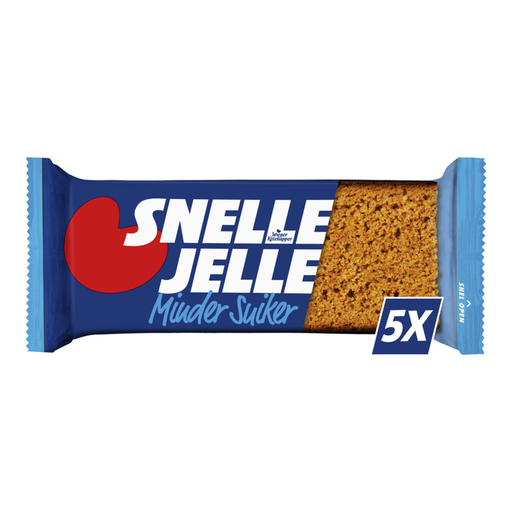 Image unavailable
If you’re looking for breakfast cake for a lunchbox, check the specific pack to see how the portions are wrapped and whether the ingredients and allergens are suitable for what you need to avoid.
Pack weight according to the product name: 250 g. Don’t treat the version name as proof that it’s suitable for someone with an allergy.
Yes. If you have a food allergy, check the current packaging of the version you’ve chosen. The Netherlands Food and Consumer Product Safety Authority says that allergens must be clearly listed on pre-packed foods; information for another version is no substitute for the label on your pack.
It’s a warning about possible cross-contamination, which you should take into account when assessing the specific product. The Netherlands Food and Consumer Product Safety Authority outlines Dutch rules for these warnings that have applied since 1 January 2026; consider the warning in relation to what you need to avoid.
No, the gluten-free label doesn’t mean that. Peijnenburg lists lupin protein concentrate and whey protein concentrate from milk in its gluten-free naturel version; check the ingredients again for every other version.
No, a zero claim isn’t allergen information. Albert Heijn says that AH Ontbijtkoek zero gesneden contains cereals containing gluten and rye, and may also contain barley, oats and wheat.
You can’t tell that from the name breakfast cake. The Netherlands Nutrition Centre discusses iodised baker’s salt in bread and says its use isn’t compulsory; check the ingredients of the specific product rather than assuming it contains iodine.