
Quiet listener at home
You usually listen at a relaxed volume in one place and want to assess vocals and instruments at your preferred listening level, rather than paying mainly for maximum volume.


If you usually listen in one place, choose between a compact stereo pair beside your listening spot and a single Wi-Fi speaker that’s easy to control. A stereo pair needs space and sometimes cables; Wi-Fi depends on a suitable network, while a battery-powered speaker is handy if you move it around. None of the specifications listed here proves how a model will reproduce folk music at low volume: if possible, listen to familiar recordings at your usual volume.
You usually listen at a relaxed volume in one place and want to assess vocals and instruments at your preferred listening level, rather than paying mainly for maximum volume.
You may have room for two compact speakers on either side of your listening spot and want to match the connections to your music source.
You want to play music in different rooms or while you’re out and about. The choice between Wi-Fi and a battery-powered speaker depends on how you use your network and how often you take it with you.
Assess vocals and acoustic instruments at your preferred listening volume; maximum power alone doesn’t tell you how a speaker will sound at that level.
A good fit if: you listen in one place and can position two speakers on either side.
Bear in mind: the space required, cables and connection to your music source.
A good fit if: app control and playback over your home network are important to you.
Bear in mind: your Wi-Fi network, your preferred music service and any accessories needed for a wired source.
A good fit if: you regularly take the speaker between rooms or outdoors.
Bear in mind: battery life is a manufacturer specification; it doesn’t automatically indicate how long it will last with your settings.
| Consideration | What should you check? | Who is this important to? |
|---|---|---|
| Sound and volume | Assess the speaker using familiar recordings in your usual listening spot. Check that the volume control is within easy reach; the Edifier MR4 has a control on the front. | If you mainly listen quietly, you’ll want to assess vocals and acoustic instruments at your preferred volume. Around 36% of consumers with this listening need give quiet listening top priority. |
| Stereo placement | Check that you have room for two speakers and whether the model is sold individually or as a pair. Match the inputs to your music source. | If you listen in one place, you’ll want to position two separate speakers on the left and right. Around 29% of consumers give this stereo placement top priority. |
| Home playback | Check Wi-Fi, Bluetooth and support for the music service you use. For a wired source, Sonos lists a separate line-in adapter for the Era 100. | If you want to play music easily from your usual sources at home, pay attention to connectivity and controls. Around 21% of consumers give home streaming top priority. |
| Portability and battery | Check whether the speaker has a battery, and treat its stated battery life as a manufacturer specification, not a guarantee of how long it will last with your settings. | If you regularly take the speaker with you, you won’t want to be tied to one listening spot. Around 14% of consumers give portability top priority. |
Denon describes a single Home 150 as a mono speaker and sells the model individually. So one unit is not the same as two separately positioned speakers.
Before choosing a setup, check whether the listing is for one speaker or a pair.
A second compatible speaker may be needed for a stereo pair.
For the Sonos Era 100’s line input, Sonos lists a separate adapter.
Compare your music source’s output with the chosen speaker’s input, and check which cable or adapter you’ll need.
You may need a suitable cable or adapter.
A battery and compact size are most useful if you actually move the speaker around. For a fixed listening spot, positioning and your preferred setup may matter more.
Think about how often you’ll take it with you, then compare portable and fixed setups.
The MR4 is a wired active stereo pair for a fixed setup at a desk or another listening spot.
The Era 100 is a compact Wi-Fi and Bluetooth speaker for the home, with options to expand your system.
The Home 150 is a compact HEOS speaker for a home setup.
The Flip 7 is a portable Bluetooth speaker for anyone who regularly changes their listening spot.
The A2+ Gen 3 is a compact active stereo pair for a desk or small, fixed listening setup.
This selection includes portable Bluetooth speakers, home Wi-Fi speakers and desktop speaker sets.
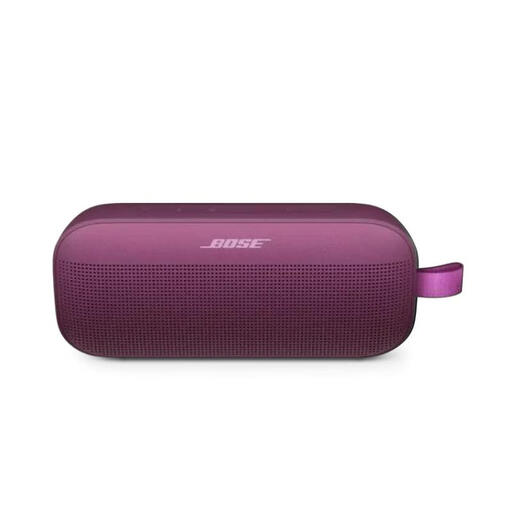 No image available
A portable Bluetooth speaker for listening in different places.
The product description lists a battery, a carrying loop and adjustable bass, mid-range and treble via the Bose app. For the stereo mode described, you need to pair two compatible speakers.
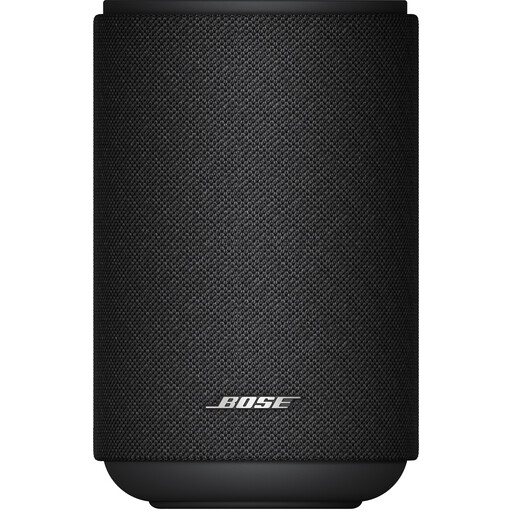 No image available
A home Wi-Fi speaker for listening via an app or network.
The product details list Wi-Fi, Bluetooth, app control and multi-room functionality. One speaker is included, not a pair.
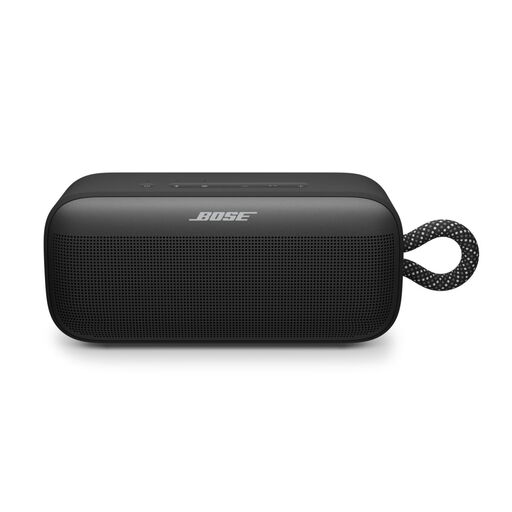 No image available
A portable Bluetooth speaker for anyone who wants to be able to move their listening spot.
The product description lists a battery, carrying loop and EQ settings via the Bose app. Two SoundLink Plus speakers are needed for the stereo mode described.
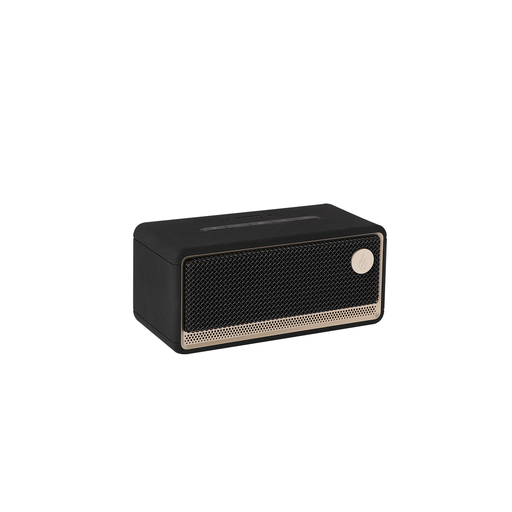 No image available
A Wi-Fi and Bluetooth speaker for the home if you want to use different sources.
The product details list USB and AUX connections, AirPlay 2 and multi-room synchronisation. They also mention a built-in battery.
 No image available
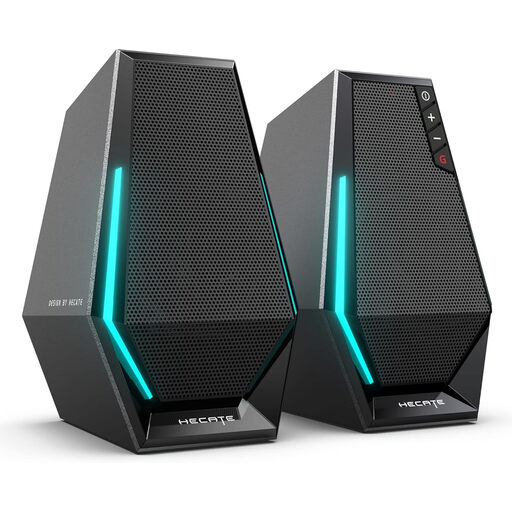
A stereo set for a computer or desktop setup.
The product details list a music mode, Bluetooth, USB, AUX and volume control on the speaker.
No. Maximum wattage is no substitute for listening at your usual volume. Consider placement and controls too, and listen to familiar recordings; the product specifications listed here aren’t a comparative measure of sound at low volume.
Sonos lists an aux cable and a Sonos line-in adapter. Also check which output your music source has.
The Dutch government advises anyone dealing with a noise nuisance from neighbours to try agreeing arrangements together first, such as when music can be played. This doesn’t mean there’s a nationwide volume setting that applies to every home.
According to the Dutch government, there’s no fixed statutory warranty period in the Netherlands, but you are entitled to a product that works as it should. If a product is faulty, contact the seller. A manufacturer’s warranty is an additional benefit and doesn’t replace this right.
According to the Dutch government, if you’re a private individual buying a new, similar appliance, you can return the old one free of charge to the shop or through the online retailer. You can also take it to a collection point or use local council facilities.