
Vandaag of morgen in huis

Kwaliteit gegarandeerd

Welkomstaanbiedingen ontgrendelen: GRATIS bezorging | Tot 80% korting | Gratis 30 dagen JoyPlus-proefperiode
Download de app
A folding wagon is handy for camping, festivals, gardening, shopping and trips to the beach. However, not every folding wagon is suitable for heavy loads or uneven ground. A model that looks capable on paper may be difficult to steer in practice, too large for your car or unstable when loaded.
So don’t focus only on the price or the biggest number in the product title. These three pitfalls are common:
Look for two separate figures: the maximum load capacity in kilograms and the volume in litres. An 80-litre wagon may be suitable for shopping or a picnic, while a 200- to 300-litre model is better for camping gear, garden waste or festival equipment.
Spread heavy items across the base and place lighter items on top. Don’t exceed the stated load capacity. A heavily loaded wagon can be harder to pull and more likely to tip if the weight is piled too high or concentrated on one side.
Also look out for conflicting information in the product title and specifications. Always check the table on the product page before ordering.
Standard wheeled wagons are often fine for pavements and shops. For grass, sand or a campsite, wagons with all-terrain wheels are more practical. Wide tyres of around 7 inches can provide more ground contact than narrow, hard wheels.
A wagon with a brake is useful if you want to park it temporarily on a slope or at a campsite. Check what the brake is designed for. On some models, the brakes are only for keeping the wagon stationary, not for slowing it down while moving.
A steel frame generally provides a sturdy base, but it also adds to the wagon’s weight. Oxford fabric, such as 600D Oxford, is often used for the cargo area. Check whether the product description mentions a coating or water resistance; this doesn’t automatically mean the wagon can be left out in the rain for long periods.
Before buying, measure the space in your car, shed or storage area. Check:
A compact folding utility wagon is especially handy if you’re short on storage space. Let the fabric dry after use before folding the wagon away.
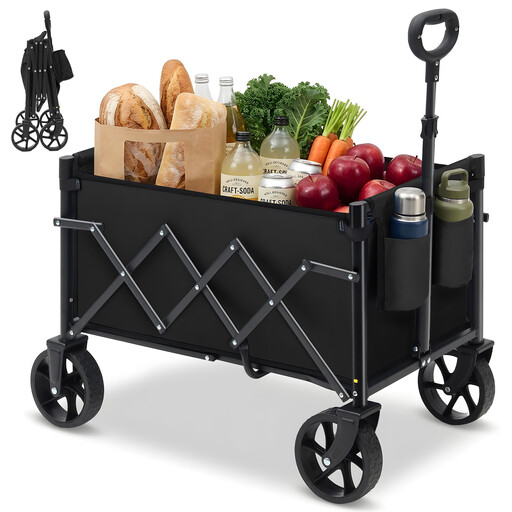
Why it suits this type of user: With a stated load capacity of 80 kg and a weight of just 4.8 kg, this model is a good fit for shopping, picnics and everyday use.
The specifications list the maximum load, the wagon’s own weight and the removable wheels separately. This makes it easier to compare load capacity and storage options.
Stated load capacity of 80 kg, weight of 4.8 kg, folds with one hand and comes with a 2-year warranty, according to the product information.
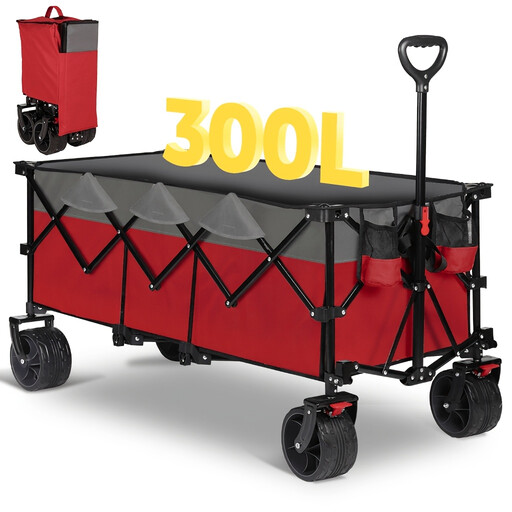
Why it suits this type of user: Its large cargo area is designed for anyone who regularly transports camping gear, garden tools or bulky items.
The product information lists both a 300-litre capacity and a 200 kg load capacity. The wide 7-inch tyres and brakes are clearly included in the specifications.
300-litre capacity, stated load capacity of 200 kg, wide 7-inch tyres, brakes and a four-sided folding mechanism.
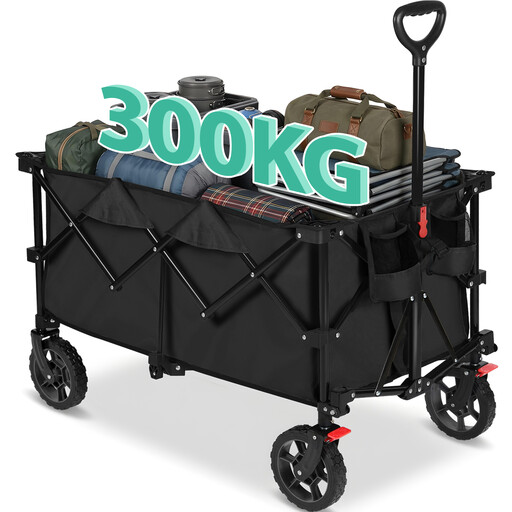
Why it suits this type of user: This model is aimed at anyone who needs a large wagon for gardening, moving house, camping or carrying heavy shopping.
The product description lists the 200-litre capacity, stated load capacity of 300 kg and universal wheels separately. With such a high capacity, take extra care to check the surface and distribute the weight evenly.
200-litre load volume, adjustable handle, steel frame and a stated maximum load of 300 kg.
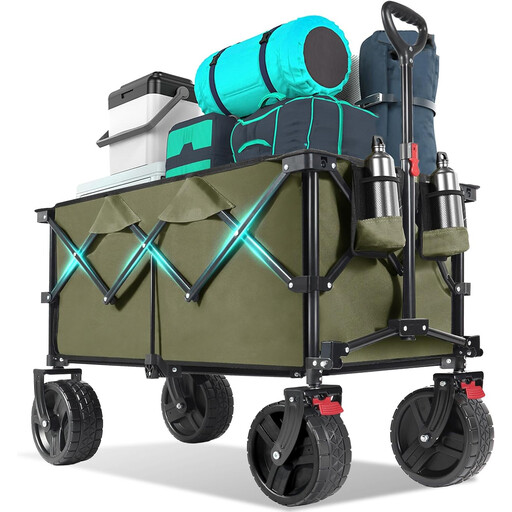
Why it suits this type of user: With a 200-litre capacity, wide tyres and securing straps, this wagon is well suited to festivals, camping, beach trips and larger families.
The adjustable handle and securing straps help keep the load more stable. The product information also lists the folded design and wheel size.
Stated load capacity of 150 kg, 200-litre capacity, wide 7-inch all-terrain tyres, brake and securing straps.
We’ve put together a complete, up-to-date list of products that meet these strict selection criteria and the applicable European safety regulations.
Unfold the frame fully and check that the locking mechanism is secure. Then fit the wheels and handle according to the product instructions. Before loading the wagon, check that the base is level and, if it has a brake, use it only for parking.
Its lifespan depends on the load, surface, storage and maintenance. Remove sand and mud from the wheels, clean the fabric with a soft, damp cloth and store the wagon somewhere dry. Regularly check the wheel attachments, frame and folding joints. Don’t use the wagon if any parts are visibly damaged.
Not necessarily, but wide wheels may need extra cleaning after use on sand or mud. Let moving parts dry and check that dirt isn’t affecting the wheels or brakes. The biggest costs usually don’t come from using the wagon itself, but from wear and tear caused by overloading, incorrect storage or using it on a surface it wasn’t designed for.
