
Vandaag of morgen in huis

Kwaliteit gegarandeerd

Welkomstaanbiedingen ontgrendelen: GRATIS bezorging | Tot 80% korting | Gratis 30 dagen JoyPlus-proefperiode
Download de app
A folding trolley can make it much easier to move shopping, camping gear, garden waste or beach essentials. However, not every trolley is suited to the same task. A compact shopping trolley for supermarket trips needs different features from a large camping trolley designed to carry heavy crates.
Look out for these three common pitfalls:
Don’t just look at the capacity in litres; check the maximum load in kilograms too. A high-capacity trolley is useful for bulky items, but a large volume doesn’t automatically mean the frame is suitable for heavy objects.
As a guide:
Distribute the load evenly and use securing straps if they’re supplied with the product. Don’t exceed the stated load capacity.
Two large wheels are often lightweight and easy to manoeuvre on pavements and in shops. Wider wheels can offer greater stability on uneven paving, gravel or grass. A stair-climbing trolley with six wheels is designed to make it easier to move over steps and kerbs, but you’ll still need to manoeuvre it carefully.
Look out for these features:
Measure the trolley when folded before you order. Check whether it will fit in a cupboard, shed, car or under a bed. A lightweight trolley is easier to lift, but make sure its low weight doesn’t come at the expense of its load capacity.
An adjustable handle is helpful for users of different heights. A folding sack truck or hand truck should also have a wide loading platform to help prevent boxes and crates from tipping over. Before use, check that all the hinges and locks are fully secured.
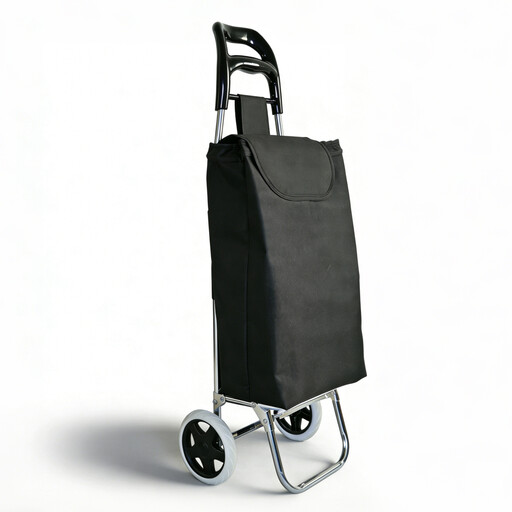
Why it suits this user: According to the product information, this compact folding shopping trolley is suitable for everyday shopping, trips to the market and travelling. The frame weighs 1.15 kg and the bag has a capacity of 25 litres.
The specifications state both the trolley’s own weight and its 20 kg hand truck capacity. This makes the difference between portability and maximum load clearer.
1.15 kg frame, 25L Oxford bag, detachable bag and quiet EVA wheels.
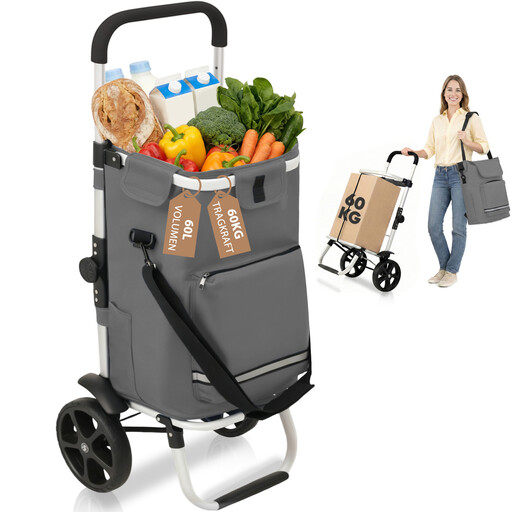
Why it suits this user: This model combines a shopping trolley, sack truck and detachable shoulder bag. The built-in insulation and drink holder are handy for shopping, picnics and day trips.
The product information gives specific dimensions of 36 × 42 × 98 cm, a weight of 3.8 kg and a maximum load of 60 kg. This makes it easier to compare than relying on the term ‘multi-functional’ alone.
60L capacity, aluminium frame, cool bag and securing strap to keep the load in place.
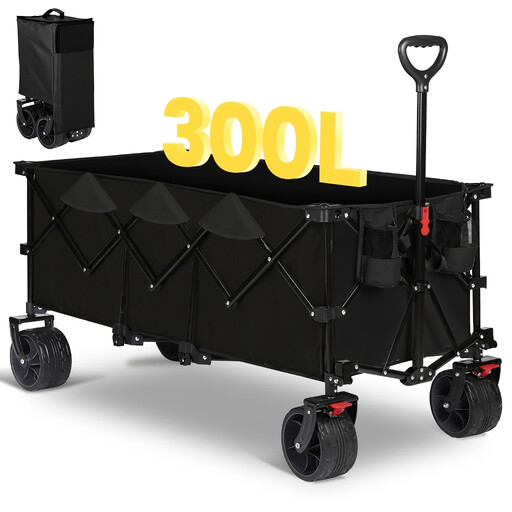
Why it suits this user: For camping, gardening or large outdoor loads, this folding garden trolley offers a 300-litre capacity and a stated load limit of 200 kg, according to the product description.
The combination of capacity, load limit, 7-inch-wide tyres and brakes gives you a clearer idea of its intended use than a general claim about heavy-duty transport.
300L storage space, folds in four directions, wide tyres and two cup holders.

Why it suits this user: The six PU wheels and 2-in-1 design are intended for shopping, market visits and carrying boxes or bottles of water over thresholds and up and down stairs.
The product description states a maximum load of 25 kg, so this model won’t be mistaken for a heavy-duty transport trolley.
25L water-resistant Oxford bag, six PU wheels and a detachable bag that lets you use the frame as a hand truck.
We’ve put together a complete, up-to-date list of products that meet these strict selection criteria and the applicable European safety regulations.
Unfold the frame fully and check that the locking mechanism is secured. Fit the bag or tray correctly, attach any loose parts and test the trolley before loading it with anything heavy. If the model has brakes, check that the wheels lock when the brake is engaged.
Its lifespan depends on the load, the surface it’s used on, storage and maintenance. Wipe the frame and wheels clean regularly, let a wet fabric bag dry before folding the trolley and store it somewhere dry. Inspect the hinges, seams, tyres and handle before heavy use.
A built-in cool bag doesn’t need electricity. The extra costs are mainly for maintenance and replacing parts if needed. Use ice packs according to the manufacturer’s instructions and handle the insulated lining with care. When buying, check whether the cool bag can be removed if you don’t need it every day.
