
Vandaag of morgen in huis

Kwaliteit gegarandeerd

Welkomstaanbiedingen ontgrendelen: GRATIS bezorging | Tot 80% korting | Gratis 30 dagen JoyPlus-proefperiode
Download de app
A folding trolley is handy for shopping, camping, gardening, festivals and moving boxes. When you’re finished, you can store it in a cupboard, shed or car boot. However, “foldable” doesn’t tell you much about how practical a trolley is. A compact model, for example, may not have enough storage space, while a spacious transport trolley can be difficult to manoeuvre through doorways or over kerbs.
So don’t just look at the price and appearance. These common pitfalls are worth keeping in mind:
Check two separate figures: the maximum weight and the capacity in litres. A large shopping trolley with a capacity of 45 to 53 litres is suitable for everyday shopping and laundry. For camping, gardening or events, models with a capacity of 127 to 200 litres are more practical.
Don’t assume you can always use the full stated load capacity. Distribute heavy items as evenly as possible across the base. With a hand truck, the load capacity may also differ between sack truck and platform trolley mode. For the 2-in-1 model below, for example, it’s 80 kg as a sack truck and 150 kg as a platform trolley.
A wheeled trolley should suit the route you’ll be taking. Look out for:
A camping trolley with wide wheels isn’t automatically suitable for stairs. For shopping in a flat, a shopping trolley with a support foot or specially shaped wheels may be more convenient.
An aluminium trolley is often lightweight and easy to carry. Steel or stainless steel can offer greater strength and stability, but will make the trolley heavier. Check the handle, too: a telescopic or height-adjustable handle is a better fit if several people will be using it.
For a folding sack truck, the folded thickness is important. A model that folds down to 5.7 cm wide is easier to fit behind a door or next to a cupboard. With a folding wagon, the folded footprint and the weight of the frame matter most.
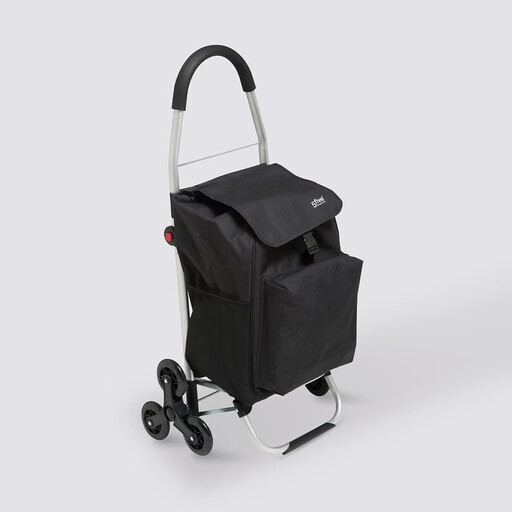
Why it suits this type of user: A practical choice for shopping, trips to the market and light everyday carrying. According to the product information, it weighs 3.04 kg.
The 53-litre capacity and dimensions are clearly stated, so you can work out in advance whether the bag is suitable for your shopping.
Aluminium frame, removable bag, foldable design and a stopper, according to the product description.
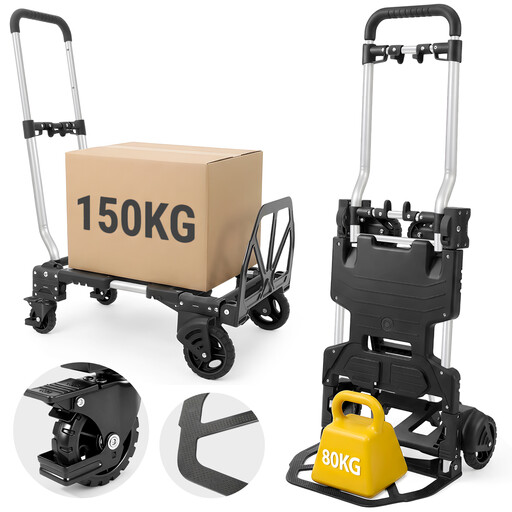
Why it suits this type of user: Ideal if you want one transport solution for boxes, crates and heavier flat loads.
The product information distinguishes between 80 kg in sack truck mode and 150 kg in platform mode. Don’t rely on a single general load capacity for both uses.
2-in-1 design, aluminium frame, adjustable handle, TPR wheels and an integrated parking brake.
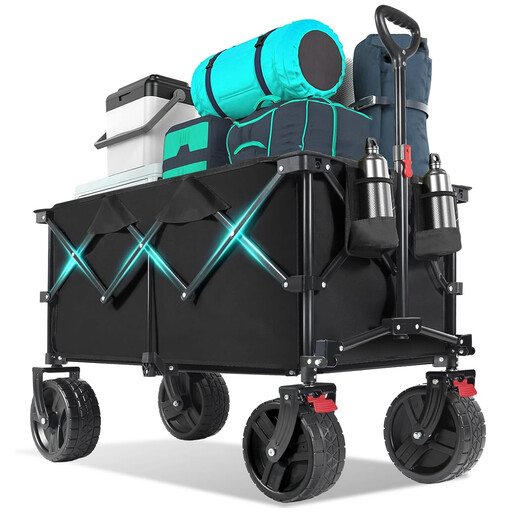
Why it suits this type of user: Designed for festivals, camping and larger loads where wide wheels and a spacious bed are important.
The product details describe the four-way folding design, dimensions and load capacity. Note that the specifications table states 150 kg, despite a higher figure in the product title.
200-litre capacity, wide all-terrain wheels, 360° wheels, adjustable handle and water-resistant Oxford fabric.
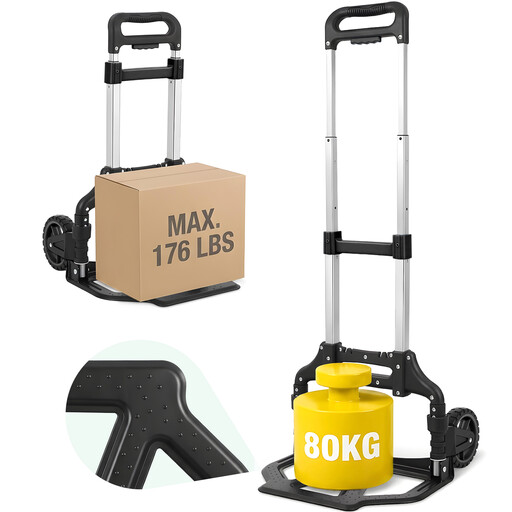
Why it suits this type of user: A lightweight folding sack truck for parcels, crates and other loads up to the stated limit.
The product description states a weight of 3.5 kg, a load capacity of 80 kg and a folded width of 5.7 cm.
Aluminium frame, three height settings for the telescopic handle, TPR wheels and wheels that fold in automatically.
We’ve put together a complete, up-to-date list of products that meet these strict selection criteria and the applicable European safety regulations.
Unfold the frame fully until the locking mechanism clicks into place. Then check the base, handle and wheels before adding your load. If the model has a brake, check that the trolley stays in place when the brake is engaged. Keep your fingers away from the hinges and don’t exceed the stated load capacity.
Its lifespan depends on the load, surface, moisture and maintenance. Remove sand and dirt from the wheels and folding mechanisms. Let a fabric load bed dry before storing the trolley. Check regularly that the joints, tyres and brakes are still working properly.
Usually, all it needs is cleaning, drying and a check of the folding mechanism. A trolley with all-terrain wheels may pick up extra dirt after use on grass or gravel. If you use it frequently, it’s a good idea to check the wheels and brake regularly before carrying a heavy load.
