
Vandaag of morgen in huis

Kwaliteit gegarandeerd

Welkomstaanbiedingen ontgrendelen: GRATIS bezorging | Tot 80% korting | Gratis 30 dagen JoyPlus-proefperiode
Download de app
A folding trolley may seem simple, but models can vary considerably. A compact trolley can be handy for shopping, while camping gear, garden waste or festival essentials call for more capacity, larger wheels and a sturdy frame.
Look out for these three common pitfalls:
A high load capacity with no clear conditions of use
A claim such as 150 kg or 200 kg doesn’t tell you everything. The surface, weight distribution and stability also matter. A heavy load on a slope can make a trolley difficult to manoeuvre.
Small wheels that aren’t suitable for grass, sand or gravel
Narrow plastic wheels roll reasonably well on tarmac, but can sink into soft ground. For off-road use, a trolley with wide all-terrain wheels is more practical.
A folding mechanism that doesn’t save much space
Don’t just check whether the trolley folds; check how compact it becomes. Measure the boot, storage room or cupboard where you plan to keep it.
Check the difference between load capacity and volume. Load capacity is measured in kilograms, while volume is usually measured in litres. A large folding trolley with a 200-litre capacity is suitable for bulky items, but that doesn’t automatically mean you can fill it completely with heavy materials.
Examples from the range:
Distribute the load evenly across the base and don’t exceed the stated limit. So even a model labelled folding trolley with a 150 kg load capacity needs to be loaded with care.
A folding trolley with large wheels is generally better suited to grass, woodland paths, gravel and uneven paving than a model with small wheels. Wide tyres spread the weight more evenly. Also check whether the wheels swivel and whether the trolley has an adjustable handle.
A trolley with a brake is useful when you need to park it temporarily. On some models, the brake is designed to keep the trolley stationary, not to slow it down while moving. Always use the brake according to the product instructions, especially on a slope.
A frame made from alloy steel or steel provides a sturdy base. The fabric is often 600D Oxford fabric, sometimes with a water-repellent coating. “Waterproof” or “water-resistant” doesn’t mean the contents will stay dry indefinitely in prolonged rain. Store the trolley in a dry place and let the fabric dry completely before folding it away.
Check these practical details:
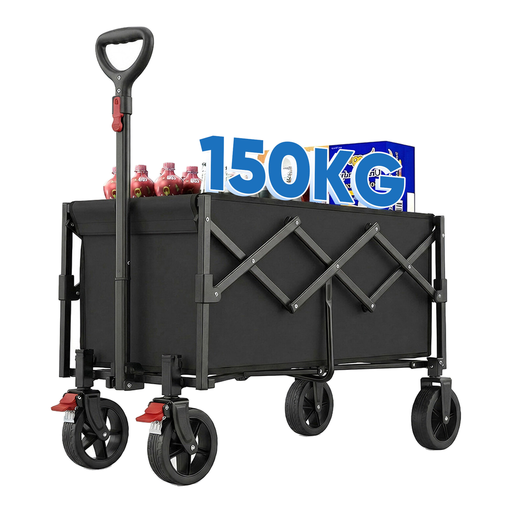
Why it suits this type of user: This compact model is designed for everyday use and storage in a small home or car boot. The product information lists an 80-litre capacity, a weight of 5.8 kg and a stated load capacity of 150 kg.
The stated capacity and net weight make it clear that this is a smaller model, so you’re less likely to buy a trolley that’s too large for light transport tasks.
80-litre capacity, foldable design, and removable wheels and bag according to the product description.
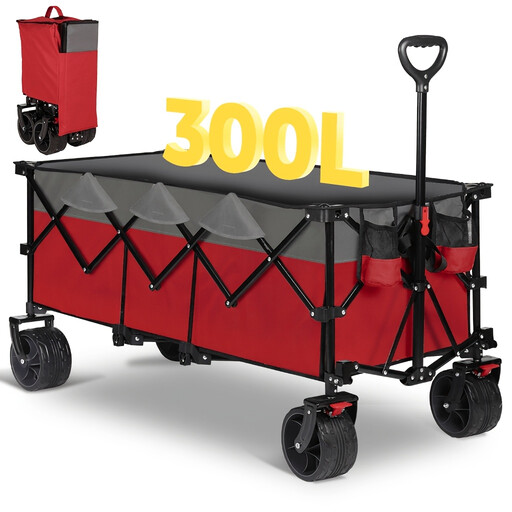
Why it suits this type of user: With a 300-litre capacity, a stated load capacity of 200 kg, wide 7-inch tyres and a brake, this trolley is ideal if you regularly transport lots of camping, garden or DIY equipment.
The specifications list both the load capacity and the volume, making it easier to judge whether the trolley is suitable for heavy and bulky loads.
300-litre capacity, a stated load capacity of 200 kg, wide tyres, quiet bearings and a brake according to the product information.
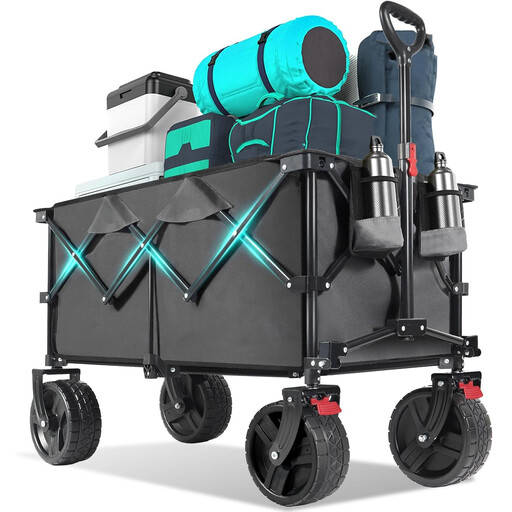
Why it suits this type of user: This model is designed for camping, festivals, gardening and other outdoor activities where you may encounter grass, mud or kerbs.
The wide 7-inch all-terrain tyres are clearly specified. That gives you more to go on than a general “off-road” claim with no wheel measurements.
200-litre capacity, a stated load capacity of 150 kg, four-way folding design, adjustable handle and lashing straps.
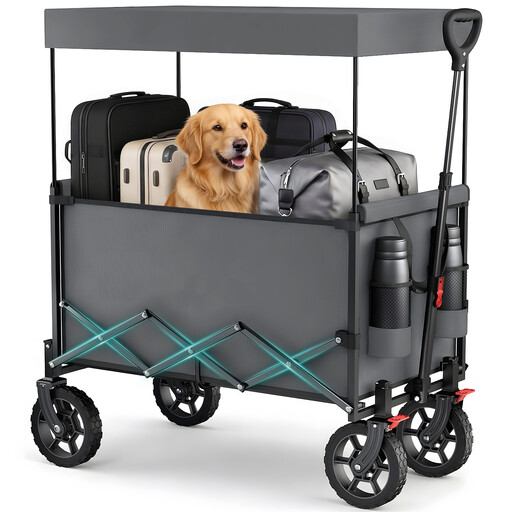
Why it suits this type of user: The removable canopy can be handy on days out when you want to shield your belongings from the sun or light rain. This model is designed for camping and transporting items over a range of surfaces.
The wheels and canopy are removable according to the product information. This makes cleaning and storage more straightforward after outdoor use.
150-litre capacity, a stated load capacity of 150 kg, all-terrain wheels, a brake and an adjustable telescopic handle.
We’ve put together a complete, up-to-date list of products that meet these strict selection criteria and the applicable European safety regulations.
Unfold the trolley fully and check that the frame is locked in place before loading it. Put heavy items low down and in the centre. Use the securing straps if they’re included. On a slope, bring the trolley with a brake to a stop before letting go of the handle.
Wipe the frame and fabric clean with a damp cloth after use. Remove sand, mud and leaves from around the wheels. Let wet parts dry before folding the trolley away. Regularly check the wheel fastenings, seams, brake and folding points. Don’t use the trolley as a seat, and don’t transport children or pets unless the product information says it’s safe to do so.
Choose a model with wide all-terrain wheels and check whether the manufacturer recommends it for grass, sand or other soft surfaces. Bear in mind that a heavy load can make the trolley harder to steer on loose sand.
Its lifespan depends on the load, the surfaces it’s used on, storage and maintenance. The frame and fabric will generally last longer if you respect the maximum load capacity, remove dirt and store the trolley somewhere dry.
That depends on what you’re taking. A capacity of 80 to 150 litres may be enough for a few shopping bags or compact camping bags. For a tent, chairs and cool box, 200 litres or more is more practical. Also check the trolley’s folded dimensions and weight before you buy.
