
Vandaag of morgen in huis

Kwaliteit gegarandeerd

Welkomstaanbiedingen ontgrendelen: GRATIS bezorging | Tot 80% korting | Gratis 30 dagen JoyPlus-proefperiode
Download de app
A folding trolley is useful for camping, gardening, shopping, festivals and trips to the beach. However, many models look similar, even though their load capacity, stability and folded size can vary considerably. A trolley rated to carry 200 kg on paper isn’t necessarily suitable for an uneven campsite or a heavily loaded trip to the beach.
As a Joybuy Product Recommendation Officer, I focus on product specifications you can verify. Below are the main pitfalls and things to consider when looking for a folding trolley, camping trolley or folding transport trolley.
A spacious load bed doesn’t tell you how much weight the frame and wheels can support. A trolley with a 300-litre capacity may be useful for sleeping bags and chairs, but that doesn’t mean you can fill it with heavy stones or paving slabs.
Always check both figures:
Also consider how the weight is distributed. An unevenly loaded heavy-duty trolley can tip over more easily, especially on grass, gravel or a slope.
Wide tyres and swivel wheels can make a trolley easier to manoeuvre, but no wheeled transport trolley makes sand, mud or uneven slopes risk-free. Product descriptions for various models say that wide 7-inch tyres, off-road wheels or shock-absorbing wheels are designed to help with handling on different surfaces. Even so, it’s best to use a loaded trolley on stable, level ground.
Pay particular attention to:
A brake is generally designed to keep the trolley stationary, not to slow it down while moving. Always check the safety information for the specific model.
A folding hand trolley may look compact in the product photo but still be too large for a hallway, shed or car boot. So, check not only its open dimensions but also:
A lightweight model is easier to take with you, while a steel frame often offers greater stability. You won’t always find both features in the same model.
A model with an 80 to 100 kg capacity may be enough for light shopping, sports bags or picnic supplies. For garden tools, camping gear or supplies for an event, 120 to 150 kg is more practical. A 200 kg trolley or a model with a stated capacity of 300 kg is most useful if you regularly transport heavy goods.
Don’t treat the maximum load capacity as your everyday target weight. Distribute the load evenly and keep it low, and check whether the stated weight applies to a stationary trolley or while it’s moving.
A high-capacity trolley means fewer trips, but it also gets heavier once it’s full. Capacities of 127 to 200 litres are often practical for families and campers. Models with a capacity of 300 litres or more are suitable for bulky loads, but need more space for storage and transport.
A higher load bed can be useful for blankets and chairs. A longer bed is more practical for tent poles, garden hoses or boxes. Also check whether the load bed is fully open or has an extended rear flap.
Many models use 600D Oxford fabric, polyester or a similar woven material around a steel frame. Product descriptions say this provides a sturdy base for outdoor use, but the fabric can still be damaged by sharp edges, prolonged exposure to damp and sand in the seams.
After use, clean the trolley with a damp cloth and let the frame, fabric and wheels dry before folding it away. If you use it at the beach, it’s a good idea to remove sand from the wheel housings promptly. Check the wheel fixings, hinges and locks regularly.
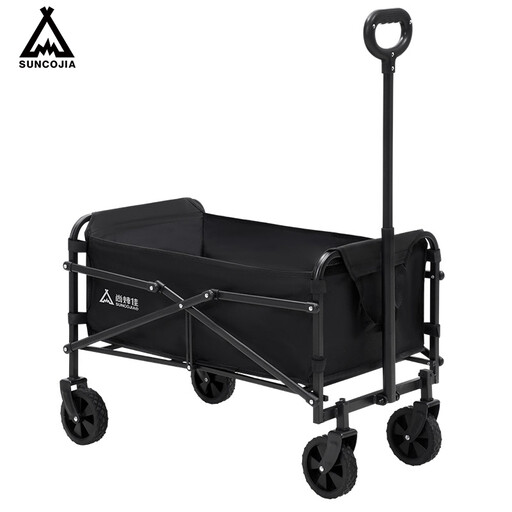
Why it suits this profile: This lightweight model weighs around 4.8 kg and is designed for camping, shopping, sports and trips to the beach. The product description lists a capacity of 170 litres and a stated load capacity of 100 kg.
The stated weight and capacity are listed separately, so you can tell the difference between a lightweight build with practical capacity and a heavy-duty transport trolley.
170-litre capacity, folding design, multidirectional wheels and a frame with 600D Oxford fabric, according to the product information.
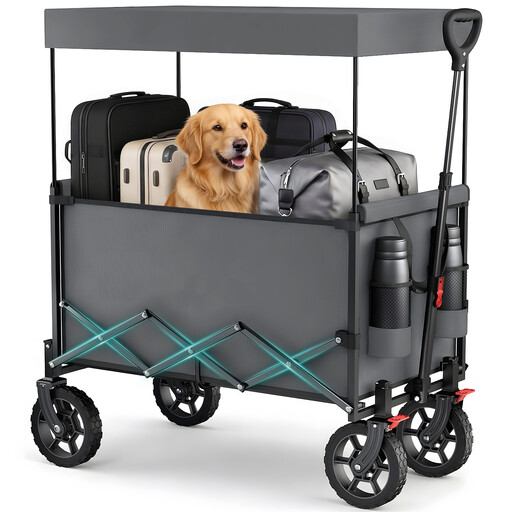
Why it suits this profile: This camping trolley combines a 150-litre capacity with a stated load capacity of 150 kg. The removable canopy can be useful during outdoor activities.
The product information lists both the dimensions of 97 × 51 × 95,5 cm and the weight of around 9,78 kg. Check these measurements before buying to make sure you have room to store it.
Telescopic handle, off-road tyres, brakes and removable wheels, according to the product description.
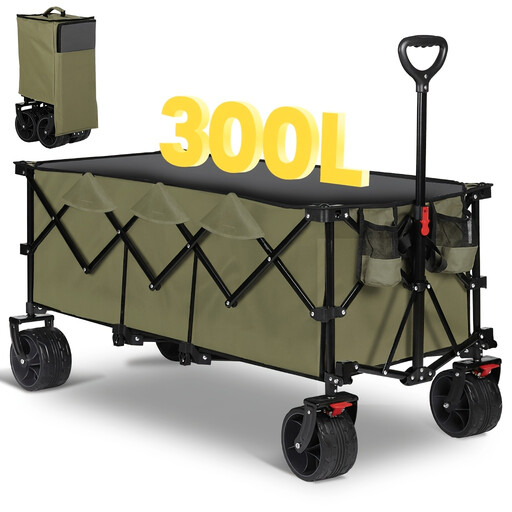
Why it suits this profile: For large amounts of camping gear, garden supplies or stock for selling, this model offers a 300-litre capacity and a stated load capacity of 200 kg, according to the product description.
The long load bed and high stated load capacity make the relationship between volume and weight clear. Always distribute the load evenly and stay within the stated limit.
300-litre capacity, wide 7-inch tyres, four-sided folding mechanism and two cup holders, according to the product details.
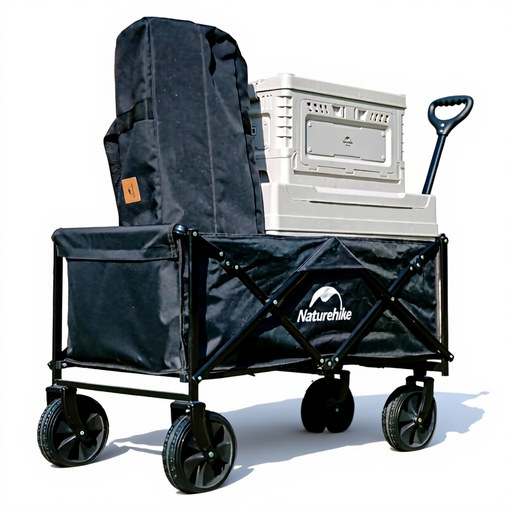
Why it suits this profile: This model is designed for gardening, camping and beach trips. The product details list a capacity of 113 litres, a weight of 7,5 kg and a stated load capacity of 100 kg.
The specifications clearly state the capacity, the trolley’s own weight and its maximum load capacity. This helps you judge how easy it will be to lift, load and store.
Adjustable handle, folding frame and 113 litres of load space for garden tools and outdoor equipment.
We’ve put together a complete, up-to-date list of products that meet these strict selection criteria and the applicable European safety regulations.
First, empty the load bed and place the trolley on a level surface. Check that no fingers, clothing or loose items are near the hinges. Unlock the mechanism as instructed in the manual, then check that the trolley remains stable when folded, whether lying down or standing up. If the model has removable wheels, you can take them off first to make storage easier.
Its lifespan depends on the load, the surface it’s used on, exposure to moisture and how well it’s maintained. Overloading it, wheeling it over sharp stones and storing it while wet can put extra strain on the frame, fabric and wheels. After using the trolley at the beach or in the rain, let it dry, remove any sand and check the wheel axles and locks regularly.
Apart from the purchase price, there are usually no regular running costs. You may need to pay for replacement wheels, bearings or fixings as they wear out. A model with removable wheels and an easy-clean load bed can be practical if you often use your trolley for gardening, camping or trips to the beach.
