
Vandaag of morgen in huis

Kwaliteit gegarandeerd

Welkomstaanbiedingen ontgrendelen: GRATIS bezorging | Tot 80% korting | Gratis 30 dagen JoyPlus-proefperiode
Download de app
A folding table is handy for the garden, camping, a birthday party or as a temporary extra worktop at home. Yet many models look alike, even though they can perform very differently in practice. A small camping table isn’t necessarily suitable for a buffet, and a large plastic table is less practical if you regularly take it with you on a bike or in the car.
So when comparing options, don’t focus on price and appearance alone. Dimensions, material, load capacity, folded size and locking mechanism all play a major part in how easy a folding table is to use.
A long folding table offers plenty of surface area, but it can wobble if the legs are set too close together or the frame doesn’t lock securely. Check whether the product description provides information about the frame, legs and maximum load capacity. Place each table on a level surface and check that all hinges or locks are fully secured before use.
A table may be relatively light but still awkward to transport because of its large packed size. An aluminium camping table weighing around 1.25 kg, for example, is designed to be taken to a campsite or fishing spot. A party table weighing around 13.5 kg is better suited to car journeys or use in and around the home.
So consider both the weight and the folded size. A carry handle, double-folding mechanism or tabletop that can be stored separately can make a big difference if you transport the table regularly.
A plastic folding table or outdoor table may be described as suitable for outdoor use, but that doesn’t mean it should be left outside permanently without care. Rain, frost, dirt and prolonged exposure to UV light can affect its lifespan. Ideally, store a folding table somewhere dry after use and follow the manufacturer’s care instructions.
If a brand mentions a feature such as UV or weather resistance, it is presented here as a claim from that brand’s product information, not as a guaranteed lifespan in all conditions.
First, decide what you need the table for:
As well as the dimensions when assembled, check the table’s size when stored. If it needs to fit in a narrow cupboard, car boot or storage space, pay particular attention to its packed size.
Aluminium is often a good choice for a portable table because it is lightweight. The product description for the Mobi Garden table lists an aluminium tabletop and frame. According to the manufacturer, the frame resists oxidation and corrosion during prolonged outdoor use. This makes the model a sensible choice for walking, camping, fishing and picnics, but its compact 50 × 40 cm tabletop is less suitable for a large group.
Plastic or HDPE is practical if you want a surface that’s easy to clean. According to the product information, Lifetime tables combine an HDPE tabletop with a powder-coated steel frame. Always check the weight and load capacity of models like these: a sturdy construction usually means the table is less easy to carry.
MDF with steel legs is mainly suited to indoor use. A table with a melamine finish can be useful when you need extra tabletop space temporarily, but keep the surface dry and avoid prolonged exposure to rain.
Treat the stated load capacity as a practical limit and distribute heavy items evenly. With a folding table, the locking mechanism matters more than the number of legs alone. An automatic locking mechanism, fixed cross-brace or sturdy snap-lock can help prevent the table from folding up accidentally. Always check that the frame is fully opened and locked before use.
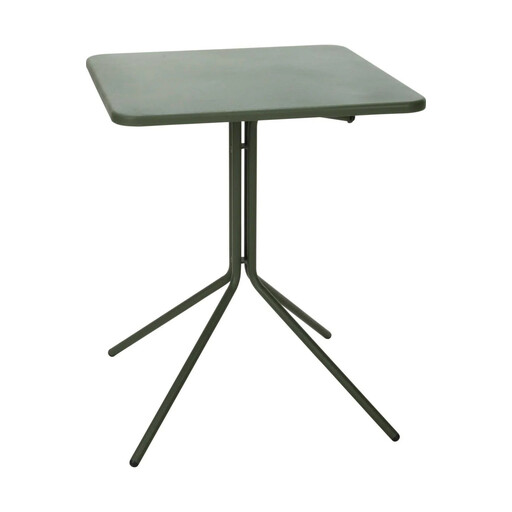
Why it suits this type of user: This compact camping table works well as a side table for two, whether you’re camping, having a picnic or relaxing on a balcony.
The size and intended use are clearly stated. Don’t expect a large dining table: this is a compact table measuring 58 × 58 × 70 cm.
Metal and plastic construction, a folding design and a stated capacity for two people.
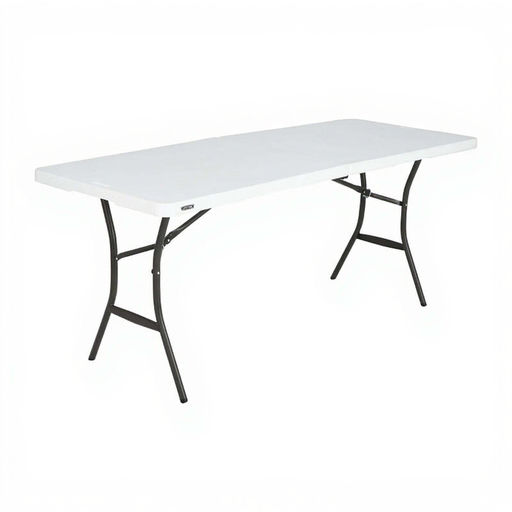
Why it suits this type of user: This model is designed for households that regularly need extra table space for parties, games, hobbies or outdoor activities.
The automatic locking mechanism and wide-set legs help reduce the risk of the table being unstable or folding up accidentally. Always check the lock yourself.
HDPE tabletop, steel frame, carry handle and dimensions of 183 × 70 cm, according to the product information.
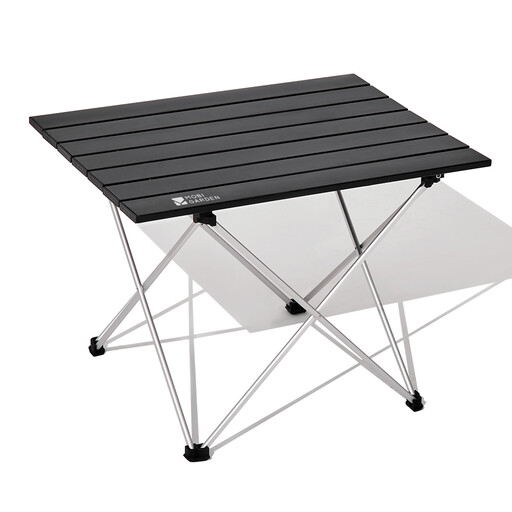
Why it suits this type of user: Walkers, campers and anglers with limited luggage space benefit from its low weight and compact packed size.
Its packed size of 16 × 8 × 57 cm and weight of around 1.25 kg make its portability clear, rather than relying on a vague marketing claim.
Aluminium tabletop and frame, cross-braced frame, non-slip foot caps and a stated static load capacity of around 20 kg.
We’ve put together a complete, up-to-date list of products that meet these strict selection criteria and the applicable European safety requirements.
For products sold in the Netherlands or the European Union, new consumer products are generally covered by a minimum two-year legal guarantee of conformity. Also check the specific product information and the seller’s terms and conditions.
For four people, a tabletop measuring around 120 to 160 cm is often more practical than a small camping table. A table of around 180 cm may be more suitable for a buffet or a larger group. Measure the available space in advance, allowing room for chairs and to move around.
Place the table on a level surface, open the legs fully and lock the frame. Check that all the foot caps are touching the floor. A table placed on uneven paving or soft ground may still wobble, even if the frame has been assembled correctly.
That depends on the material and the product instructions. Some product descriptions state that plastic, HDPE and metal models are suitable for indoor and outdoor use. Even so, storing the table somewhere dry, cleaning it and protecting it from prolonged rain and frost will usually help it last longer. Never load a table beyond its stated capacity.
