
Vandaag of morgen in huis

Kwaliteit gegarandeerd

Welkomstaanbiedingen ontgrendelen: GRATIS bezorging | Tot 80% korting | Gratis 30 dagen JoyPlus-proefperiode
Download de app
A folding table is handy for camping, a birthday party, a trade fair or extra workspace at home. But choosing the wrong one can quickly prove disappointing. A table that looks spacious in a photo may turn out to be too small in practice. Terms such as “sturdy”, “weather-resistant” and “versatile” don’t always tell you whether a model is right for your needs, either.
So keep an eye out for these three common pitfalls:
First, decide what you need the table for. A folding camping table for cooking equipment and cups calls for different features from a folding party table for snacks or a buffet.
Also check whether the stated dimensions refer to the table when unfolded. Some models also list their folded dimensions. This information matters when you’re planning to store it in a cupboard, shed or car.
A plastic folding table with an HDPE tabletop is generally easy to wipe clean. Selected Lifetime models feature a high-density polyethylene tabletop combined with a powder-coated steel frame. According to the product information, these surfaces are stain-resistant and easy to clean. This is a product specification, not a guarantee that the table will remain undamaged in all conditions.
For outdoor use, these points are especially relevant:
“Suitable for indoor and outdoor use” doesn’t automatically mean you can leave a table out in the rain or frost all the time. Put your folding table away somewhere dry after use, especially if the frame has hinges or metal joints.
A folding table should not only pack down compactly, but also be easy and safe to set up. Look for an automatic locking mechanism, a fixed frame and a handle. With models that have a folding mechanism, it’s a good idea to check that the legs are fully extended before use.
Always use the table on a level surface. Don’t overload it, and keep your fingers away from the hinges when opening and closing it. A heavy tabletop may feel stable, but it can be harder to move. If you’ll be transporting the table regularly, a lower weight is usually more important than an extra-large surface.
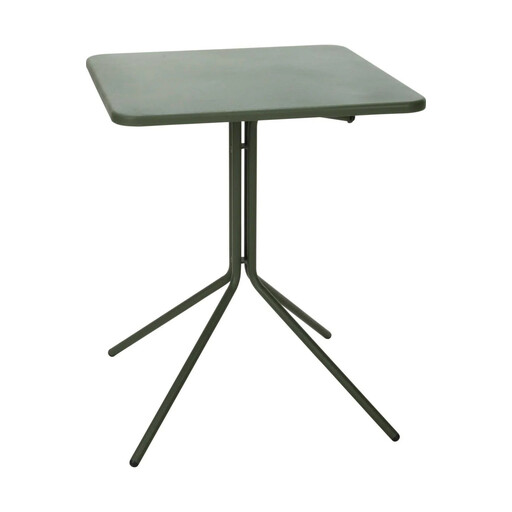
Why it suits this type of user: This compact folding table works well as a side table for camping, a balcony or a small space. It’s designed for up to two people.
The dimensions make it clear that this is a compact table, so you won’t accidentally use it as a large dining table. Its metal and plastic design is practical if you need to move it regularly.
58 × 58 × 70 cm; folding design; suitable for two people.
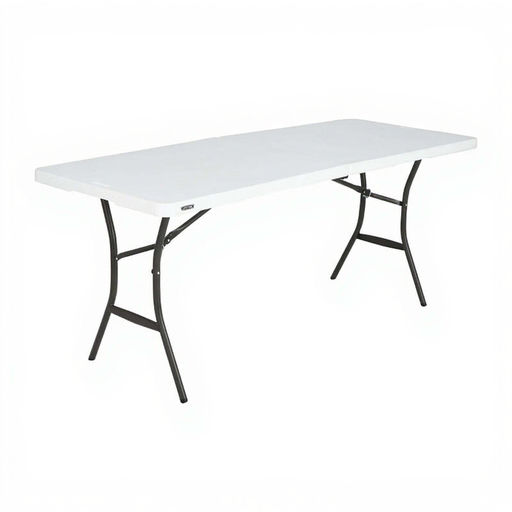
Why it suits this type of user: This model provides a long surface for working or dining, making it a good choice for families, game nights and outdoor activities. Its double-fold design makes it easier to store and transport.
The product information lists a lockable frame, an automatic locking mechanism and a handle. This makes setting up, folding away and carrying the table more straightforward than with a basic table without these features.
183 × 70 cm; HDPE tabletop; powder-coated steel frame; described as suitable for indoor and outdoor use.

Why it suits this type of user: The adjustable height makes this table practical for trade fairs, hobby rooms, offices and households with users of different heights.
You’re not limited to one working height. The table has four stated height settings: 55,9, 61, 73,7 and 86,4 cm. Check in advance which setting works with your chairs or intended use.
HDPE surface; powder-coated steel frame; one-handed operation; lockable frame.
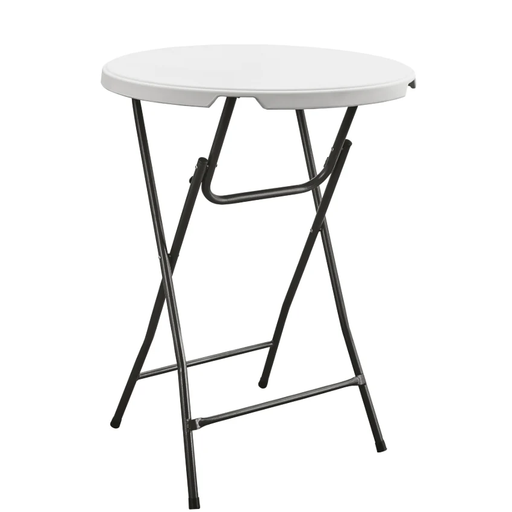
Why it suits this type of user: This tall, round table is designed for standing conversations, drinks and snacks at a party, reception or business event.
The diameter and height are clearly stated: 80 cm and 110 cm. This makes it clear that it’s a bar table, not a standard dining table. According to the product information, the KD design is supplied ready to assemble as a straightforward construction.
80 cm round tabletop; 110 cm high; described as suitable for indoor and outdoor use.
We’ve put together a complete, up-to-date list of products that meet these strict selection criteria and current European safety regulations.
Place the table on a level surface, fully extend all the legs and check that the frame or legs are locked in place. Only then put crockery, equipment or other items on the tabletop. Keep your fingers away from the hinges when opening and closing the table.
Its lifespan depends on the materials, load, transport and storage. A steel frame and plastic HDPE tabletop can be practical for regular use, but no table can withstand overloading or prolonged exposure to bad weather indefinitely. Clean the tabletop, check the joints and store the table somewhere dry.
It depends on the product. Check the official product description to see whether indoor and outdoor use is specified. “Suitable for outdoor use” doesn’t mean the table should be left outside permanently. Rain, dirt and frost can shorten the lifespan of materials and hinges.
