
Vandaag of morgen in huis

Kwaliteit gegarandeerd

Welkomstaanbiedingen ontgrendelen: GRATIS bezorging | Tot 80% korting | Gratis 30 dagen JoyPlus-proefperiode
Download de app
A folding shopping trolley can be useful for groceries, laundry, camping equipment or luggage. However, models vary considerably in load capacity, wheel type and ease of storage. A low price means little if the bag is too small, the frame proves unstable or the wheels do not cope well with Dutch pavements.
Use these checks to compare a shopping trolley with wheels, folding trolley or collapsible transport cart based on practical features rather than marketing claims.
A 60- or 80-litre bag may seem spacious, but that does not automatically mean you can safely use its maximum weight capacity. A large shopping trolley with a thin frame may be less suitable for bottles, pet food or heavy groceries.
Always check these separately:
Also look out for contradictory product information. With some models, the capacity in the product title does not match the technical description. If in doubt, ask the seller to confirm the details before ordering.
A stair-climbing shopping trolley usually has three wheels on each side. This design can help with kerbs and steps, but the weight still has to be pulled or tilted. A full trolley containing glass bottles behaves differently from a lightweight bag filled with bread and vegetables.
Check:
A shopping trolley with a cool bag or integrated cool compartment is practical for short journeys home or a picnic. According to the product description, aluminium insulation may help retain the temperature for longer, but it is not a substitute for a fridge or actively cooled cool box. Consider using ice packs and limit the time spent outside the fridge.
An aluminium frame generally keeps the trolley’s own weight low. Steel can add more weight, but is worth considering for heavier transport tasks. Oxford fabric, such as 600D Oxford, is often used for bags designed to withstand daily use. According to the product description, a water-repellent coating protects against dust and light rain; check that the bag is not described as fully waterproof without supporting evidence.
For use in town, EVA, PVC or PU wheels are often sufficient, depending on the surface. PU stair-climbing wheels are specifically designed for steps and kerbs. Bear in mind that a wheel that turns smoothly is not the same as a wheel with a brake or locking mechanism.
Measure the space where you plan to keep the trolley: in a hallway, cupboard, car or under the bed. A model may be described as foldable on paper but still take up a considerable amount of space in practice. Look at:
A folding hand cart with a narrow folded frame is particularly useful for small flats. A camping trolley with large wheels requires more storage space, but may cope better with grass, gravel and sand.
An adjustable handle helps different users pull the trolley comfortably. Check that the handle is firmly secured and that the load remains low enough to prevent the trolley from tipping. Never exceed the stated load capacity. Secure loose goods with a strap or flap, and keep your fingers away from hinges when folding the trolley.
The following models suit different situations. The features listed are based on the product descriptions and specifications provided.
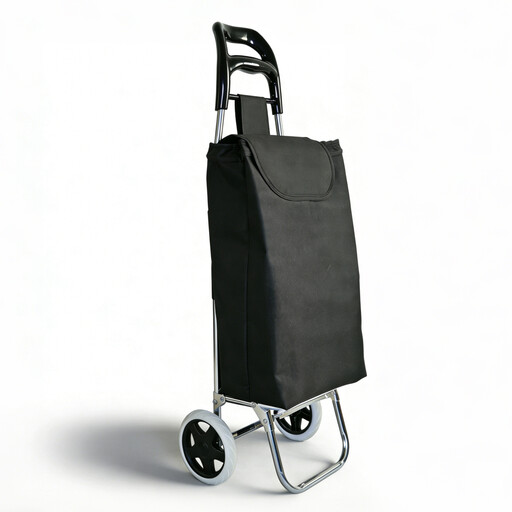
Why it suits this profile: With its low weight of 1.15 kg, this 2-in-1 trolley is practical for short shopping trips, flats and users who often put the trolley in the car.
The product description states a clear bag capacity of 25 litres and a hand-truck function supporting up to 20 kg. This means capacity and load-bearing ability are specified separately.
1.15 kg own weight; 25L water-repellent Oxford bag; folding frame; quiet EVA wheels.

Why it suits this profile: If you want to use one trolley for shopping, small transport tasks and days out, this design combines several functions in one.
The specifications state a maximum load capacity of 60 kg, a securing strap and an aluminium frame. The cool compartment is described as insulated rather than actively cooled.
3-in-1 design; 60L capacity; integrated insulated compartment; adjustable handle.
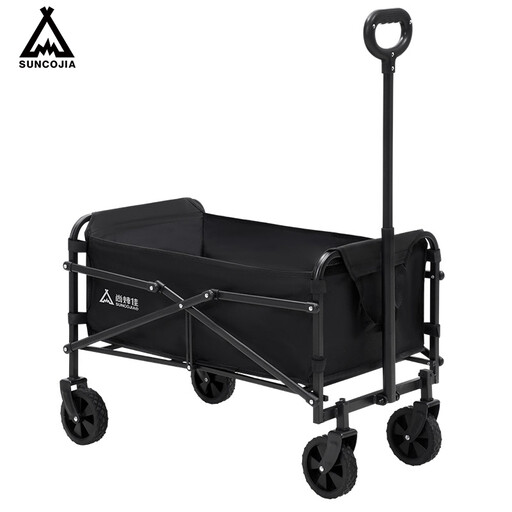
Why it suits this profile: For camping, festivals, trips to the beach or larger transport jobs, a spacious camping trolley with all-terrain wheels makes more sense than a narrow shopping bag.
The product information states both a capacity of 170 litres and a load capacity of 100 kg. The multidirectional wheels are designed for different surfaces.
170L loading space; foldable; stated load capacity of 100 kg; swivel wheels for manoeuvring.
A shopping trolley for older people does not necessarily need to be large. A lightweight model with an adjustable handle and simple wheels may be more comfortable than a heavy trolley with lots of features. For stairs, a six-wheel model is worth considering, while a standard two-wheeler is often easier to manoeuvre through narrow shop aisles.
For heavy boxes, crates or removal boxes, a folding transport cart with a flat loading platform is more suitable. A model such as the BLACK+DECKER folding platform trolley has, according to the product information, an adjustable handle, four wheels and a stated maximum load capacity of 89 kg. For large outdoor loads, there are also folding wagons with a capacity of 127 litres or more, but these generally take up more space when folded.
We have put together a complete, up-to-date list of products that fully meet these strict selection criteria and the applicable European safety regulations.
For a short shopping trip, 25 to 45 litres is often sufficient. If you shop for several days at a time or carry extra items, consider 60 litres or more. As well as the litre capacity, check the maximum weight: bottles fill a bag quickly but can significantly increase the load.
A trolley with six stair-climbing wheels can make it easier to negotiate steps. Pull the trolley slowly, keep the load stable and do not exceed its load capacity. For several flights of stairs or heavy shopping, a lift or assistance is often more practical.
Clean the bag and frame with a slightly damp cloth and allow everything to dry completely before folding the trolley. Regularly check the wheels, axles, seams and folding lock. Do not use a folding trolley as a seat or step, and store it in a dry place.
