
Vandaag of morgen in huis

Kwaliteit gegarandeerd

Welkomstaanbiedingen ontgrendelen: GRATIS bezorging | Tot 80% korting | Gratis 30 dagen JoyPlus-proefperiode
Download de app
A folding shopping trolley can be a practical solution for carrying shopping, laundry and parcels, or for days out. However, some models can be disappointing in everyday use. A compact design, for example, tells you little about stability, how smoothly the wheels roll or how much space you really have for your shopping.
Three common pitfalls to watch out for:
A high capacity in litres without a clear weight limit
A bag may look spacious, but that doesn’t automatically mean the frame can safely carry heavy shopping. Always check both the capacity in litres and the maximum weight.
Wheels that aren’t suited to your route
Two small wheels are suitable for shops and smooth pavements. If your route often includes kerbs, cobbles or stairs, you may be better off with a shopping trolley designed for those conditions, such as a model with six PU wheels.
A folding mechanism that sounds more useful on paper
Don’t just look for the word “foldable”. Check whether the trolley folds flat for storage, how wide it is when folded and whether the frame locks securely when opened.
A 25-litre bag may be enough for a few everyday essentials. For a weekly supermarket shop, laundry or larger items, 38 to 51 litres may be more suitable. An insulated compartment is useful for chilled items, but it’s no substitute for a full-size cool box and won’t tell you how long food will stay at temperature.
Be aware of the difference between:
For example, a 2-in-1 model might combine a 25-litre bag with a load capacity of 20 or 25 kg when used as a hand trolley. Don’t exceed the stated limit, and spread heavy items as evenly as possible.
A lightweight shopping trolley with two EVA wheels is generally easy to lift and takes up little space. If your route includes uneven pavements, cobbles or stairs, other features may matter more.
Check:
A “stair-climbing shopping trolley” won’t make stairs effortless. Keep a firm grip on the handle, take the steps slowly and follow the manufacturer’s safety instructions.
A lightweight shopping trolley weighing around 1.15 kg is easy to put in a boot or cupboard under the stairs. On the other hand, a large camping model with a metal frame and wide wheels may be considerably heavier. Choose based on how far you’ll need to carry the trolley yourself.
An ergonomic handle at a suitable height can stop you from having to lean forwards all the time. For adjustable models, check the available settings. Also see whether the bag is detachable and whether you can use the frame on its own as a folding transport trolley.
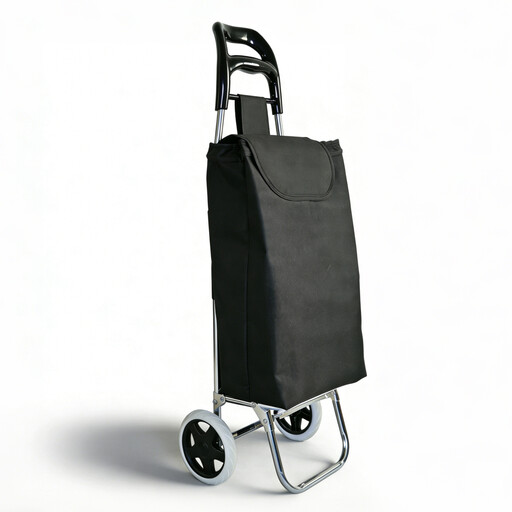
Why it suits this type of shopper: Its low weight, 25-litre bag and hand-trolley function make it a good fit for everyday shopping, short trips and anyone who needs to lift their trolley regularly.
The product information lists both the bag capacity and a load capacity of 20 kg. This makes it easier to choose a trolley that suits the amount of shopping you carry.
1.15 kg net weight, 25L water-repellent Oxford bag and detachable bag for use as a hand trolley.
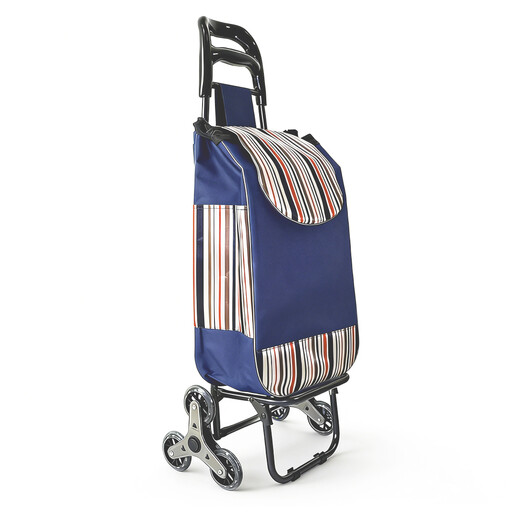
Why it suits this type of shopper: This model is designed for anyone who regularly carries heavy shopping and encounters stairs, kerbs or uneven paving along the way.
The specifications list six PU wheels, a sturdy axle and a maximum hand-trolley load capacity of 30 kg. This makes it easier to assess than relying on a marketing term alone.
38L Oxford bag, six PU wheels, rear zip pocket and a frame that folds flat.

Why it suits this type of shopper: Combining a shopping trolley, sack truck and shoulder bag, this model is useful for families, campers and anyone looking for one transport solution for different situations.
The product description states a maximum load of 60 kg, and includes a securing strap and an insulated compartment. Make sure you secure the load properly and don’t exceed the limit.
60L capacity, insulated compartment, adjustable handle, aluminium frame and 3-in-1 design.
Before each use, check that the frame is fully opened and locked in place. Pack heavy items low in the bag, keep zips and flaps closed, and clean the wheels after travelling over sand or mud. If the bag or frame gets wet, let it dry fully before folding the trolley away.
If you have a stair-climbing shopping trolley, it’s a good idea to secure the load especially well. Don’t use a shopping trolley as a seat or step stool unless the manufacturer specifically says you can.
We’ve put together a complete, up-to-date list of products that meet these strict selection criteria and the applicable European safety regulations.
For a small everyday shop, 25 litres is often a practical choice. If you shop less often or also carry laundry, look for a capacity of 38 to 51 litres. Check the maximum load capacity as well as the bag size.
No. A six-wheel model is designed to manoeuvre over stairs, kerbs and uneven surfaces, but how well it works depends on the step height, load and handle. Take it slowly and follow the safety instructions.
Its lifespan depends on the load, surface, moisture and maintenance. A trolley that regularly carries more than its stated limit will wear out faster. Check the wheels, axles, seams and folding joints, and store the trolley somewhere dry.
