
Vandaag of morgen in huis

Kwaliteit gegarandeerd

Welkomstaanbiedingen ontgrendelen: GRATIS bezorging | Tot 80% korting | Gratis 30 dagen JoyPlus-proefperiode
Download de app
A folding shopping trolley can make it easier to transport groceries, parcels and camping gear. However, models vary considerably in load capacity, wheel type and ease of storage. A low price doesn’t always mean a trolley will be practical, but neither does a long list of features.
In Dutch apartment blocks, flats and urban neighbourhoods, you’ll often come across the same problems: a trolley that struggles over door thresholds, a bag that doesn’t close securely or a frame that feels unstable when carrying heavy shopping. Use the checks below to reduce the risk of buying the wrong one.
A shopping trolley with a large capacity may seem convenient, but always check its maximum load capacity. A 60-litre bag doesn’t automatically mean you can safely carry 60 kilograms. Pay attention to how you distribute the weight, too. Bottles, tins and cartons of milk should sit as low as possible in the bag.
Only use a trolley with a stated capacity of 60 kg within that limit, and secure the load properly. Also check whether the stated capacity applies to the bag, the frame or the trolley as a whole.
A shopping trolley with stair-climbing wheels can be practical for pavements, kerbs and stairs. However, the design, with three wheels on each side, moves differently from a standard two-wheel model. You’ll still need to manoeuvre carefully on narrow stairs, wet tiles or when the trolley is fully loaded.
According to the product description, some models come with PU wheels, ball bearings and a three-wheel mechanism. These are verifiable features, but they don’t guarantee that you’ll be able to climb every staircase without effort.
“Foldable” can mean that only the bag folds flat, while the frame remains relatively wide. So, check the dimensions when folded, if they’re available. Also see whether the bag is removable and whether the folding mechanism works without tools.
A lightweight shopping trolley is useful for older people and city dwellers who want to store it in a car, cupboard or under a bed. A heavier steel frame, on the other hand, may feel more stable with heavier loads.
Two larger wheels are often enough for straight supermarket aisles and pavements. According to the product description, EVA wheels may roll more quietly and help absorb some of the impact from uneven paving. For stairs and high kerbs, six PU wheels with a three-wheel mechanism offer a different design option.
Look out for these features:
Aluminium is generally lightweight, while steel or rust-resistant metal can feel heavier and sturdier. Don’t just look at the frame material: check the joints and the base of the bag, too.
A bag made from 600D Oxford fabric is often described in product listings as having a water-repellent finish. “Water-repellent” doesn’t mean waterproof. A cover flap can help in light rain, but extra protection is a good idea in prolonged wet weather.
Choose a capacity that suits your usual shop:
An adjustable handle is useful if several people use the same trolley. A 3-in-1 shopping trolley can also work as a shopping trolley, sack truck and shoulder bag. Check how quickly you can switch between functions and whether the frame remains stable without the bag.
A shopping trolley with a cool bag is particularly useful for chilled products, picnics and camping. According to the product description, the aluminium insulation layer helps maintain the temperature, but it doesn’t replace active cooling. Use ice packs if your shopping needs them.
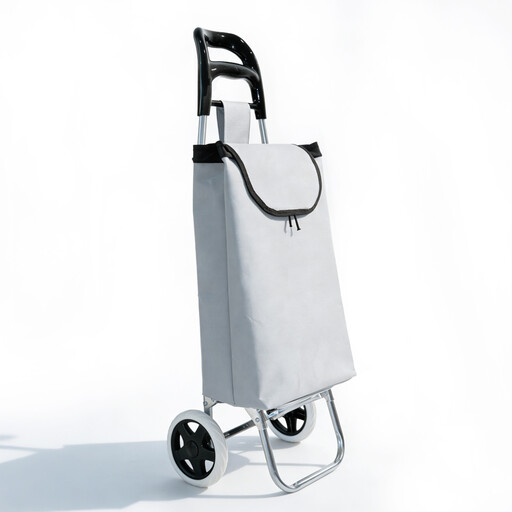
Why it suits this profile: At a stated weight of 1.15 kg, this model is designed for people who often need to lift their trolley, take it in the car or store it in a small home.
The specifications list a 25-litre Oxford bag and a maximum load of 20 kg when used as a sack truck. This makes it clearer when you need to avoid overloading the trolley.
1.15 kg frame, 25-litre capacity, folding design and EVA wheels, according to the product information.
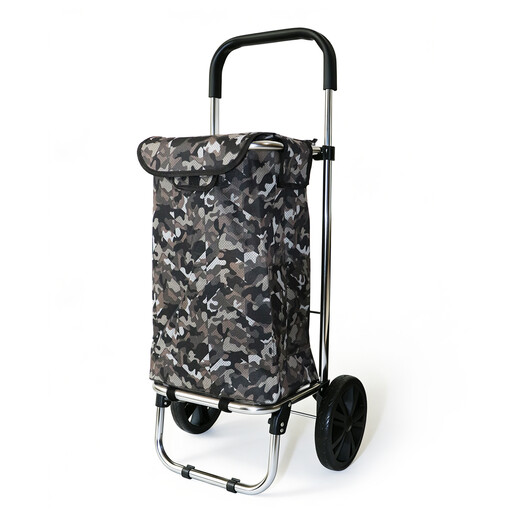
Why it suits this profile: This model is designed for regular use, with a bag of around 45 litres, a rust-resistant steel frame and a removable bag.
The product information lists a protective flap, 600D Oxford fabric and a removable bag. Be sure to check the current load limit before use.
Around 45 litres of capacity, a rust-resistant frame, a water-repellent bag and EVA foam wheels, according to the product specifications.
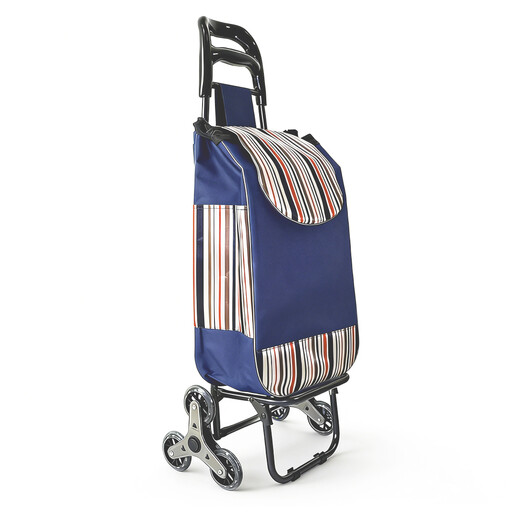
Why it suits this profile: The 38-litre bag and six PU wheels suit people who combine shopping with stairs, kerbs or transporting parcels.
This version lists the 38-litre bag capacity and 30 kg load capacity as a sack truck separately. That makes it easier to choose between carrying shopping and transporting other items.
38-litre water-repellent Oxford bag, six PU wheels, folding frame and 2-in-1 function, according to the product description.
We’ve put together a complete, up-to-date list of products that meet these strict selection criteria and the applicable European safety regulations.
Not necessarily. The wheel mechanism is designed to tackle obstacles such as steps and kerbs differently from a two-wheel model. The width of the staircase, the weight of the load and the surface all matter. Move the trolley carefully and don’t exceed its stated load capacity.
Empty the bag and wipe the frame, handle and wheels with a slightly damp cloth. Let the fabric dry completely before folding the trolley. Don’t use harsh cleaning products on Oxford fabric or aluminium unless the product instructions say it’s safe to do so.
Its lifespan depends on the load, how often you use it, exposure to moisture and the surfaces it’s used on. Regularly check the wheel attachments, seams, hinges and handle. If you use your trolley outdoors often, it’ll stay in good condition for longer if you store it somewhere dry and avoid regularly exceeding its stated load limit.
