
Vandaag of morgen in huis

Kwaliteit gegarandeerd

Welkomstaanbiedingen ontgrendelen: GRATIS bezorging | Tot 80% korting | Gratis 30 dagen JoyPlus-proefperiode
Download de app
A folding shopping trolley is handy for shopping, markets, laundry and parcels. However, not every model is suited to the same route or load. A compact wheeled shopping trolley, for example, can be convenient in the supermarket but less practical on a pavement with high kerbs. On the other hand, a large model may be unnecessarily heavy if you mainly buy a few things.
Look out for these three common pitfalls:
Choose the capacity to suit your usual shopping trips:
Also check the stated load capacity. A frame that can carry 20 or 25 kg as a hand truck won’t necessarily have the same capacity with the bag attached. Place heavy items low in the bag to reduce the risk of the trolley tipping over.
An aluminium frame is often lightweight and easy to carry. Steel can offer greater strength, but generally makes a model heavier. Also look for:
A product description may refer to a “heavy-duty” frame. It’s better to assess this using verifiable details such as the material, dimensions and maximum load capacity. According to the relevant manufacturer’s product description, some models have a steel frame, a 600D Oxford bag and a galvanised axle. These are product specifications, not a guarantee of an unlimited lifespan.
Two large EVA wheels generally roll smoothly over shop floors and pavements. Some models have six wheels for stairs, with three rotating wheels on each side. This design can make it easier to tackle steps and kerbs, but you’ll still need a stable stance and controlled movement.
Note the difference between:
A shopping trolley for stairs is therefore most useful if your route regularly includes a communal entrance, pavement or short flight of stairs. You may still need to lift it on long or steep staircases.
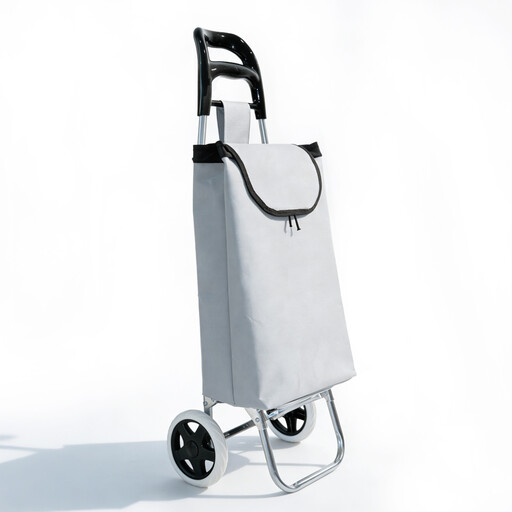
Why it suits this profile: At a stated weight of 1.15 kg, this model is easy to store in a car or cupboard. The 25-litre bag is ideal for everyday shopping and short trips.
The stated maximum load capacity for the hand-truck function is 20 kg. This gives you a clearer idea of what you can carry than a description that only mentions a “large capacity”.
1.15 kg product weight, 25-litre bag, water-repellent Oxford fabric and a 2-in-1 design.
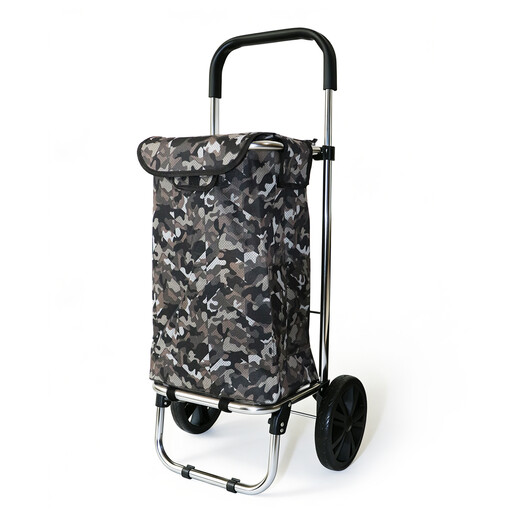
Why it suits this profile: The stated bag capacity is around 45 litres. That gives you room for a larger shop, laundry or everyday essentials without needing to switch to a large transport cart.
The product information lists the bag dimensions, material and protective flap. This lets you assess its capacity and protection more specifically than you could from a marketing term alone.
Rust-resistant stainless steel frame, around 45 litres of capacity, quiet EVA wheels and a foldable design.
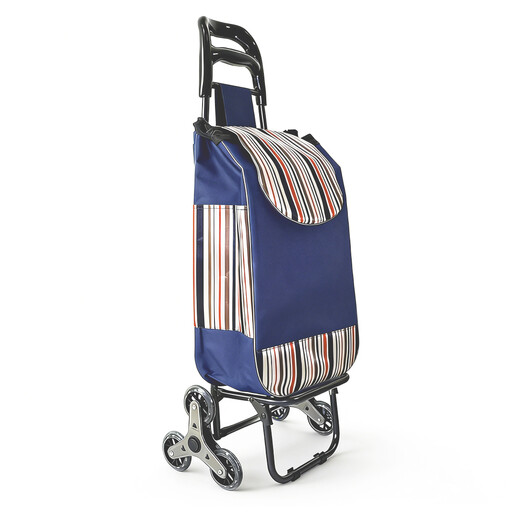
Why it suits this profile: This model is designed for people who regularly encounter stairs, kerbs or uneven paving and also need a larger shopping trolley with plenty of capacity.
According to the product description, the six PU wheels are designed for a stair-climbing mechanism. Use the trolley carefully, keep hold of the load and don’t exceed the stated load capacity of 30 kg.
38-litre capacity, 30 kg hand-truck function, six PU wheels and a frame that folds flat.
Use this quick checklist before you place your order:
A shopping trolley with an insulated compartment is especially useful for chilled products, picnics and day trips. For everyday use in town, a lightweight shopping trolley without an extra compartment may be simpler.
We’ve put together a complete, up-to-date list of products that meet these strict selection criteria and the applicable European safety regulations.
That depends on its weight, handle, wheel design and the route. A lightweight model with a stable base may be easier to handle. Six-wheel models may offer more control on stairs, but you’ll still need to manoeuvre carefully.
Its lifespan depends on the load, surface, damp and storage conditions. Overloading it, leaving it outside for long periods and rolling it over sharp edges can wear down the frame, bag and wheels more quickly. Regularly check the wheel axle, attachment points and bag seams.
Routine maintenance is usually limited to wiping it with a damp cloth, letting the bag dry and keeping dirt out of the wheels. You may incur replacement costs if the wheels, fastenings or bag need to be replaced separately. Check in advance whether spare parts or service information are available.
