
Vandaag of morgen in huis

Kwaliteit gegarandeerd

Welkomstaanbiedingen ontgrendelen: GRATIS bezorging | Tot 80% korting | Gratis 30 dagen JoyPlus-proefperiode
Download de app
A folding shopping trolley can make it much easier to transport shopping, parcels and camping gear. But many shoppers run into the same problems: a bag that’s smaller than expected, wheels that struggle over pavements or a frame that’s awkward to lift. Product photos don’t always show how a trolley handles in a narrow hallway, on stairs or in a busy supermarket, either.
So don’t just look at the bag’s capacity. Check the trolley’s own weight, wheel type, load limit and how it folds away. Below, we compare the key things to look for and some suitable models.
A large capacity sounds appealing, but a full bag can become heavy. Always check these two separate specifications:
A high-capacity shopping trolley is only useful if the frame, base and wheels can handle the weight too. Place heavy items low in the bag and secure any loose items. Never exceed the limit stated in the product information.
A shopping trolley designed for stairs usually has three wheels on each side. These rotate to help it climb a step. This makes manoeuvring easier, but you’ll still need to tilt and guide the trolley. Take care on narrow or steep stairs.
A model with two standard wheels is often lighter and more compact, making it better suited to flat routes, shops and pavements. So consider your usual route before paying extra for a stair-climbing wheel system.
A folding shopping trolley can save space, but some models weigh several kilos themselves. Check the folded dimensions if you want to store it in a cupboard, car or under a bed. Also consider the handle: an adjustable or ergonomic handle can be more comfortable, but check that the height suits whoever will be using the trolley.
A lightweight shopping trolley is useful if you often need to lift it, take it on public transport or carry it up to a flat without a lift. An aluminium frame can help keep the overall weight down. Steel or rust-resistant metal may be a better choice if you need a higher load capacity. Always compare the weight of the empty trolley with its maximum load capacity.
No type of wheel will make a heavy load feel light. Also check the wheel width, axle construction and how stable the bag is when full.
According to the product information, a water-repellent Oxford bag protects against dust and light rain, but that doesn’t automatically make it fully waterproof. A flap, zip or rear pocket helps keep the contents secure. If you want to carry shopping and drinks on the go, look for a shopping trolley with a cooler bag.
A 2-in-1 shopping trolley usually combines a shopping bag with a sack truck function. A 3-in-1 shopping trolley adds features such as a removable shoulder bag. Check how quickly you can switch between the different functions and whether the frame stays stable without the bag.
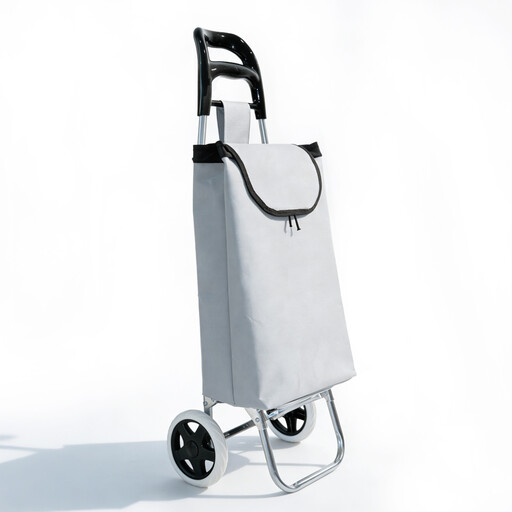
Why it suits this shopper: With a stated weight of 1.15 kg, this model is designed for anyone who often needs to lift their trolley, take it in the car or use it for smaller shops.
The specifications list the trolley’s own weight (1.15 kg), a bag capacity of 25 litres and a sack truck capacity of 20 kg. This lets you assess portability and load capacity separately.
2-in-1 design, water-repellent 600D Oxford bag and EVA wheels, according to the product information.
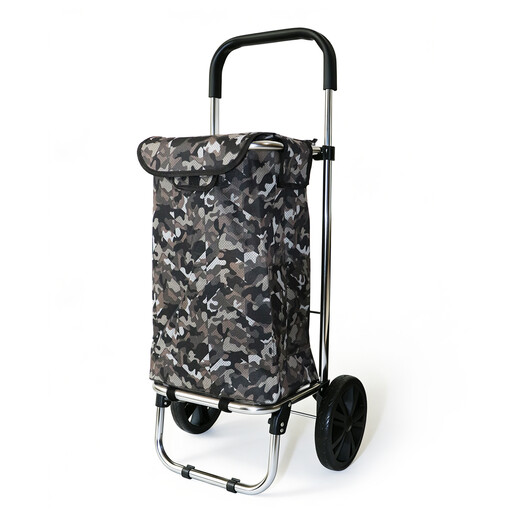
Why it suits this shopper: The stated bag capacity of around 45 litres makes this model suitable for longer shopping trips, laundry or everyday transport.
The product information lists the materials, bag dimensions of approximately 53 x 33 x 26 cm and a flat-folding design. This gives you a clearer idea of storage and capacity than a general volume claim alone.
Stainless steel frame, 600D Oxford bag and two EVA wheels, according to the product specifications.
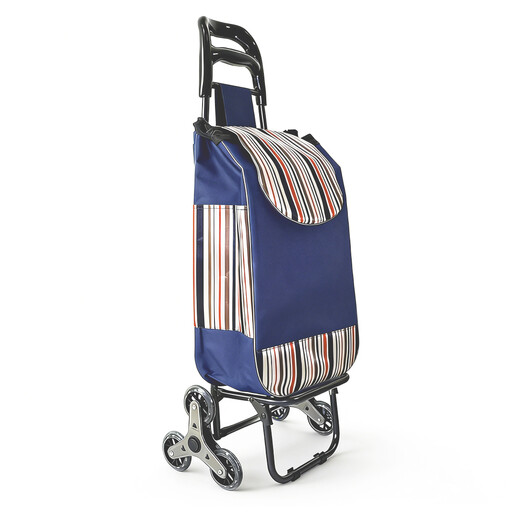
Why it suits this shopper: This model is designed for routes with stairs, kerbs and uneven paving, while its 38-litre bag has room for a larger shop.
The specifications list six PU wheels, a sack truck capacity of 30 kg and a flat-folding frame. Use the stair-climbing mechanism carefully and don’t exceed the stated load limit.
38-litre capacity, 2-in-1 function and a zipped rear pocket, according to the product information.
We’ve put together a complete, up-to-date list of products that meet these strict selection criteria and the applicable European safety regulations.
Unfold the frame fully and check that the locks are secure. Then attach the bag according to the product instructions and distribute the load evenly. Before setting off, check the wheels, handle and any straps.
Its lifespan depends on the load, surfaces, moisture and maintenance. Wipe the frame and bag clean with a slightly damp cloth, let the trolley dry before folding it away and regularly check the seams, wheel fixings and hinges. Don’t use the trolley as a seat or step.
Maintenance usually involves cleaning, drying and checking the wheels. With frequent use on pavements or stairs, the wheels and fittings may wear more quickly. A model with a removable bag is also handy if you want to clean the bag separately.
