
Vandaag of morgen in huis

Kwaliteit gegarandeerd

Welkomstaanbiedingen ontgrendelen: GRATIS bezorging | Tot 80% korting | Gratis 30 dagen JoyPlus-proefperiode
Download de app
A folding shopping trolley can make it easier to carry shopping, laundry and everyday essentials. However, models vary considerably in load capacity, bag capacity, wheel type and folded size. A trolley that rolls well in the supermarket may not be suitable for heavy crates or uneven pavements.
Look out for these three common pitfalls:
Start by thinking about how much you usually carry. For a small shop, a shopping trolley with a bag of 25 to 30 litres is often practical. If you also carry laundry, parcels or several bottles, you may prefer a larger high-capacity shopping trolley.
Be aware of the difference between:
A 45-litre bag gives you more space, but the trolley will also be heavier when full. For older people, students and commuters, a lightweight shopping trolley may therefore be more practical than a larger model.
A frame made from steel, aluminium or a combination of materials affects the trolley’s weight and stability. According to the product description, galvanised or powder-coated steel is designed to give the frame better protection against rust and scratches. Aluminium can help keep the weight down, but always check the stated maximum load.
For the bag, 600D Oxford fabric, a protective flap and a water-resistant coating are useful features. In practice, “water-resistant” means it will keep out light rain or splashes for a time. If it rains heavily or for a prolonged period, make sure any sensitive shopping is given extra protection.
Also check:
A shopping trolley on wheels should suit the surfaces you use it on. According to the product information, EVA or TPR wheels are designed to roll relatively quietly. Two larger wheels are often enough for supermarket aisles and pavements. For gravel, grass or campsites, wider off-road wheels and a brake are more practical.
Also look for:
A shopping trolley for the market and supermarket does not need the same features as a camping trolley. Choose based on your route and the weight you’ll carry, rather than simply going by the biggest number in the product title.
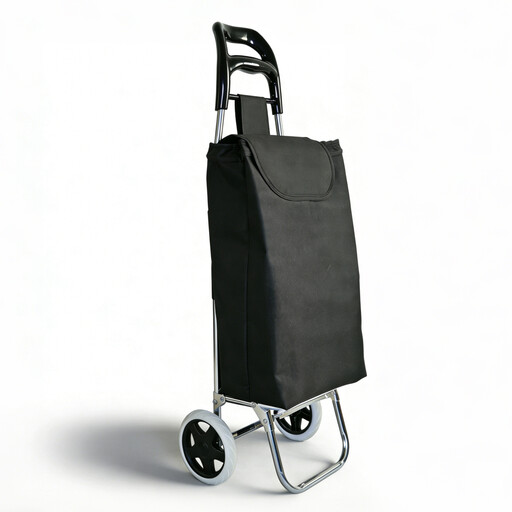
Why it suits this buyer: With a frame weighing 1.15 kg, this model is easy to take to the supermarket, market or car. The bag has a capacity of 25 litres, and the frame can be used as a sack truck without the bag.
The product information lists the 25-litre bag capacity and 20 kg sack truck load separately. This makes it clearer what each mode is designed for.
1.15 kg unladen weight, 25L Oxford bag, water-resistant coating and EVA wheels, according to the product description.
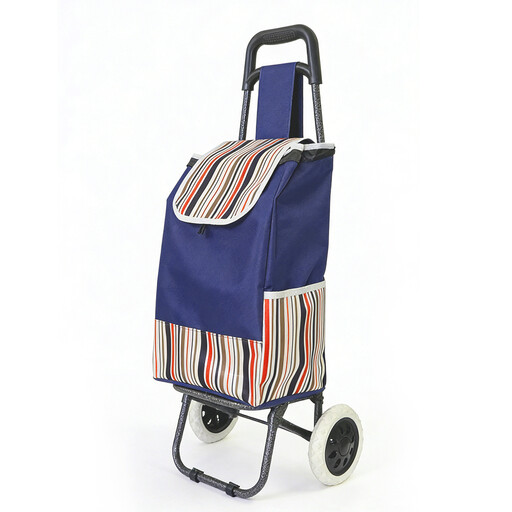
Why it suits this buyer: According to the product information, this model combines a 30-litre bag with a sack truck function rated for loads of up to 25 kg. It’s a good fit for larger shopping trips and households that also need to carry parcels or drinks.
The stated bag capacity and sack truck load are listed separately. The zipped rear pocket also helps keep small items separate from your shopping.
30L 600D Oxford bag, powder-coated steel frame, folding design and EVA wheels.
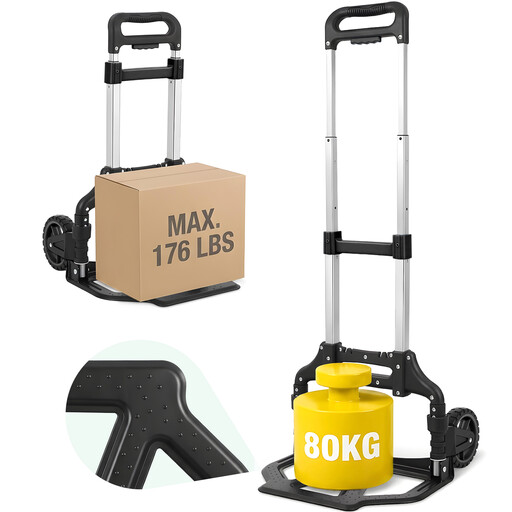
Why it suits this buyer: This trolley is best suited to parcels, crates and other heavy items. The handle has three height settings, and the model is designed as a transport trolley rather than a traditional shopping trolley with a bag.
The product information specifies an 80 kg load capacity, a folded width of 5.7 cm and three handle heights. This makes it easier to compare if storage space and load capacity are important to you.
Aluminium frame, 3.5 kg unladen weight, TPR wheels and adjustable heights of 63, 90 and 100 cm.
We’ve put together a complete, up-to-date list of products that meet these strict selection criteria and the applicable European safety requirements.
Unfold the frame fully and check that the hinges or locks are secure. Then attach the bag according to the product instructions and check that the wheels turn freely. Don’t use a transport trolley until the frame is fully open.
Its lifespan depends on the load, the surface it’s used on and how well it’s maintained. Don’t exceed the stated limit, let a wet bag dry thoroughly and remove dirt from the wheel mounts. Regularly check the seams, handle, axles and folding joints.
There are generally no fixed running costs. However, the wheels, axles or bag may wear out with frequent use. For long-term use, a model with a detachable bag and replaceable or easily accessible parts may be more practical.
