
Vandaag of morgen in huis

Kwaliteit gegarandeerd

Welkomstaanbiedingen ontgrendelen: GRATIS bezorging | Tot 80% korting | Gratis 30 dagen JoyPlus-proefperiode
Download de app
A folding shopping trolley is handy for shopping, laundry and light parcels. Yet many models look similar, despite clear differences in load capacity, wheel type, bag capacity and ease of storage. A low price also tells you little about how practical a trolley will be on pavements, cobbles or stairs.
So don’t focus on looks alone. Check the construction and dimensions, and consider how the trolley will fit into your daily routine.
A stated load capacity usually applies to a particular way of loading the trolley and a flat surface. A trolley that can carry 25 kg isn’t automatically suitable for pulling over high kerbs every day. Also check whether the load capacity applies to the bag, the frame or a standalone wheeled hand truck.
With a 2-in-1 shopping trolley, the maximum weight for the bag may differ from that for the frame. For example, the bag may be designed for shopping, while the frame can be used as a hand truck without the bag.
The term ‘quiet wheels’ is only useful if the wheel material is specified. EVA foam and TPR are different materials, with different levels of hardness and rolling resistance. The surface matters too. Almost any wheel rolls smoothly on a polished shop floor, but you’ll notice bigger differences on cobbles, gravel or uneven pavements.
So look for EVA or TPR wheels, the axle construction and any bearings. A wheeled shopping trolley with a sturdy axle may feel more stable than a model with small, loose wheel fittings.
A bag capacity of 25 or 30 litres gives you a useful indication of its size, but check the shape and fastening too. An open top can be inconvenient in the rain or when cycling. A protective flap helps shield the contents, but a water-repellent shopping bag isn’t the same as a fully waterproof one.
According to the product information for the models in question, Oxford bags with a water-repellent coating offer protection mainly against light rain, dust and dirt. For prolonged exposure to rain, extra protection is still a good idea.
For a small daily shop, 25 litres is often enough. A 30-litre bag gives you more room for a bigger shop or several packets. If you also need to carry laundry or larger shops, look for a model with a capacity of around 45 litres.
Check these three details:
Distribute the weight as evenly as possible. Putting heavy bottles at the bottom and lighter items on top helps reduce the risk of the trolley tipping over.
A steel frame can be sturdy, but it’s usually heavier than aluminium. For everyday use in a flat without a lift, a lightweight shopping trolley is easier to carry. Also check the handle height. A handle that’s too low can be uncomfortable over longer distances.
A good folding shopping bag or trolley should fold down to fit easily behind a door, in a storage cupboard or in the boot. Check the folded dimensions and make sure the wheels or handles don’t stick out.
EVA wheels are lightweight and are described in the product information for various trolleys as hard-wearing and relatively quiet. TPR wheels are often fitted with bearings, which can help a folding hand truck roll smoothly. No wheel type makes a trolley completely effortless to use on every staircase or surface.
For UK streets, the following features are particularly important:
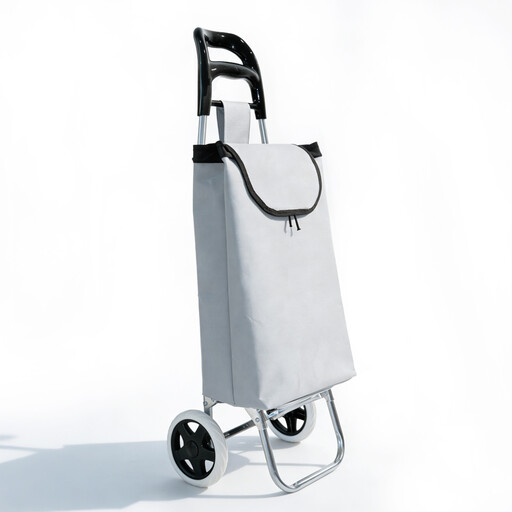
Why it suits this profile: At a stated weight of 1.15 kg, this model is easy to take to the shops, in the car or up the stairs. The bag has a capacity of 25 litres, and according to the product information, the frame can also be used as a hand truck without the bag.
The product information states both the bag capacity and the maximum 20 kg load for use as a hand truck. This makes it clearer what each of the two modes is designed for.
Stated weight of 1.15 kg, 25-litre bag, water-repellent Oxford fabric and quiet EVA wheels, according to the product description.
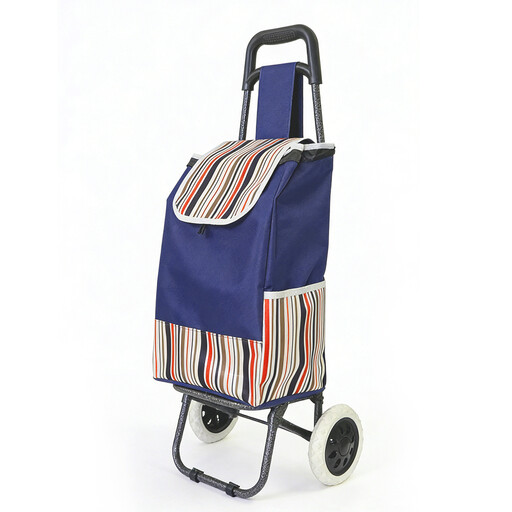
Why it suits this profile: This model combines a shopping trolley with a bag and a separate wheeled hand truck. It’s a good choice if you want one frame for shopping, boxes and crates.
The product information sets out the two functions separately: a 30-litre shopping bag and a stated load capacity of 25 kg for the frame without the bag. The protective flap and rear pocket are also listed separately.
30-litre Oxford bag, steel frame, folding design and EVA wheels described as suitable for various surfaces.
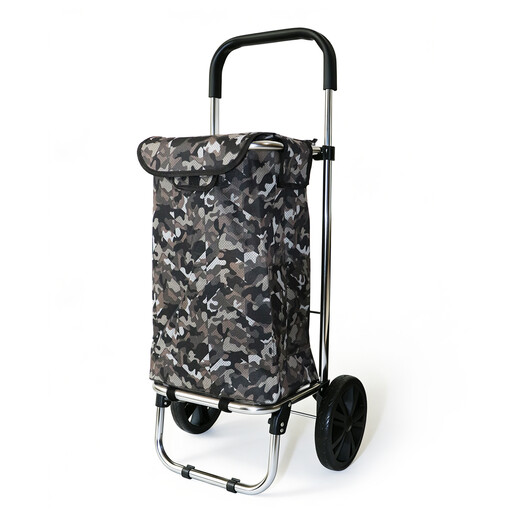
Why it suits this profile: The bag, with a capacity of around 45 litres, is designed for larger shops, laundry and everyday transport. According to the product information, the handle is 96 cm high.
The stated bag dimensions and capacity make it easier to judge how much it can hold than the phrase ‘large capacity’ alone. The bag is also removable, and the frame can be used as a dolly.
Around 45 litres of capacity, a rust-resistant stainless steel frame, removable bag and EVA foam wheels, according to the product information.
We’ve put together a complete, up-to-date list of products that meet these strict selection criteria and current European safety regulations.
For a few everyday groceries, 25 litres may be enough. Choose 30 litres if you’re doing several shops at once. Around 45 litres is more practical for larger shops, laundry or family use. Check the maximum load too: a larger capacity doesn’t automatically mean you can fill the bag with heavy items.
According to product specifications, EVA and TPR wheels may be suitable for pavements, cobbles and other uneven surfaces. The experience also depends on wheel size, how the trolley is loaded and the axle construction. Take a full trolley slowly over high kerbs, and don’t exceed the stated load capacity.
Empty the bag after use and wipe away dust or moisture with a dry or slightly damp cloth. Let a water-repellent bag dry completely before putting it away. Keep sand and dirt out of the hinges and folding mechanism. Store the trolley somewhere dry, and regularly check that the wheels, handle and fittings are still secure.
