
Vandaag of morgen in huis

Kwaliteit gegarandeerd

Welkomstaanbiedingen ontgrendelen: GRATIS bezorging | Tot 80% korting | Gratis 30 dagen JoyPlus-proefperiode
Download de app
A folding shopping trolley is handy for shopping, laundry, camping gear and everyday essentials. However, models can vary greatly in load capacity, wheel type and ease of use. A trolley that rolls smoothly in a shop may be less practical on a cobbled pavement or on stairs.
So don’t just look at a large capacity or an attractive price. Check these common pitfalls before you order.
A 60-litre bag sounds spacious, but the maximum load for the frame, wheels and base determines how much you can safely transport. Check both figures: capacity in litres and maximum load in kilograms. You should also distribute heavy items evenly throughout the bag.
A large 60-litre shopping trolley is especially practical for a weekly shop or a day out. For a quick trip to the shops, a 25-litre model may be lighter and easier to store.
A shopping trolley with stair-climbing wheels usually has three wheels on each side. The wheel mechanism rotates as it moves over a step, but you still need to tilt the trolley correctly and keep the load under control. You’ll need to manoeuvre carefully on narrow or uneven stairs.
Also check the difference between PU wheels, EVA wheels and PVC wheels. EVA wheels are often lightweight and quiet on flat surfaces. PU wheels with a three-wheel mechanism are designed for kerbs, steps and uneven paving. No wheel type automatically prevents wear or knocks.
Check the dimensions when the trolley is folded. A model may fold away but still be too wide for a narrow cupboard or too long for the boot of a small car. Also check whether the bag is removable and whether you can use the frame as a sack truck without it.
An aluminium frame is generally lightweight and suits anyone who needs to lift the trolley regularly. Steel can provide a sturdier construction, but it often makes the trolley heavier. The product information should clearly state which material is used and what load the trolley can carry.
Look out for these practical points:
A lightweight shopping trolley is handy for older shoppers, students and city dwellers. If you often carry bottles, crates or laundry, a sturdy frame with a clearly stated load capacity may be a better choice.
Two large wheels are usually enough for shop aisles and tarmac. For cobbles, kerbs and stairs, a model with six PU wheels may be more practical. Check the wheel width, material and axle stability.
A trolley with a sack-truck function is useful if you can remove the bag and use the frame as a sack truck. Check whether its load capacity as a sack truck is the same as, or lower than, its capacity with the bag attached.
Oxford fabric, such as 600D, is often described in product listings as a sturdy, water-repellent material. “Water-repellent” doesn’t mean fully waterproof. A flap may offer protection in light rain, but don’t leave your shopping outside for long periods.
A shopping trolley with a cool bag can be useful for chilled products, picnics and camping. According to the product descriptions of the models below, they have insulated compartments. How long they keep things cool depends on the outside temperature, how full they are and whether you use ice packs.
Also look for an adjustable handle. The right height helps you avoid hunching over while pulling the trolley. This is particularly important when choosing a shopping trolley for an older person.
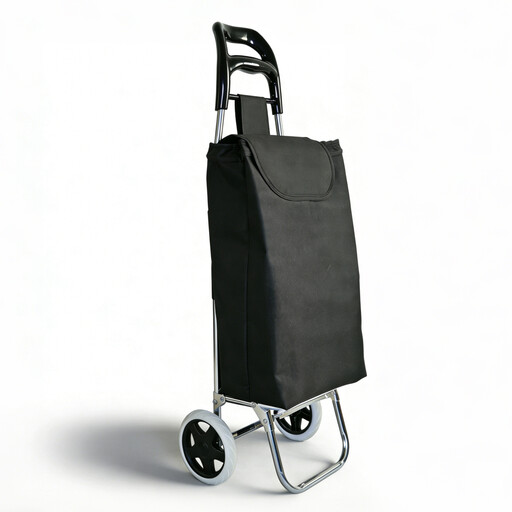
Why it suits this type of shopper: The product description lists a weight of 1.15 kg, a 25-litre bag and a sack-truck function with a maximum load of 20 kg. That makes it a good fit for quick shopping trips and limited storage space.
The capacity and maximum load for sack-truck use are clearly stated. This makes it easier to see what the model is and isn’t designed for.
1.15 kg weight, folding frame, 25L Oxford bag and quiet EVA wheels, according to the product information.
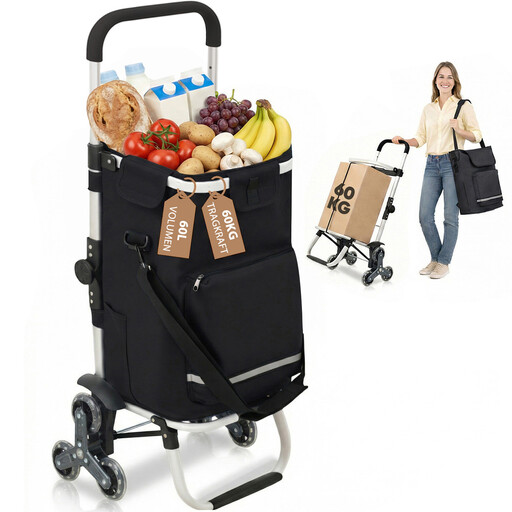
Why it suits this type of shopper: According to the product specifications, this model combines an aluminium frame, a 60-litre capacity, a removable bag, a cool-bag compartment and a sack-truck function.
The product specifications state a maximum load of 60 kg, an adjustable handle and PU stair-climbing wheels. Always check the load and surface before use.
60L capacity, 3-in-1 design, six PU wheels, aluminium frame and insulated compartment, according to the product information.
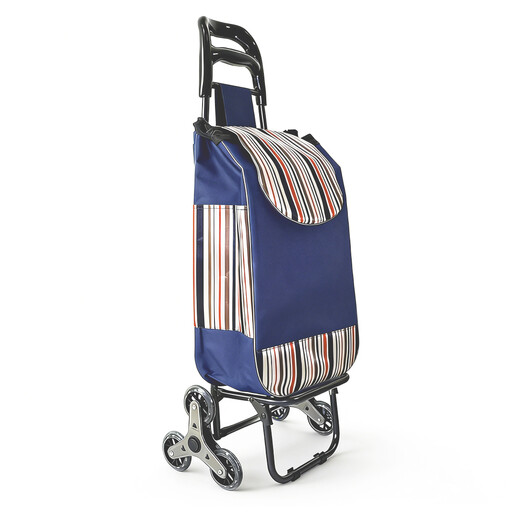
Why it suits this type of shopper: The product description lists a 38-litre bag, six PU wheels and a sack-truck function with a stated load capacity of 30 kg. This makes it a good match for heavier shopping and regular trips.
The stated 38L capacity and 30 kg sack-truck load make the difference between the shopping bag and the frame’s load capacity clear. Don’t load the trolley beyond the stated limit.
38L Oxford bag, six PU wheels, folding frame, rear zipped pocket and 2-in-1 use, according to the product description.
We’ve put together a complete, up-to-date list of products that meet these strict selection criteria and current European safety regulations.
Remove the bag if the product information says you can, then wipe the frame, handle and wheels with a damp cloth. Don’t use harsh cleaning products on Oxford fabric or plastic. Let wet parts dry completely before folding and storing the trolley.
Its lifespan depends on the load, surface, storage and maintenance. Regular use on smooth shop floors puts less strain on the wheels than daily use on cobbles and stairs. Check the wheel axle, seams, attachment points and folding mechanism regularly. A stated load capacity doesn’t guarantee a particular lifespan.
No. A shopping trolley with six wheels can make it easier to tackle steps, but you still need to tilt and guide it. Check the width of the staircase, the height of the steps and the stability of the load beforehand. Always use the securing strap if one is supplied.
